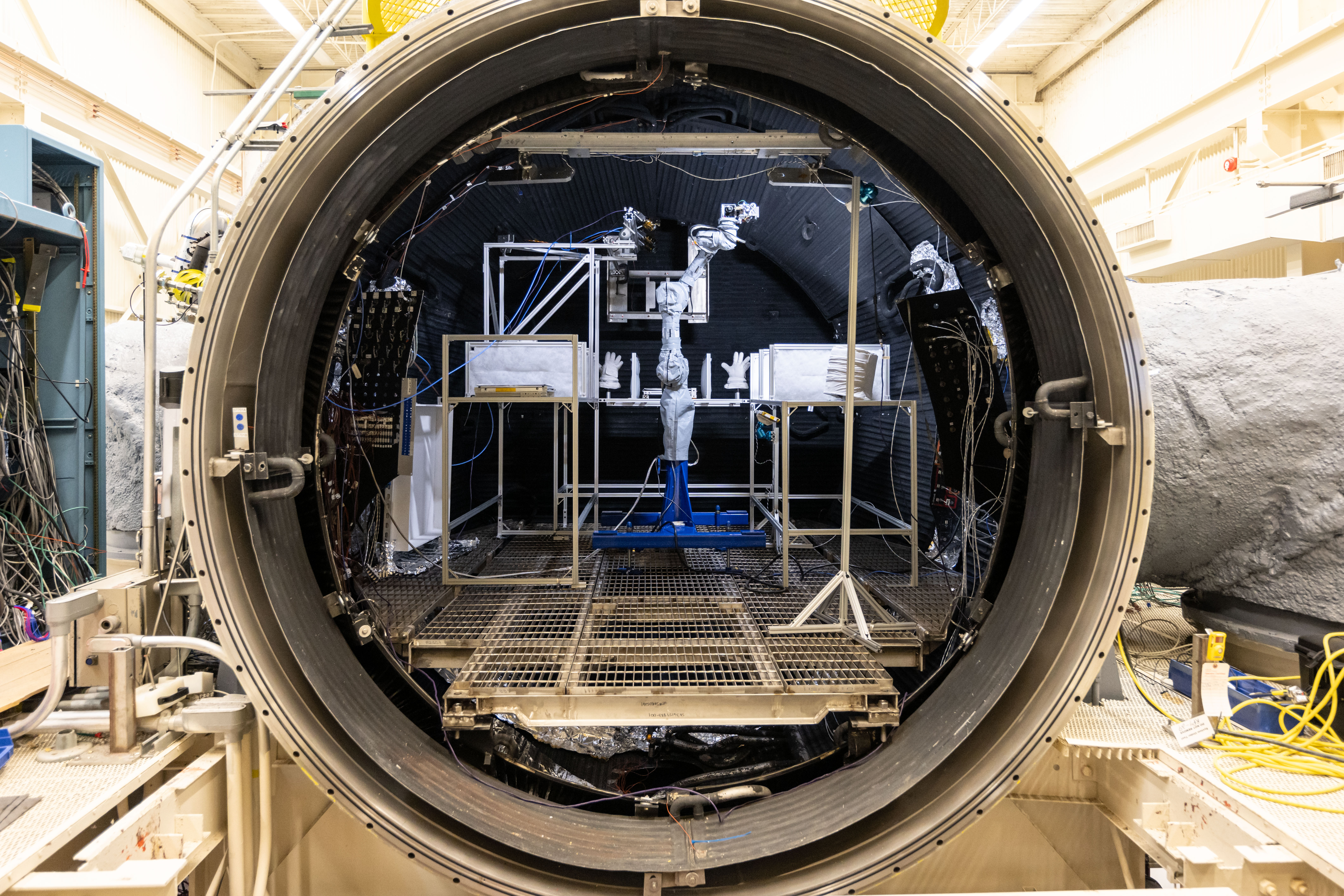
NASA's Johnson Space Center operates a specialized Lunar Development and Test Facility dedicated to preparing Artemis hardware for the harsh realities of lunar operations. Engineers there confront one of exploration's most vexing problems: lunar dust.
The material differs fundamentally from Earth sand. Lunar dust particles are jagged and abrasive, with edges that cut rather than round. The dust clings electrostatically to surfaces, infiltrating seals, corroding mechanisms, and degrading equipment performance. This hazard threatened Apollo missions decades ago and remains a critical concern for Artemis astronauts and rovers.
The facility subjects Artemis hardware to simulated lunar conditions before flight. Engineers test spacesuits, life support systems, exploration equipment, and vehicle components against dust contamination. They recreate the Moon's vacuum environment, extreme temperature swings between sunlight and shadow, and the electrostatic properties that make lunar dust uniquely problematic. This ground-based validation work identifies design vulnerabilities early, before hardware reaches the lunar surface.
The Artemis program aims to establish sustained human presence on the Moon, requiring equipment that can function reliably in environments far more hostile than Apollo encountered. Artemis missions will extend surface stays, increase mobility ranges, and deploy infrastructure for long-term habitation. All of this demands hardware engineered to withstand lunar dust for months, not days.
Testing at Johnson Space Center directly enables this ambition. By subjecting every critical component to realistic dust exposure, NASA engineers reduce mission risk and enhance operational reliability. Lessons learned in Houston translate directly to mission success on the lunar surface.
The Lunar Development and Test Facility represents infrastructure investment in human spaceflight that extends beyond rockets and spacecraft. Ground-based engineering facilities prove as essential to exploration as launch vehicles themselves. This facility ensures that when Artemis astronauts step onto the Moon, their equipment performs as designed, advancing NASA