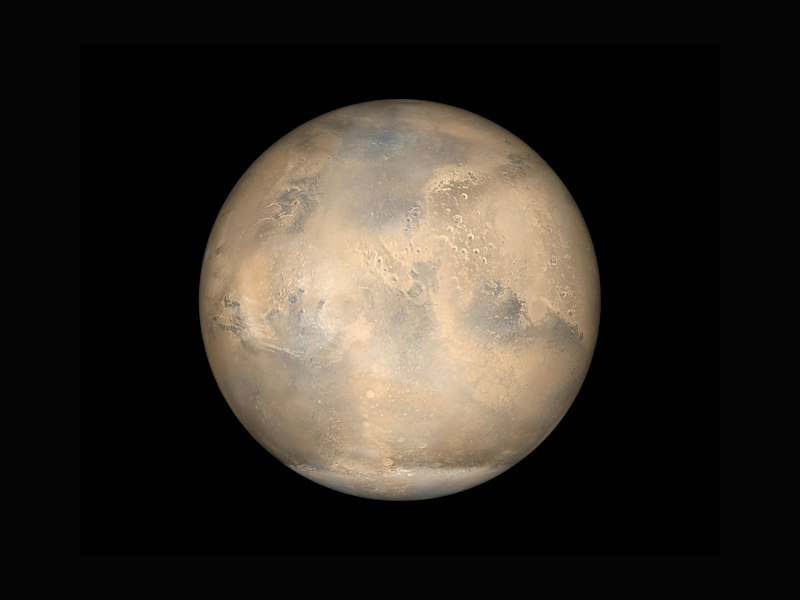
The consensus is comfortable: humanity's future depends on becoming a multiplanetary species, and Mars is the obvious next step. We celebrate every rover discovery, every new geological finding, every hint that ancient Mars might have harbored microbial life. The narrative writes itself. We're explorers. We're curious. We're doing science.
But the better question isn't whether we can reach Mars or even whether life once existed there. It's what our presence will irreversibly alter on a planet we barely understand.
Recent rover observations showing honeycomb textures and layered geological formations remind us how much we still have to learn about Martian geology. Each discovery deepens our scientific knowledge. That's genuinely valuable. But it also highlights something uncomfortable: we're studying a world in detail while simultaneously planning to industrialize it. Those two goals may not be compatible.
Consider what we know about Mars exploration timelines. Private companies and space agencies are seriously discussing human missions within the next 15 years. Within decades, we're talking about permanent settlements, resource extraction, and terraforming concepts. The pace is accelerating. Yet our understanding of Martian subsurface conditions, potential microbial ecosystems, or even basic dust chemistry remains incomplete. We're moving faster than our knowledge.
Here's what keeps me up at night: what if we contaminate Mars in ways we don't discover for fifty years? What if we establish a mining operation that destroys evidence of ancient life we might have studied? What if we pump water from subsurface aquifers that turn out to be the only remaining habitat for extant organisms we never even detected?
The scientific community has planetary protection protocols, certainly. But protocols designed for robotic rovers aren't equivalent to standards for human habitation. Humans shed biological material constantly. We carry microbes in our bodies and equipment despite sterilization efforts. Once humans are on Mars for months or years, contamination becomes inevitable rather than unlikely.
The consensus says this is acceptable because exploration requires some risk. Scientific advancement demands some sacrifice. We've already altered Earth extensively; why should we treat Mars with more caution?
That's precisely the comfortable thinking we should reject.
Earth's history of exploration offers a cautionary template, not a justification. When Europeans arrived in the Americas, they weren't consciously attempting genocide, yet that's what happened. When colonial powers extracted resources from Africa and Asia, the long-term consequences devastated ecosystems and societies. We didn't know what we didn't know, and we paid no price for our ignorance.
Mars is different in one crucial way: no human inhabitants existed to resist or suffer directly from our choices. But that doesn't make reckless exploration ethical. It makes it worse. We have no stakeholders to negotiate with, no indigenous voice to challenge our assumptions, no one on Mars to hold us accountable for mistakes.
So what breaks if we pursue Mars colonization without radically more robust scientific baseline studies first? Potentially, it's our credibility as a species capable of learning from history. It's our claim to be stewards of planetary systems rather than simply extractors. It's the possibility of understanding whether life emerged independently on two planets in the same solar system, a discovery that would reshape our understanding of biology itself.
I'm not arguing against Mars exploration. I'm arguing we've accepted the wrong timeline.
Before we establish the first settlement, before we mine the first resource, before we begin terraforming, we need decades more of robotic science. Rigorous, patient, unglamorous study. It's slower than the consensus wants. It won't sell the public on space the way the narrative of human footprints does.
But it's the price of doing this right.