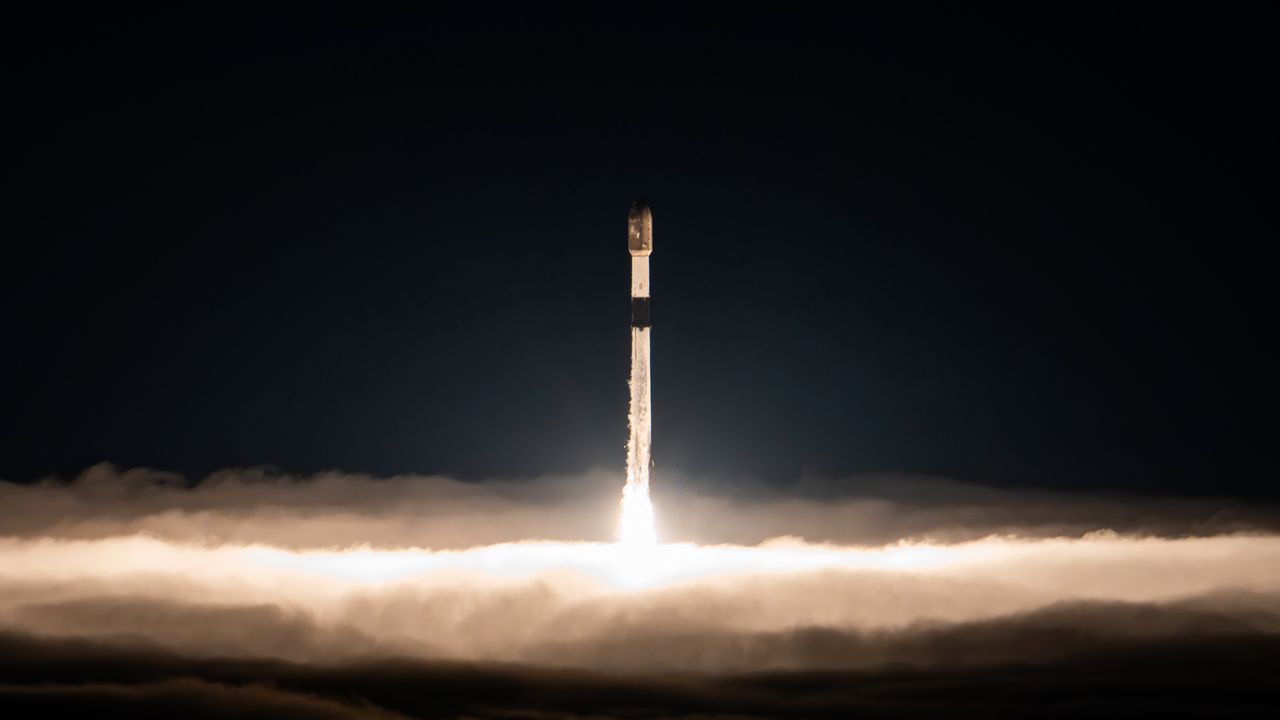
SpaceX achieved a historic operational milestone on August 22, launching 27 Starlink internet satellites aboard a Falcon 9 rocket from Vandenberg Space Force Base in California. The mission marked the 100th Falcon rocket launch of 2024, underscoring the company's unmatched cadence in commercial spaceflight operations.
The early morning launch delivered another batch of satellites to SpaceX's expanding low-Earth orbit constellation. Starlink now comprises thousands of operational satellites providing broadband coverage across the globe, with the network continuing to expand and upgrade its capabilities. Each Falcon 9 mission typically carries between 20 and 60 satellites depending on orbital altitude and inclination requirements.
Reaching 100 Falcon launches in a single calendar year represents a watershed moment for the aerospace industry. SpaceX operates multiple Falcon 9 cores on rapid reuse schedules, with some boosters completing four or more flights per year. The company also flies its heavier Falcon Heavy variant, which accounts for a smaller portion of annual mission volume. This launch tempo dwarfs the output of any competing launch provider globally.
The Falcon 9's first stage booster likely executed a landing recovery downrange, a routine procedure SpaceX perfected years ago. Booster recovery and refurbishment cycles have compressed to weeks, enabling the company to maintain high launch frequencies while managing operational costs. The reusable rocket architecture stands as a core component of SpaceX's business model, distinguishing it from traditional expendable launch systems.
Starlink deployment missions have become the backbone of SpaceX's launch manifest. The company maintains standing orders to continue constellation buildout, with orbital slots coordinated through international regulatory bodies. Each satellite launch advances SpaceX's goal of providing redundant, continuous coverage for rural and underserved regions worldwide. The constellation also serves as critical test infrastructure for SpaceX's satellite technology development pipeline.
SpaceX's 100th Falcon launch this year represents four times the annual launch volume typical of the company just five years prior. Capacity expansion at Vandenberg, investments in barge landing platforms, and parallel operations at Kennedy Space Center and Cape Canaveral Space Force Station enabled this acceleration. The company has signaled intentions to push launch cadence even higher in coming years as Starship manufacturing ramps and additional Falcon 9 cores enter operational service.
This mission underscores the transformation of spaceflight from a specialized government domain into a routine industrial operation. Launch availability no longer constrains space activities. Instead, satellite manufacturing capacity and market demand set the pace for orbital deployments. SpaceX's consistent execution has validated the reusable rocket model and reshaped expectations across the entire aerospace sector, with competitors accelerating development of their own recoverable first stages.
The August 22 launch continues the company's weekly or near-weekly cadence that will likely persist through year-end. Each Starlink mission represents not only commercial revenue but also operational validation of SpaceX's ground infrastructure, launch procedures, and booster refurbishment processes. The 100th Falcon launch confirms that high-frequency spaceflight operations have transitioned from engineering aspiration to operational reality.