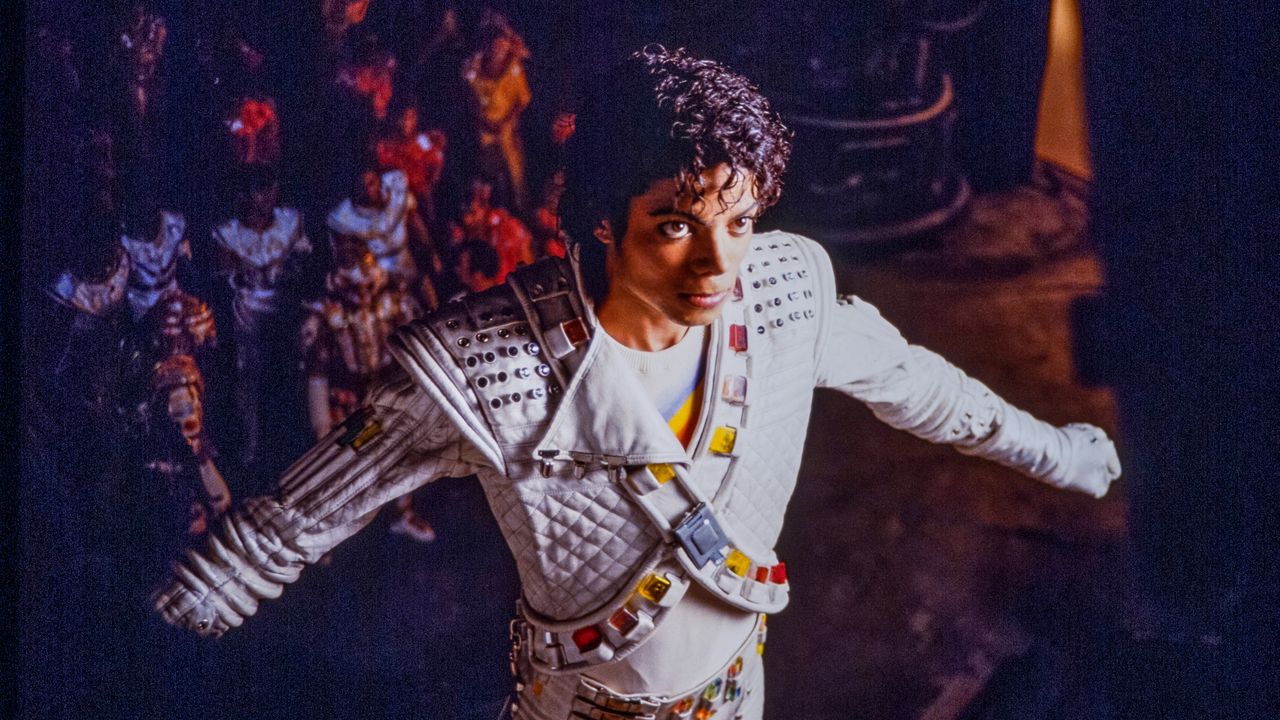
# Michael Jackson's 'Captain EO' Bridged Pop Culture and Space Exploration at Disney Parks
Forty years after its 1986 premiere, Michael Jackson's "Captain EO" remains one of cinema's most unusual intersections of music, technology, and space imagination. The 17-minute 3D film, directed by Francis Ford Coppola and conceived by George Lucas, played exclusively in Disney theme parks worldwide, making it one of the most seen sci-fi films ever made despite its limited theatrical reach.
The project paired Jackson at the height of his fame with two titans of American filmmaking. Lucas, fresh from his success with "Star Wars" and "Return of the Jedi," envisioned a narrative about a charismatic space captain leading a ragtag crew of alien creatures on a mission to transform a hostile planet. Coppola, Academy Award-winning director of "The Godfather" trilogy, brought cinematic gravitas to what could have been dismissed as a theme park novelty. The resulting film defied easy categorization.
Jackson played Captain EO, a hero whose mission involved changing the hearts and minds of an alien world through music and dance. The ensemble cast featured practical costumes and puppetry alongside Jackson's signature choreography. Industrial Light and Magic provided visual effects that pushed the boundaries of what 3D technology could achieve in the mid-1980s. The film's budget reached $17 million, making it one of the most expensive short films ever produced at that time.
The premiere occurred at EPCOT Center in Walt Disney World on September 12, 1986. A second installation opened at Disneyland's Tomorrowland in 1987. The film subsequently appeared at Tokyo Disneyland and later at Disneyland Paris. Over its initial run spanning nearly two decades, an estimated 47 million people experienced the film in theaters, an audience larger than most Hollywood releases.
"Captain EO" captured a specific moment in space exploration culture. The 1980s represented an era when space travel still carried profound imaginative weight in popular consciousness. The Space Shuttle program operated regularly. The Hubble Space Telescope launch remained in the near future. Science fiction films and television shaped how millions of people envisioned humanity's relationship with the cosmos. Jackson's film, regardless of its pop sensibility, contributed to that cultural narrative.
The technical achievement deserves recognition. Coppola and Lucas collaborated on developing new 3D cinematography techniques. The film employed an innovative camera rig that produced stereoscopic images more sophisticated than most theatrical 3D experiences of the era. When audiences donned their 3D glasses in those darkened Disney theaters, they experienced visual technology that rivaled what Hollywood studios offered.
Jackson's involvement elevated the project beyond theme park entertainment into genuine cultural artifact. His global superstardom ensured that people discussed the film internationally. Music, dance, and science fiction merged into something that entertained children while introducing them to concepts about transformation, harmony, and cosmic adventure.
The film remained in rotation at Disney parks until 2015, when Disney closed the attraction to make room for new experiences. Disneyland Paris retained a version slightly longer. The original theatrical release has never received a wide home video release, maintaining the film's exclusive theme park legacy even after its exhibition ended.
Forty years onward, "Captain EO" represents a unique collaboration between popular music superstardom and imaginative space cinema. Few projects achieve such scale, artistic ambition, and cultural reach while remaining sequestered to a single exhibition format.