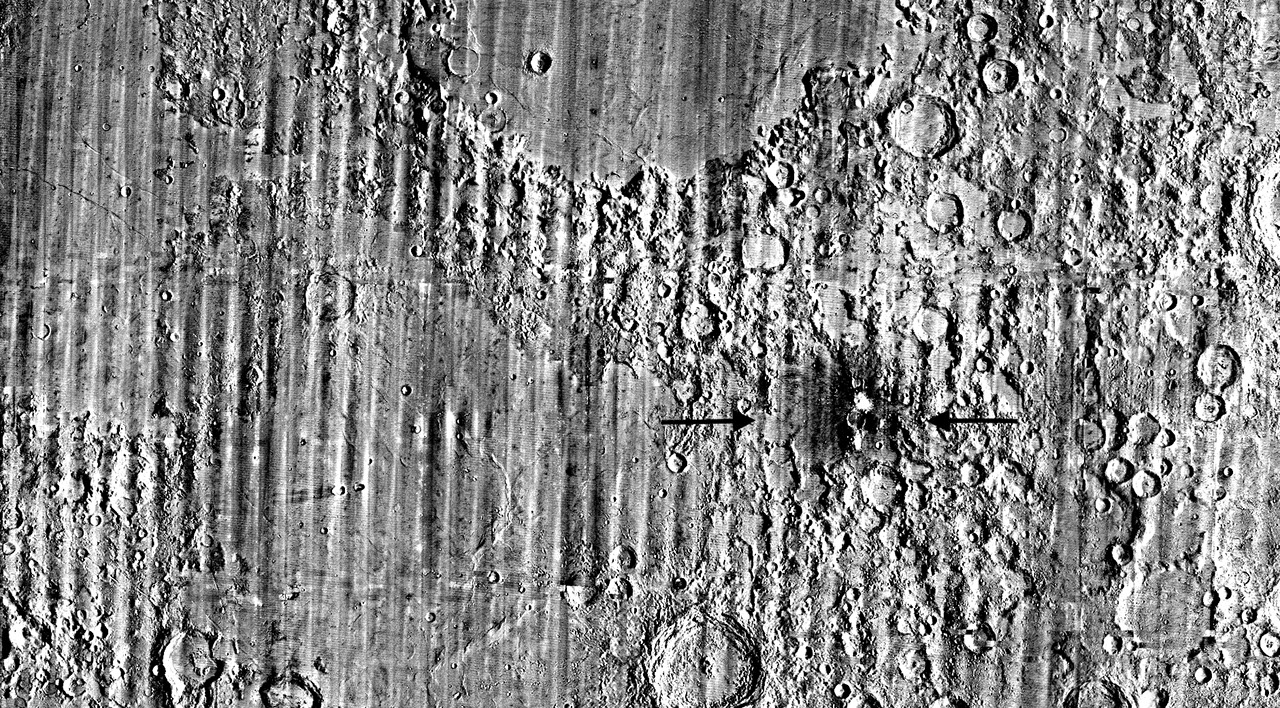
NASA's Lunar Reconnaissance Orbiter spotted a crater on the Moon's surface so recent and large that scientists estimate it formed within the last decade. The discovery emerged during a routine data-quality review when Robert Wagner, a planetary scientist working with the LRO mission, noticed an unusually bright spot surrounded by a dark halo on lunar imagery. That signature pattern indicates freshly exposed subsurface material, a telltale sign of a recent impact event.
The crater represents a rare find. Large impacts on the Moon occur infrequently on human timescales. Wagner's identification of this feature provides the LRO team with a documented case of lunar geology in action, captured between successive orbits of the spacecraft that has circled the Moon continuously since 2009.
The Lunar Reconnaissance Orbiter carries a suite of instruments designed to map the Moon's surface, study its geology, and monitor changes over time. The spacecraft's high-resolution cameras have documented dozens of new craters over the mission's 15-year operational lifespan by comparing images taken years apart. However, craters of this scale do not form frequently. The discovery qualifies as a once-in-century event in terms of Moon impact frequency and crater size.
The crater's bright appearance stems from physics. When an impact strikes the Moon's regolith, or surface dust and rock, it excavates material from beneath the weathered uppermost layer. The subsurface material has not spent billions of years exposed to solar radiation and cosmic ray bombardment, so it reflects light differently than the darker, aged surface surrounding it. The dark halo results from material ejected outward during impact, which travels at high velocity and disturbs the surrounding terrain.
This crater offers more than a curiosity. Each new impact crater serves as a natural experiment in lunar processes. By studying how fresh craters appear in orbital imagery, comparing their characteristics to older features, and analyzing the distribution of ejecta blankets around them, scientists refine their understanding of how the Moon's surface evolves. These observations feed into models of planetary protection and impact risk assessment for lunar missions.
NASA and other space agencies plan to return humans to the Moon through the Artemis program. Understanding where recent impacts occur, how frequently they strike, and what hazards they create informs site selection for future bases and equipment placement. The LRO data also helps scientists understand the Moon's interior structure by analyzing how seismic waves propagate from impact events.
The identification of this crater exemplifies the value of sustained orbital reconnaissance. While LRO was launched in 2009 to support earlier exploration objectives, it continues to operate well beyond its original mission timeline. Its persistent monitoring capability allows scientists to detect transient events and track long-term changes across the lunar surface. Wagner's discovery, made while performing routine housekeeping on data files, demonstrates how systematic observation of planetary bodies yields discoveries that alter scientific understanding and inform future exploration strategy.