# The Best Images from the 2026 Solar Eclipse
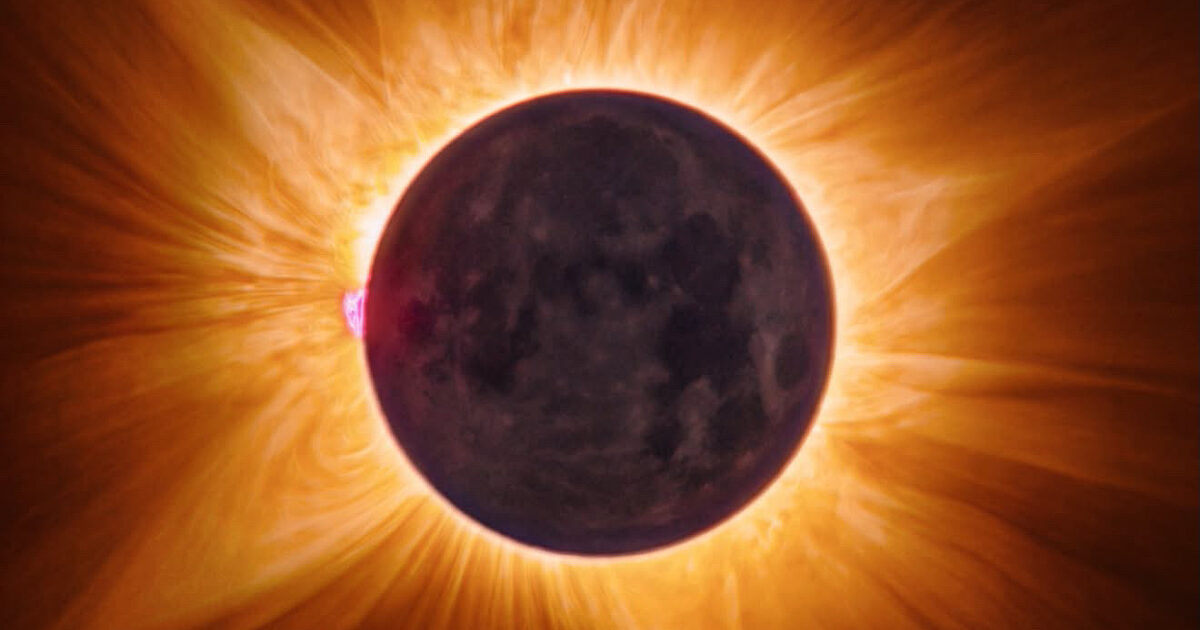
The total solar eclipse that swept across Europe on August 12, 2026, delivered some of the most striking astronomical photography in recent memory. Observers from Spain to Portugal to Greece captured the moment when the Moon slipped directly in front of the Sun, casting a path of totality across the continent and revealing the Sun's ethereal corona to millions of viewers.
The Planetary Society compiled the finest images from the event, showcasing how modern imaging technology and classical eclipse observation converge to document one of nature's most dramatic celestial mechanics. These photographs record not just the visual spectacle but also serve as scientific records of solar corona behavior during a specific moment in the Sun's 11-year activity cycle.
Total solar eclipses occur when the Moon passes between Earth and the Sun, and the alignment is precise enough that the Moon's shadow covers observers on the ground. The geometry works because the Sun and Moon appear roughly the same size in Earth's sky, despite their vastly different actual dimensions. This coincidence creates windows of opportunity for eclipse chasers and professional astronomers to study the solar corona, the wispy outer atmosphere that remains invisible during normal daylight.
The 2026 eclipse's path crossed southern Europe, making it accessible to tens of millions of people across densely populated regions. Spain experienced totality first, followed by Portugal, then Greece and Turkey. The timing and location made this eclipse particularly valuable for citizen scientists and professional researchers alike.
Photography during totality reveals details usually hidden by the Sun's brilliant surface. The corona's structure becomes visible, along with solar prominences, those bright loops of plasma extending from the solar surface. Specialized instruments and carefully configured cameras captured these features at various wavelengths, from visible light to infrared and ultraviolet. Amateur photographers using telephoto lenses and professional solar observatories both contributed to the collection.
Such eclipse images serve multiple purposes beyond their aesthetic appeal. Scientists use them to map the corona's magnetic field structure, study how particles escape the Sun, and monitor variations in the corona's brightness and extent. The 2026 eclipse occurred during a period of elevated solar activity, making the corona particularly pronounced and active in the images.
The Planetary Society's curation of the best images highlights both the technical mastery required to capture these moments and the collaborative nature of modern astronomy. Eclipse observation brings together professional researchers, amateur astronomers, and casual observers all focused on a single celestial event. The resulting image archive becomes a communal scientific resource, with high-resolution versions available for further analysis and study.
These photographs also document the human experience of totality. Many images captured the eclipse through crowds of spectators, the darkened landscape during the few minutes of totality, and the reaction of observers witnessing the Moon's perfect alignment with the Sun. Such imagery preserves not just astronomical data but the emotional dimension of viewing one of the universe's most accessible wonders.