# Europe Witnesses Total Solar Eclipse as Science Advocacy Scores Political Win
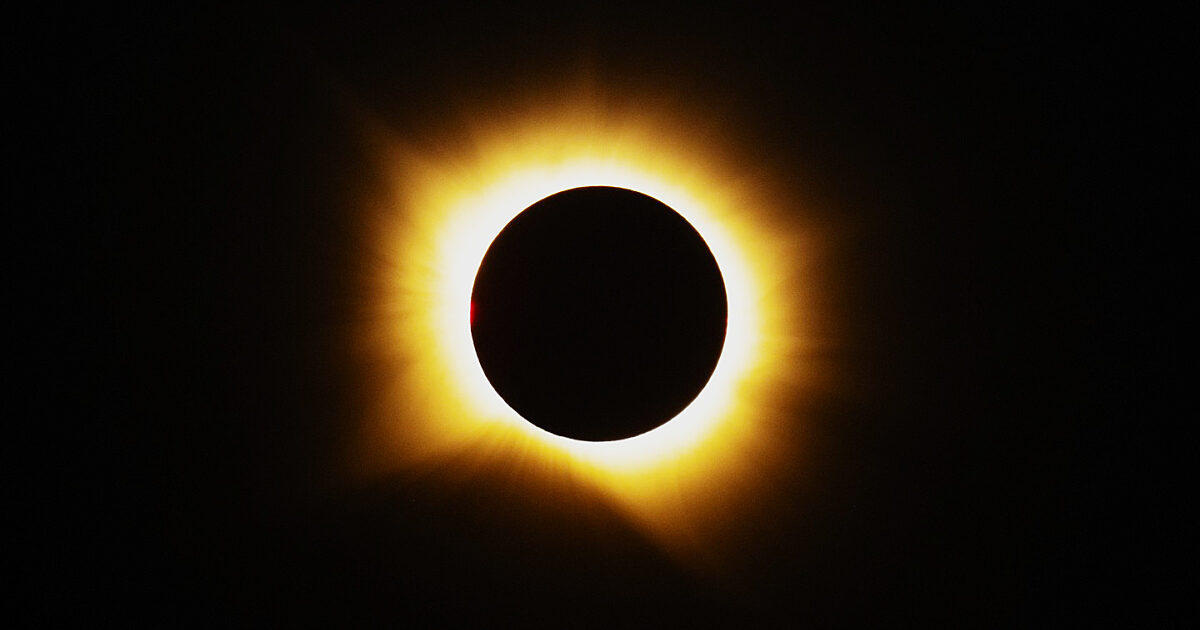
Europe experienced a total solar eclipse that swept across the continent, capturing public attention and generating momentum for space science funding and research initiatives. The Planetary Society reported on the astronomical event alongside broader advocacy gains for the scientific community.
Total solar eclipses rank among the most observable natural phenomena available to ground-based researchers and amateur astronomers. During totality, the Moon passes directly between Earth and the Sun, blocking the solar disk and allowing scientists to study the Sun's corona, the outermost atmospheric layer normally hidden by the Sun's brilliant photosphere. This layer reaches temperatures exceeding one million degrees Kelvin, a paradox that continues to puzzle solar physicists. Eclipse observations yield crucial data on coronal heating mechanisms, solar wind acceleration, and the structure of Earth's magnetic environment during peak solar activity.
The eclipse traversed multiple European nations, drawing crowds of observers and media coverage that extended beyond astronomy enthusiasts. Observatories across the continent deployed specialized instrumentation to capture high-resolution images and spectroscopic data. Ground-based observations complement space-based solar missions like NASA's Parker Solar Probe and the European Space Agency's Solar Orbiter, which continuously monitor solar behavior from orbit but cannot replicate the full-disk coronal imaging possible during eclipse totality.
Beyond the immediate scientific observations, the eclipse event catalyzed political support for space research funding. The Planetary Society, a Washington-based nonprofit advocacy organization founded in 1980, leveraged the public interest surrounding the eclipse to advance legislative priorities. Eclipse events consistently demonstrate public enthusiasm for space science, offering advocates tangible evidence that funding these disciplines generates broad societal interest and educational value.
The political victory referenced in the reporting suggests concrete outcomes: increased budget allocations, renewed commitments to specific missions, or enhanced international collaboration agreements. European funding bodies and national governments frequently use eclipse seasons to reaffirm commitments to astronomy and space exploration programs. The combination of public engagement and scientific achievement creates favorable conditions for expanding research budgets and supporting long-term observational programs.
The eclipse also underscored the continuing relevance of traditional ground-based astronomy in the space age. While orbital observatories revolutionized solar science, total eclipses remain irreplaceable tools for studying the solar corona and testing theoretical models. The event demonstrated that space science encompasses both cutting-edge orbital missions and time-honored observational techniques.
For European space agencies and research institutions, the eclipse timing aligned with broader efforts to secure stable funding for solar physics and heliospheric research. The International Space Station hosts solar observation instruments, while European contributions to joint missions with NASA advance climate monitoring and space weather prediction. Eclipse observations feed directly into these operational programs by refining our understanding of solar dynamics.
The convergence of scientific observation and public advocacy illustrates how astronomical events transcend pure research value. Total solar eclipses capture imagination across educational, cultural, and political domains, creating windows of opportunity for advancing scientific priorities and securing resources for long-term research initiatives.