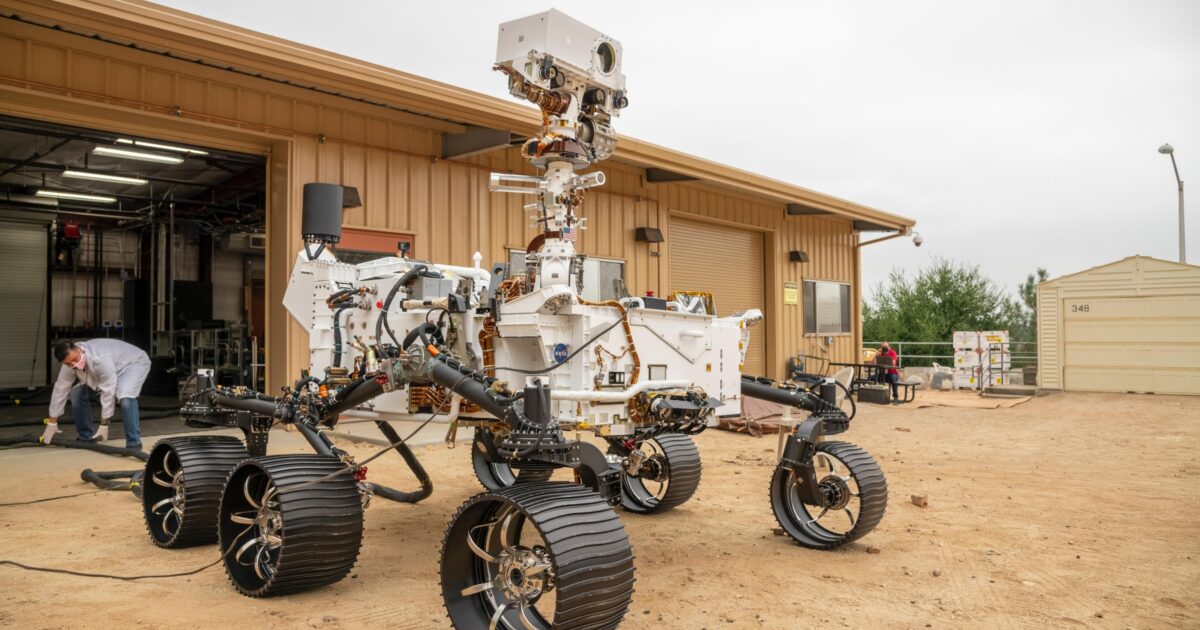
# NASA Weighs Lunar Testing of PROMISE Mars Rover Against Budget Constraints
NASA is considering sending an engineering test model of its PROMISE Mars rover to the Moon, a strategic move that would validate critical technologies before committing hardware to the Red Planet. The decision hinges on cost, schedule, and the rover's readiness for deep space operations.
PROMISE, NASA's next-generation Mars rover program, represents a significant step beyond Curiosity and Perseverance. The rover incorporates advanced mobility systems, autonomous navigation, and improved power management designed for extended exploration of the Martian surface. Testing these systems on the Moon offers NASA a proving ground closer to Earth, where engineers can monitor performance, troubleshoot issues, and refine operations before dispatching the rover to Mars.
The engineering model would operate on the lunar surface under conditions that partially mirror Martian environments. Temperature swings, radiation exposure, and terrain complexity on the Moon present authentic challenges without the communication delays and irreversibility of Mars operations. A successful lunar mission would demonstrate that PROMISE's wheels can handle abrasive regolith, its instruments function in harsh conditions, and its autonomous systems navigate reliably across obstacle-strewn terrain.
However, the proposal carries substantial financial weight. Lunar missions have grown more expensive as NASA pursues the Artemis program, competing for limited budgets against International Space Station operations, Earth science missions, and deep-space probes. Shipping an engineering model to the Moon requires a dedicated launch vehicle, a lander capable of transporting heavy cargo, and operational support throughout the mission duration. These costs ripple through multiple NASA divisions and contractors.
The timing adds complexity. PROMISE development follows a decades-long arc from concept to deployment. Each delay in testing pushes back the Mars mission timeline, extending the period during which rovers sit in development rather than conducting science. Conversely, rushing PROMISE to Mars without adequate validation risks repeating costly failures from earlier programs where insufficient testing led to mission-ending malfunctions.
Engineers from NASA's Jet Propulsion Laboratory and Marshall Space Flight Center must weigh the technical gains against budget realities. The agency currently operates three rovers on Mars: Perseverance, Curiosity, and Zhurong (a Chinese rover). Adding a fourth operational rover requires securing new funding or reallocating resources from existing programs, neither politically simple nor fiscally painless.
The Planetary Society and other advocacy groups argue that testing on the Moon accelerates the timeline for human-scale Mars exploration by reducing downstream risk. A failed PROMISE on Mars costs far more than a failed engineering model on the Moon. Others contend that Earth-based testing and simulation have advanced sufficiently to eliminate the need for intermediate lunar validation.
The decision reflects broader tensions within NASA between exploration ambition and fiscal responsibility. PROMISE represents the agency's commitment to sustained Mars presence. The rover would support human missions by establishing supply caches, characterizing hazards, and mapping resources. Skipping the lunar test phase saves money now but potentially burdens Mars operations with unforeseen technical problems.
NASA expects to announce its decision within the next budget cycle. The outcome will shape not only PROMISE's development schedule but also the pace at which NASA advances toward the sustained Mars presence that Artemis and future human missions demand.