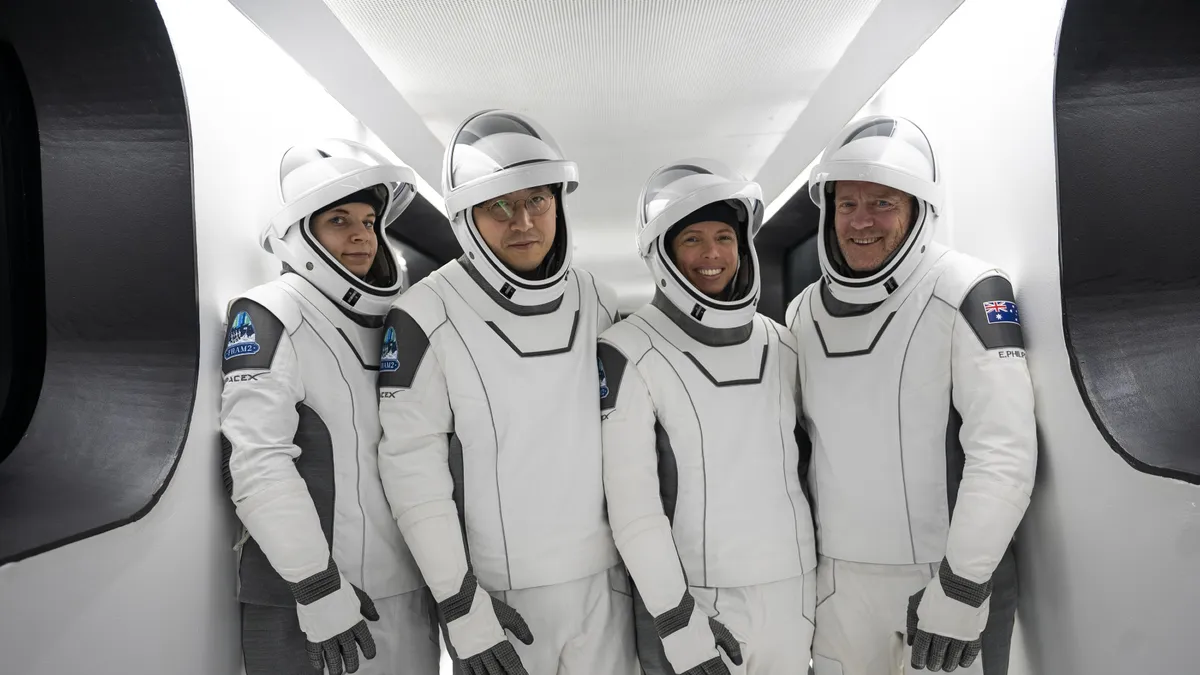
SpaceX astronauts aboard the Fram2 mission generated the first diagnostic X-ray images in space, marking a watershed moment for medical practice beyond Earth's atmosphere. The achievement proves that radiological imaging, a cornerstone of terrestrial medicine, now functions reliably in the microgravity environment of low Earth orbit.
Commander Chun Wang, pilot Rabea Rogge, vehicle commander Jannicke Mikkelsen, and medical officer Eric Philips executed the experiment during their commercial spaceflight. The team's successful deployment of X-ray equipment represents a fundamental expansion of in-orbit medical capability. Until now, astronauts facing medical emergencies lacked diagnostic imaging tools that could reveal bone fractures, detect internal injuries, or identify organ complications.
The Fram2 mission, launched by SpaceX, carries significant implications for long-duration spaceflight and future deep-space exploration. As NASA and commercial partners plan extended stays on the Moon through the Artemis program and eventual crewed missions to Mars, medical infrastructure becomes increasingly critical. Astronauts traveling beyond low Earth orbit will face multi-month or multi-year journeys without rapid evacuation options. Ground-based telemedicine cannot substitute for the ability to diagnose injuries and illnesses in real time.
X-ray imaging in microgravity presents unique technical challenges. Equipment must function without gravity's influence on fluid systems and components. Radiation shielding becomes more complex in spacecraft where mass limitations constrain design decisions. The Fram2 team demonstrated that these obstacles prove surmountable through proper engineering and testing.
The diagnostic capability adds to the growing portfolio of medical services that crews can self-administer in space. Astronauts already conduct routine health monitoring, blood draws, and physical examinations aboard the International Space Station. Ultrasound equipment operates in orbit, providing real-time imaging of internal structures. X-radiography extends this toolkit significantly, enabling detection of conditions that ultrasound alone cannot resolve.
The Fram2 mission illustrates the maturing commercial spaceflight industry's contributions to human spaceflight development. Private companies now field crewed vehicles capable of supporting specialized payloads and experiments. SpaceX's Crew Dragon vehicle, which carried the Fram2 astronauts, has become integral to NASA's Commercial Crew Program and increasingly supports private missions with specific scientific or medical objectives.
Medical officer Eric Philips occupied a critical role in this mission architecture. Dedicated medical specialists aboard crewed spacecraft represent a shift from earlier NASA practice, where commanders and flight surgeons managed health needs alongside primary duties. As missions extend in duration and venture farther from Earth, crew composition increasingly includes personnel with specialized medical training.
The X-ray images acquired during Fram2 will undergo detailed analysis to assess image quality, radiation dose patterns, and diagnostic accuracy compared to ground-based radiography. Researchers will evaluate whether the equipment performs within specifications necessary for clinical decision-making. This data directly informs development of medical systems for Lunar Gateway stations and Mars transit vehicles.
Future crewed missions will build on this foundation. The ability to diagnose fractures, pneumothorax, and other conditions requiring imaging expands the range of medical scenarios astronauts can manage independently. Combined with telemedicine consultation to mission control and eventual autonomous decision-making protocols, X-ray capability transforms space medicine from emergency stabilization to comprehensive diagnosis and treatment planning.