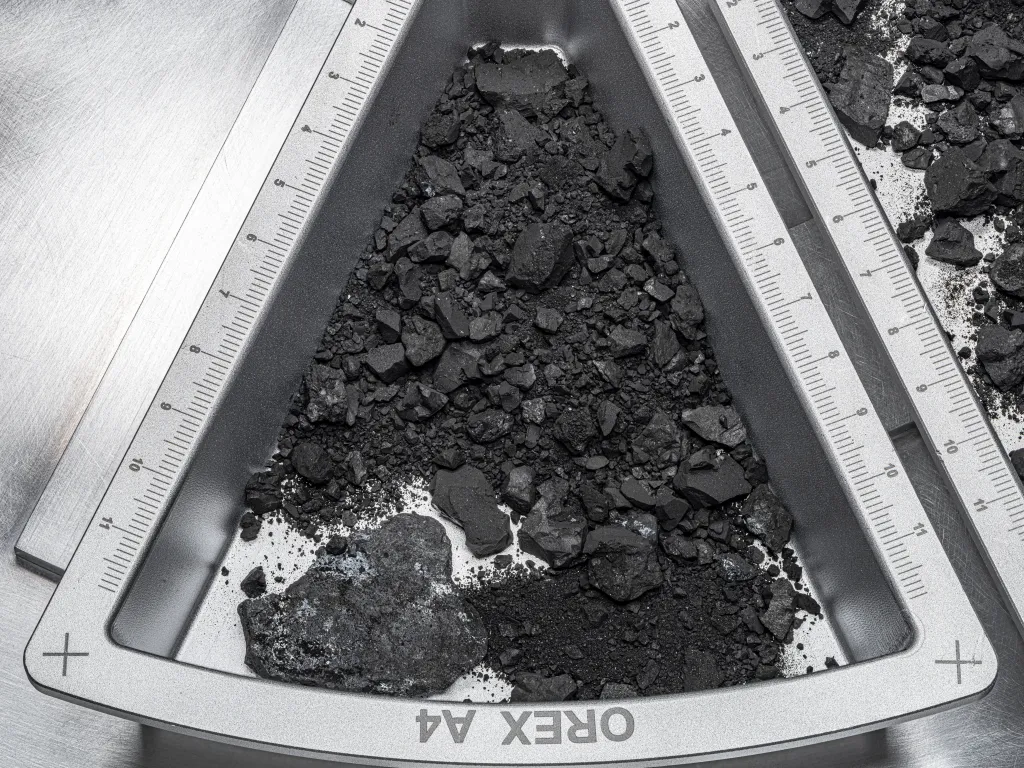
NASA's OSIRIS-REx mission returned samples from asteroid Bennu to Earth, offering researchers a rare opportunity to study pristine material from the early solar system. However, analysis of these samples has revealed an unexpected puzzle. Researchers at ETH Zurich and Lawrence Livermore National Laboratory published findings in Science Advances showing that Bennu's composition suggests it originated in two different regions of the solar system.
The samples indicate that Bennu contains material characteristic of both inner and outer solar system formation environments. This mixing appears inconsistent with current models of how asteroids formed and evolved. According to the research team, Jupiter's gravitational influence may explain this anomaly.
Jupiter's massive gravity well could have disrupted Bennu's original trajectory or caused significant gravitational redistribution of material during the early solar system's formation. This scenario would account for why the asteroid contains compositions that typically form in distinct, separate regions of the solar system.
The finding raises important questions about asteroid formation and migration patterns in the early solar system. Standard models suggest asteroids should retain compositions reflecting their birth location. Bennu's mixed composition challenges this assumption and suggests more complex dynamical processes shaped the solar system's architecture than previously understood.
Sample return missions like OSIRIS-REx have successfully preserved pristine material that survives Earth's entry without being damaged by atmospheric friction. This allows scientists to study undamaged samples unavailable from meteorites. Yet as researchers analyze these samples in detail, they continue discovering unexpected features that require new explanations.
The research demonstrates how returning actual asteroid material enables scientists to test existing theories against real data. Bennu's identity crisis points toward the need for refined models explaining how planets influenced early asteroid populations and their eventual configurations.