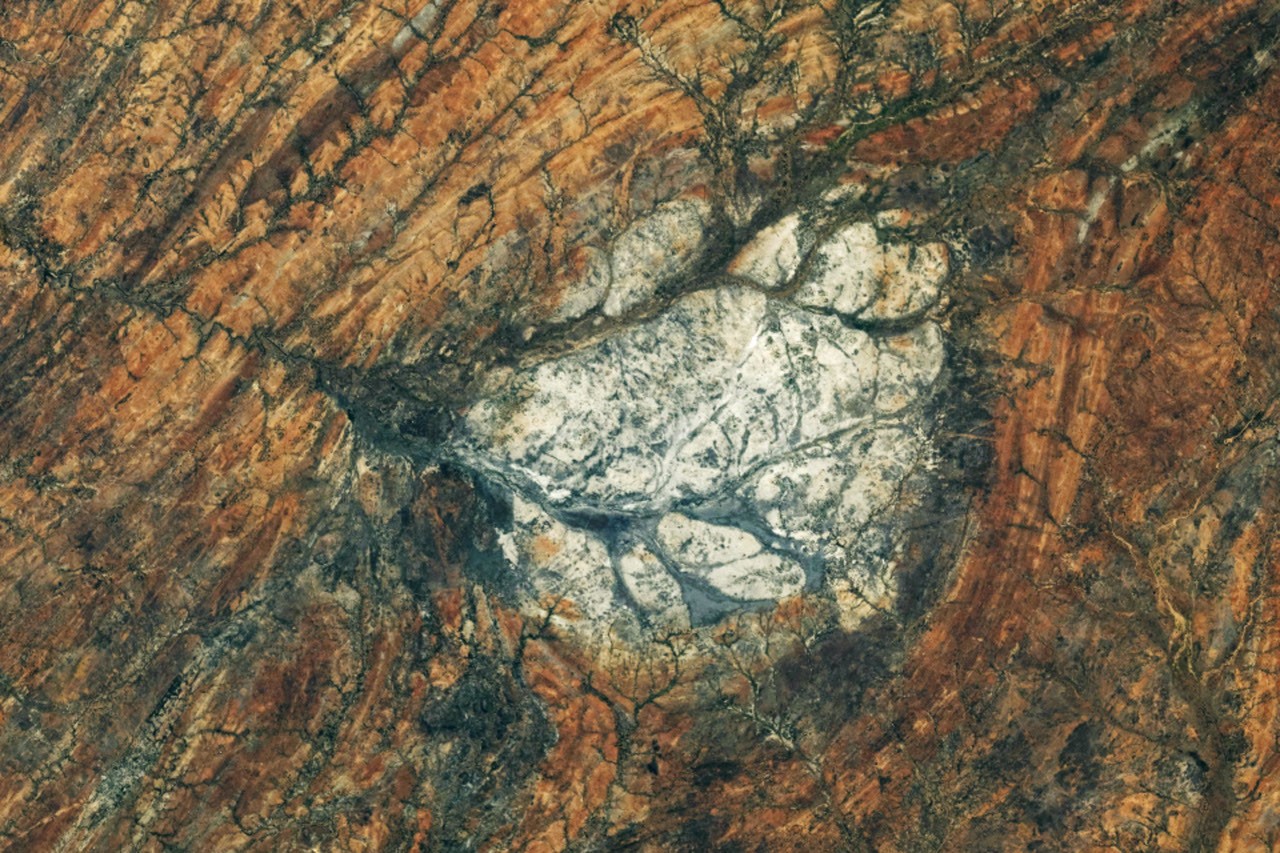
NASA researchers have identified a large anorthosite formation in southern Madagascar, a rock type that dominates the lunar surface. The bright lens of anorthosite sits embedded within sheared rocks in the region.
Anorthosite, a light-colored igneous rock composed primarily of plagioclase feldspar, covers much of the moon's highlands. Finding this material on Earth provides scientists with an accessible analog for studying lunar geology without traveling to space.
The Madagascar discovery offers geologists a terrestrial reference point for understanding anorthosite's properties and formation processes. Examining the deposit on Earth allows researchers to gather detailed samples and conduct in-depth analysis that informs lunar science.
The presence of anorthosite in Madagascar's south adds to the continent's geological significance. The rock's occurrence within sheared geological formations suggests complex tectonic and metamorphic processes shaped the region over time.
NASA highlighted the finding as an example of how Earth-based geological studies support space exploration science. Lunar anorthosite formations represent some of the moon's oldest crustal material, dating back billions of years. Understanding these rocks helps scientists reconstruct the moon's early history and internal evolution.
The bright anorthosite lens in Madagascar demonstrates how planetary geology connects across worlds. Studying similar rock types in different settings reveals universal principles governing planetary formation and evolution. Earth exposures of materials found on other worlds serve as natural laboratories for space scientists seeking to unlock the secrets of distant landscapes.