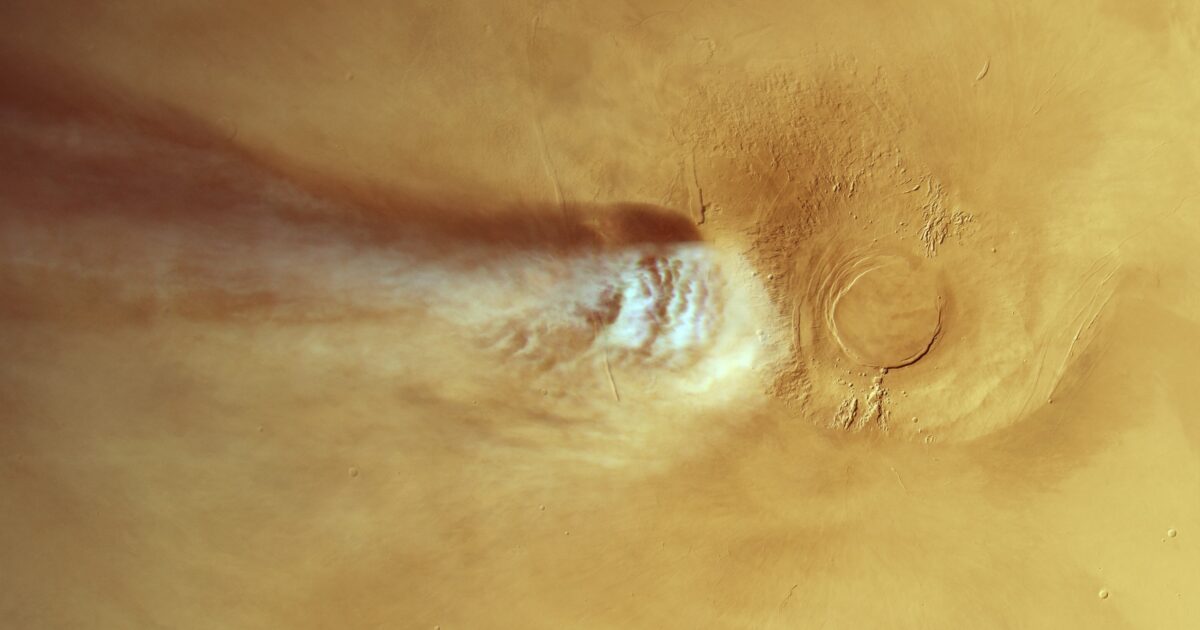
NASA's Perseverance rover has detected a cloud formation near Arsia Mons, a massive volcano on Mars. The rover observed the phenomenon as part of ongoing atmospheric monitoring on the Red Planet.
Separately, a NASA spacecraft underwent thermal testing in a furnace as part of preparation for its mission. Such baking procedures test spacecraft components and systems under extreme temperature conditions to ensure they can withstand the harsh environments they will encounter in space.
Research has also indicated that a planet may be forming around a dying star. This discovery adds to the growing body of evidence that planetary formation can occur in unexpected stellar environments, including around stars nearing the end of their life cycles.
These three developments represent different aspects of current space exploration and astronomical research. The Mars observations from Perseverance contribute to understanding Martian atmospheric behavior and geological features. The spacecraft testing ensures NASA equipment meets rigorous safety and performance standards before deployment. The potential planet formation around an aging star expands scientific understanding of how planets originate across the universe.
Each finding emerged from active NASA missions and research programs dedicated to exploring our solar system and beyond, according to The Planetary Society.