Mars appeared near the Beehive cluster beneath an auroral curtain in the night sky above Lansjärv, Sweden, according to NASA's Astronomy Picture of the Day for October 14, 2026. The image captures the planet positioned below the colorful aurora and above a forested horizon. The Beehive cluster, also known as Messier 44, is an open star cluster visible to the naked eye in the constellation Cancer. The composition places Mars, Earth's neighboring planet, in alignment with this stellar grouping beneath the dancing lights of the aurora borealis. NASA documented this scene as a notable celestial arrangement occurring in the Swedish sky during this date. The photograph combines three prominent astronomical subjects in a single frame: the aurora borealis spanning across the upper portion of the sky, Mars positioned in the middle distance, and the Beehive cluster of stars accompanying the planet. The forested landscape provides an Earthbound anchor to the cosmic display. Such alignments of bright planets with recognized star clusters offer observers opportunities to locate both objects in the night sky relative to familiar landmarks and geographical features.
News
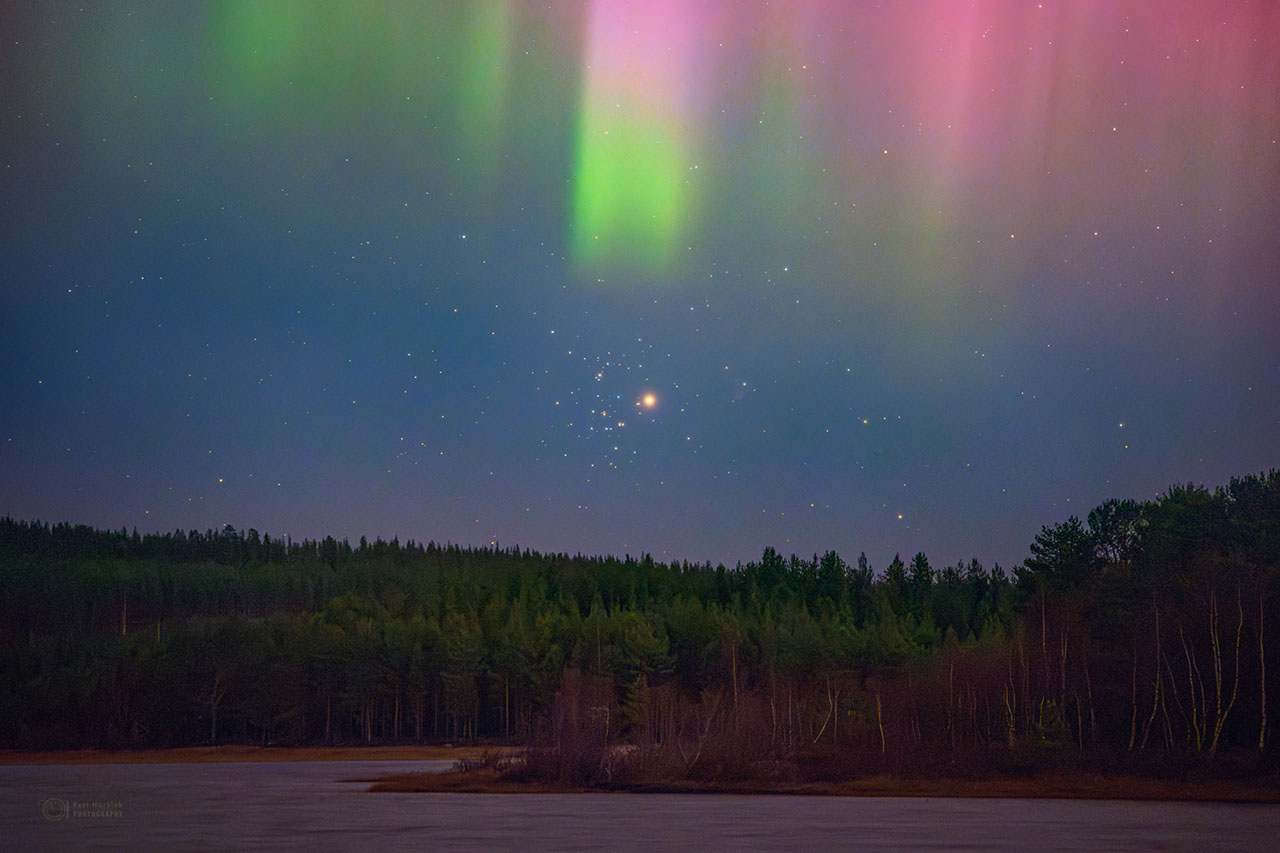
APOD: 2026 October 14 – Mars and the Beehive Under an Aurora
Key facts
- Mars appeared near the Beehive cluster beneath an auroral curtain in the night sky above Lansjärv, Sweden, according to NASA's Astronomy Picture of the Day for October 14, 2026.
- The image captures the planet positioned below the colorful aurora and above a forested horizon.
- The Beehive cluster, also known as Messier 44, is an open star cluster visible to the naked eye in the constellation Cancer.
- The composition places Mars, Earth's neighboring planet, in alignment with this stellar grouping beneath the dancing lights of the aurora borealis.
Why it matters
This astronomy story is part of SpaceWireDaily's daily monitoring of sources, companies, institutions, and trends shaping nasa, spacex & astronomy news.
Source context
This article summarizes and contextualizes reporting from NASA. The visible original source link is retained so readers can review the primary report directly.