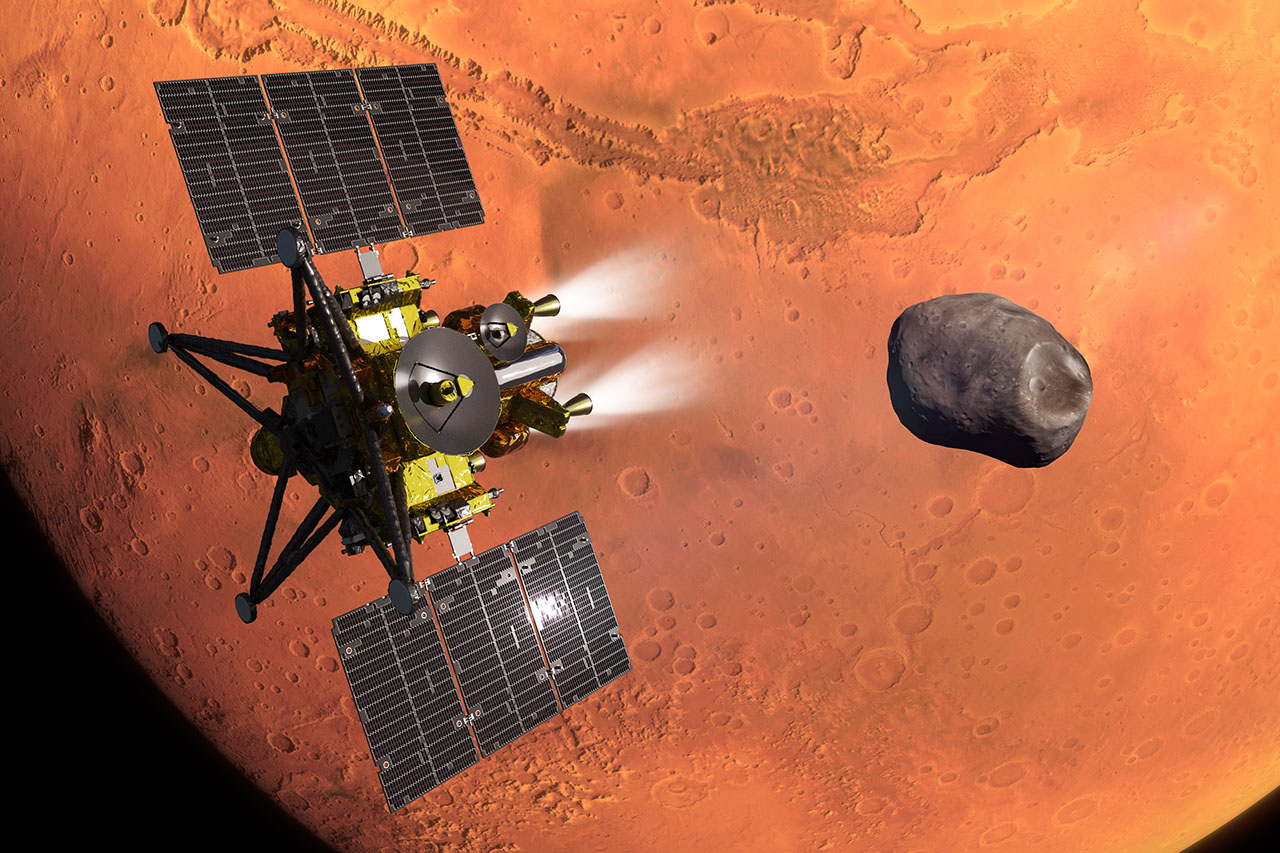
NASA will contribute to Japan Aerospace Exploration Agency's Martian Moons eXploration (MMX) mission, which seeks to characterize and determine the origin of Mars' two moons, Phobos and Deimos. The collaboration builds on NASA's extensive history of Mars exploration.
The MMX mission represents a joint effort between the two space agencies to advance understanding of the Martian moon system. By studying Phobos and Deimos, the mission aims to unlock scientific mysteries about these celestial bodies and their relationship to Mars.
NASA's involvement in the project contributes to broader efforts to explore and understand the Mars system. The agency's participation leverages decades of experience conducting robotic missions to the Red Planet and analyzing Martian geology and atmospheric conditions.
The mission plan includes collecting and delivering samples, which scientists will examine to better understand the composition and history of Mars' moons. This sample-return component distinguishes MMX from previous orbital studies of Phobos and Deimos.
Both moons remain poorly understood compared to Earth's Moon or Mars itself. Phobos, the larger and closer moon, orbits Mars roughly every eight hours. Deimos, smaller and more distant, takes about 30 hours to complete an orbit. Their origins remain debated among planetary scientists, with some proposing they formed around Mars while others suggest they were captured asteroids.
The partnership between NASA and JAXA reflects the international nature of modern space exploration. Japanese space missions often include American instruments, expertise, or direct participation, while NASA frequently collaborates with international partners on ambitious scientific objectives.
By combining resources and knowledge, the two agencies position themselves to achieve scientific goals that would be more difficult or expensive for either to pursue independently. The MMX mission demonstrates how cooperative agreements advance planetary science and expand humanity's understanding of our solar system.