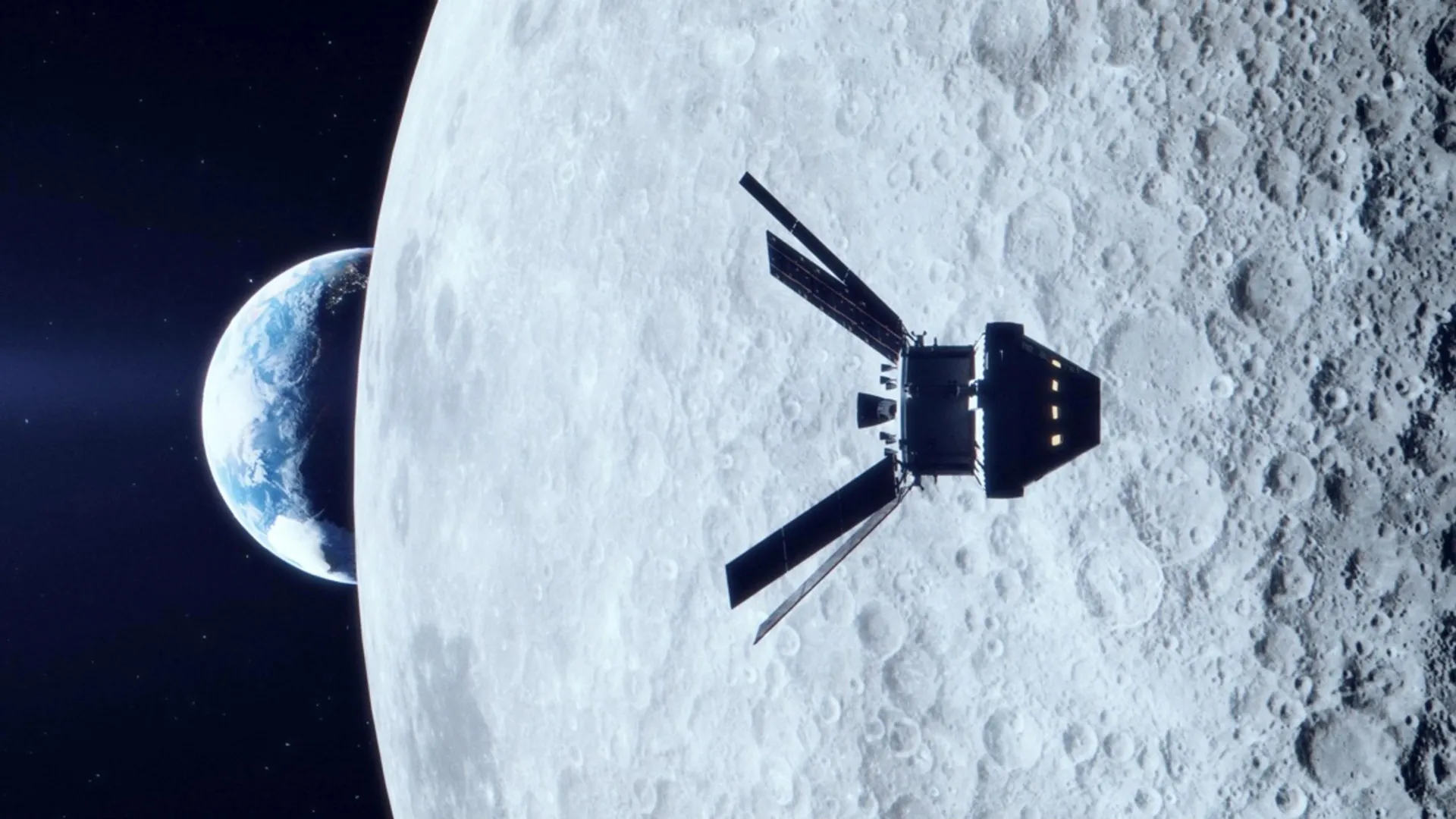
NASA's Artemis I mission has delivered a critical gift to future lunar exploration: detailed radiation measurements that expose both the promise and the gaps in our current protective capabilities. Using experimental lithium fluoride crystal detectors developed by scientists at the Institute of Nuclear Physics of the Polish Academy of Sciences (IFJ PAN) in Cracow, researchers aboard the uncrewed Orion spacecraft obtained preliminary measurements revealing unexpected differences in radiation exposure between low Earth orbit and the lunar environment. Published in the journal Radiation Measurements, these findings should serve as a wake-up call that we need to move faster in deploying practical radiation monitoring tools for astronauts heading to the Moon.
The technical achievement here is remarkable. Prof. Pawel Bilski and his team created detectors so sensitive they can identify individual particle tracks through fluorescence microscopy, eliminating the chemical etching required by older passive detectors. When charged particles pass through the lithium fluoride crystals, they create color centers that glow red under blue light illumination, revealing the paths of incoming radiation. The researchers supplied several dozen of these experimental detectors and nearly 600 thermoluminescent crystal detectors aboard Artemis I as part of the MARE (Matroshka AstroRad Radiation Experiment). After developing sophisticated software to remove background interference, their results differed by no more than 15 percent from conventional detectors while also recording particle tracks that older devices could not detect.
What makes these findings particularly valuable is how they illuminate the radiation environment astronauts will actually encounter near the Moon. Unlike low Earth orbit, where low-energy protons trapped in Earth's Van Allen radiation belts create uneven radiation dose distributions, conditions near the Moon expose astronauts to high-energy galactic particles that penetrate uniformly through the body. Prof. Bilski emphasizes the counterintuitive aspect: although total radiation doses near the Moon are higher than in Earth orbit due to galactic radiation, the difference is smaller than intuition might suggest because the substantial contribution from Van Allen belt protons simply disappears.
The most compelling aspect of this research is the practical potential of these detectors. Measuring just a few millimeters and manufactured using the Czochralski crystal-growing method that IFJ PAN has refined over a decade, these devices are compact enough to be worn comfortably by astronauts during space missions. This represents a genuine breakthrough for real-time radiation monitoring during lunar exploration. However, breakthrough technology sitting in research papers does astronauts no good. NASA and its international partners should immediately prioritize integrating these wearable lithium fluoride detectors into operational lunar mission protocols, moving beyond experimental status to become standard equipment for every crewed Artemis mission.
The Artemis I data has given us the knowledge base we need. Now we must act with urgency to translate that knowledge into protection for the astronauts who will return humans to the Moon.