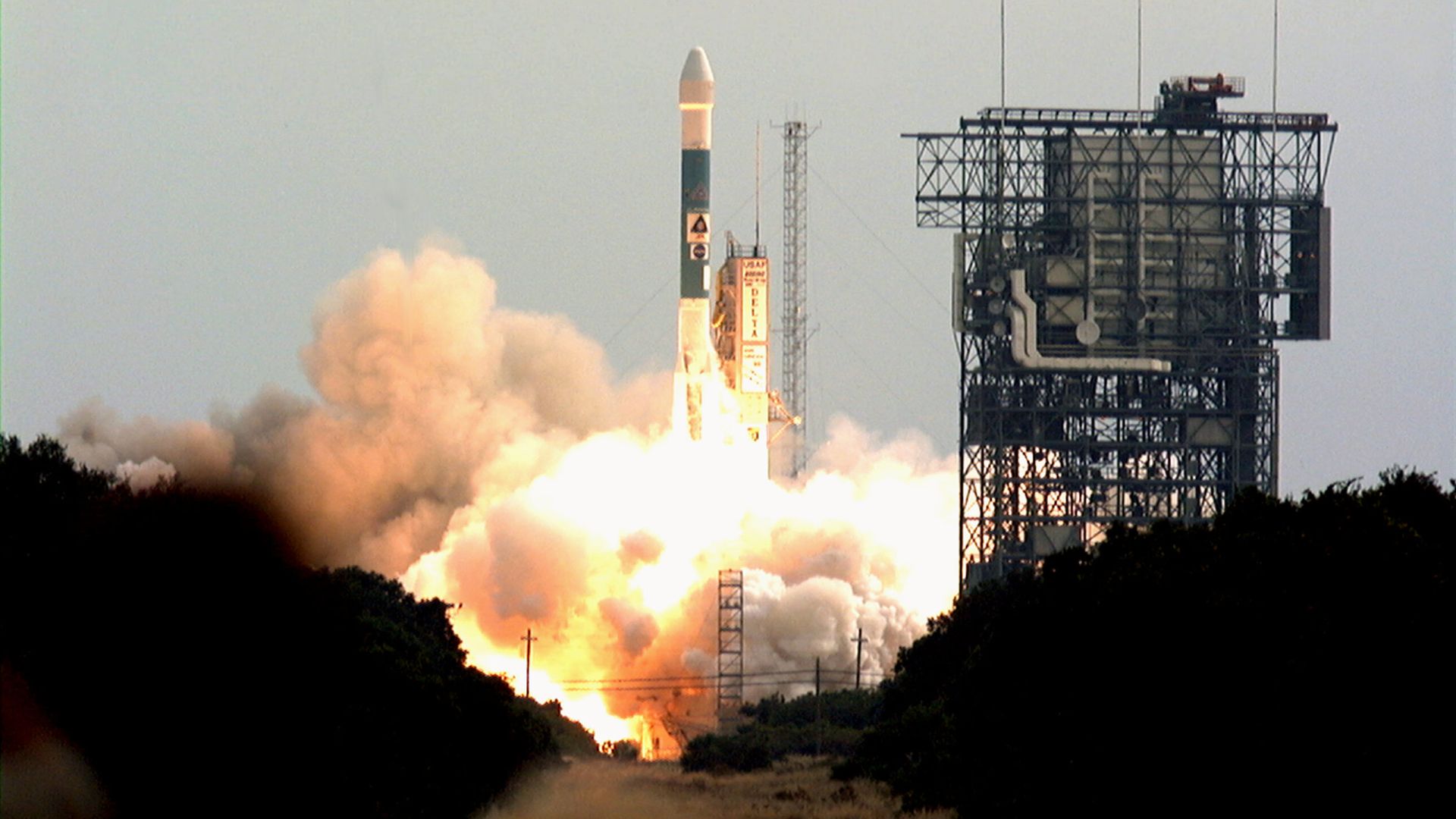
NASA launched Mars Global Surveyor on November 7, 1996, aboard a Delta II rocket. The orbiter was NASA's first Mars mission in nearly 20 years.
Mars Global Surveyor transmitted data from NASA's Mars rovers Sojourner, Spirit, and Opportunity back to Earth while conducting its own science. The spacecraft discovered surface channels on Mars that appeared formed by running water. It observed the south pole and detected signs of possible climate change. The orbiter identified hematite, a mineral that typically forms in water, on the Martian surface. Spirit and Opportunity rovers later found hematite near their landing sites.
The mission sent back more than 240,000 images during nine active years. A space maneuver accidentally exposed one of its batteries to the sun, causing the spacecraft to lose power. Mars Global Surveyor fell silent in November 2006.
According to NASA, the mission "overhauled scientists' understanding of Mars by studying the entire Martian surface, atmosphere and interior." Major findings included evidence that water flows on Mars in short bursts down hillside gullies and the identification of water-related mineral deposits that helped determine landing sites for subsequent rovers.