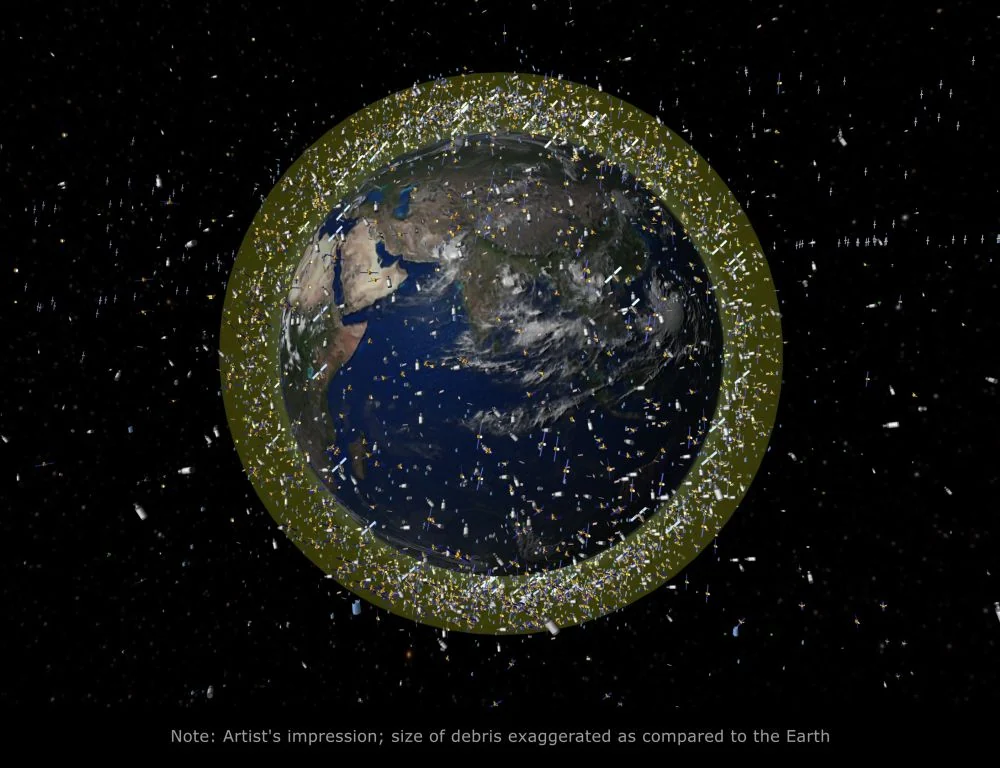
Low-Earth Orbit hosts nearly 20,000 satellites, with over 3,500 that are non-functional and unable to broadcast their positions. A collision between satellites risks creating debris clouds that could trigger cascading collisions, a phenomenon known as Kessler syndrome. These zombie satellites could be repaired through autonomous servicing missions, but custom docking solutions cannot scale to thousands of targets.
Researchers at the University of Illinois Urbana-Champaign have developed CORTEX, an autonomous framework for close-range rendezvous and proximity operations published in Acta Astronautica. The system, led by aerospace engineering faculty member Minduli Wijayatunga, uses convex optimization to design and execute satellite docking trajectories without ground control input.
CORTEX addresses the time delays inherent in commanding spacecraft from Earth and the constraint that satellites are best maneuvered during sunlit periods. The framework autonomously tracks uncooperative satellites, makes go-or-no-go decisions, and adjusts approach plans if thrusters fail or orbits shift unexpectedly. Rather than aborting failed approaches, CORTEX recalculates trajectories to attempt docking again, unless the servicer violates keep-out zones around sensitive equipment on the target satellite.
The system prioritizes minimal fuel consumption, keeps fly-around and approach phases in sunlight, avoids keep-out spheres around target satellites, and prevents thruster plumes from damaging the client spacecraft. Testing introduced orbital perturbations and thruster failures. "In all cases, the framework either recovered successfully while respecting safety constraints or executed a safe retreat before entering unsafe regions," the authors write.
The number of tracked objects in Low-Earth Orbit grew from 13,700 in 2019 to over 24,000 in 2025, outpacing the capacity of custom rendezvous solutions developed for individual missions like those from Northrop Grumman, China, and Astroscale.