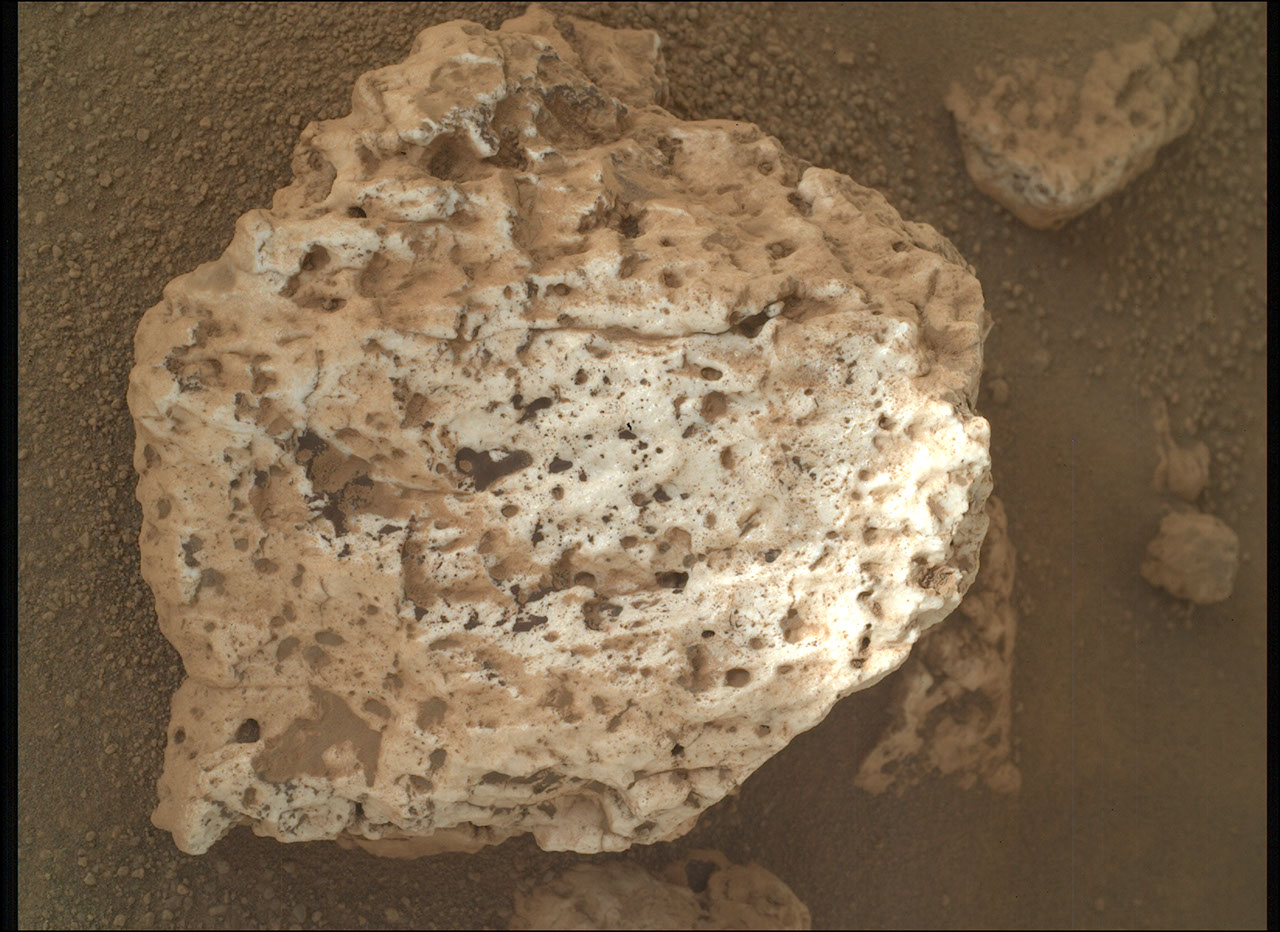
NASA's Perseverance rover has detected corundum, a mineral that contains chromium, on Mars using its SuperCam instrument. The detection occurred on Sol 2023, October 29, 2026, when SuperCam's laser targeted a light-toned rock called "Nhlanguleni" in the South Idubi region near Jezero crater.
SuperCam identified the corundum through time-resolved luminescence spectroscopy. When the laser struck the rock, chromium atoms in the corundum mineral emitted narrow luminescence peaks at 692.7 and 694.1 nanometers in the red portion of the spectrum. This signature matches that of ruby, the gemstone form of chromium-containing corundum.
Roger C. Wiens, SuperCam Principal Investigator at Purdue University, explained the finding's significance. Corundum is a metamorphic and pegmatitic mineral not expected on Mars, which lacks plate tectonics. However, large meteor and asteroid impacts create localized metamorphism through long-term heating. Because Perseverance operates in ancient terrain near Jezero crater's rim, impact-related metamorphic minerals are plausible.
A team led by Ann Ollila published results of this technique in Geophysical Research Letters earlier in 2026. Perseverance now uses time-resolved luminescence observations frequently on light-toned rocks to search for additional evidence of ancient impact effects.