Dr. Slava Turyshev of NASA's Jet Propulsion Laboratory has published a paper on arXiv outlining three strategies to control orbital debris at a time when space trash poses growing risks to active satellites.
SpaceX's Starlink constellation performed 144,404 collision avoidance maneuvers between December 2024 and May 2025, according to FCC filings. On average, each Starlink satellite executes one evasive maneuver per week.
Starlinks orbit at 500-600 kilometers altitude alongside other megaconstellations like Amazon's Kuiper and China's Qianfan. At this height, enough atmospheric drag exists to burn up dead satellites and debris within years. Higher altitudes present the real danger. Dead rocket stages at around 850 kilometers lack control systems and remain in orbit for decades or centuries. European Space Agency data cited in the paper attributes about 96 percent of long-term collision risk to these uncontrolled objects.
Turyshev identifies three control mechanisms. First, regulators must mandate rapid deorbit. The FCC recently required satellites to deorbit within five years of retirement instead of twenty-five. According to the paper, improving disposal reliability from 90 to 99 percent while reducing afterlife to five years decreases environmental hazard by a factor of 50.
Second, better tracking through Space Situational Awareness systems will shrink uncertainty zones around potential collisions. NOAA's Traffic Coordination System for Space is expanding its pilot program to more commercial operators this year.
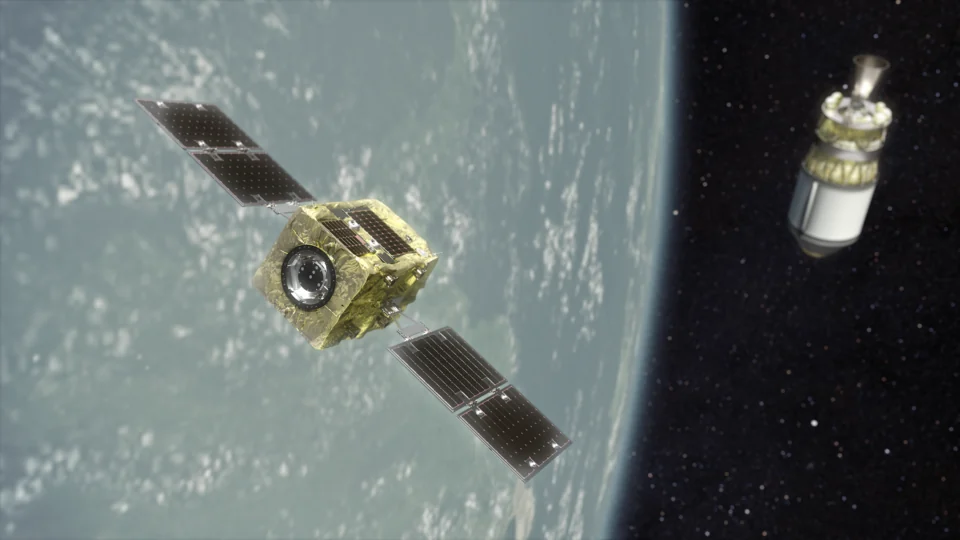
Third, Turyshev proposes Just-in-Time Collision Avoidance. Rather than deorbiting all dead rocket stages, ground-based lasers or shepherd satellites could nudge them meters out of the way before impact, offering a cheaper alternative.
Turyshev argues economics and property rights must shift. The 1967 Outer Space Treaty prevents private companies from deorbiting foreign government equipment. He proposes contracts paying for verified risk reductions, with governments financing "disposal bonds" that reward companies like Astroscale for removing the most dangerous debris first.