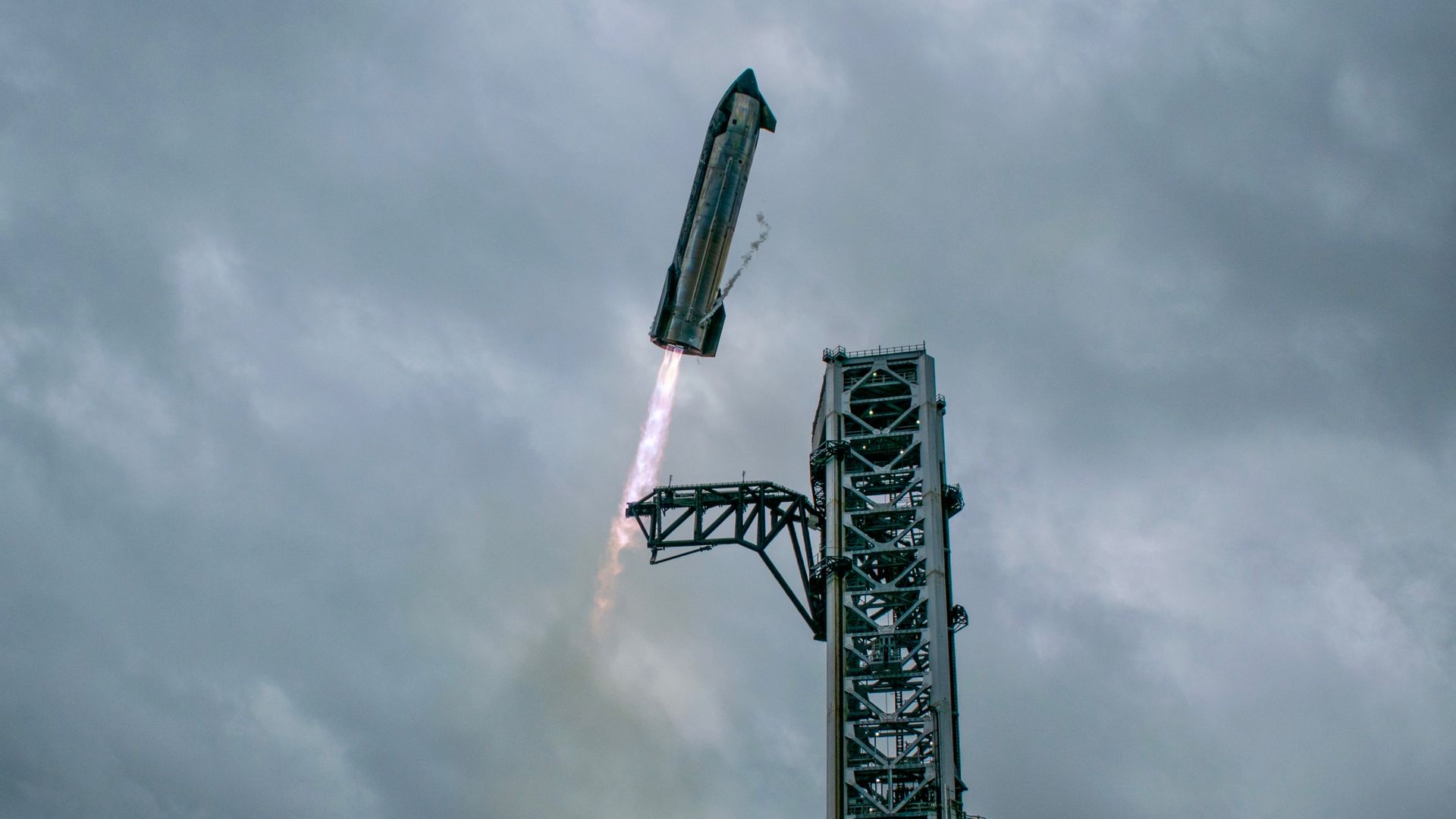
SpaceX recovered the upper stage of its Starship rocket for the first time on November 14, capturing it with the launch tower's mechanical arms in Texas. The achievement marks a major step toward the company's goal of full rocket reusability.
Elon Musk announced plans for a larger next-generation model, Starship V4, on November 15. The V4 Ship will stretch approximately 70 meters (230 feet) long, a 40 percent increase in length that allows over 60 percent more propellant capacity. Engine count will rise to nine, adding three more Raptor-Vacuum engines with higher thrust than current V3 engines.
The current Starship V3, which launched on November 13 for its 15th test flight, stands 408 feet tall when fully stacked with its booster and upper stage. The V3 Ship measures 171 feet tall and carries six Raptor V3 engines.
The V4 Ship will reach approximately the same height as a fully stacked Falcon 9 rocket but with much greater width at 30 feet across, compared to Falcon 9's 5.2-meter payload fairing. Musk stated the full V4 stack will reach roughly 150 meters in height, nearly 500 feet tall.
Musk posted a progression chart showing the planned evolution from V2 to V4 in August 2025, originally targeting a 2027 debut for V4. He stressed those earlier specifications are outdated.
During Flight 15, SpaceX attempted to catch both the Super Heavy booster and Ship upper stage at the launch tower. The Super Heavy experienced a low-fuel alarm and splashed down in the Gulf of Mexico instead. The Ship catch succeeded and proved unprecedented, as the upper stage returns from orbit at higher speeds and temperatures. SpaceX had not previously attempted the maneuver.
"That was the missing link," SpaceX's Dan Huot said. "We caught a Starship, and now everything changes."