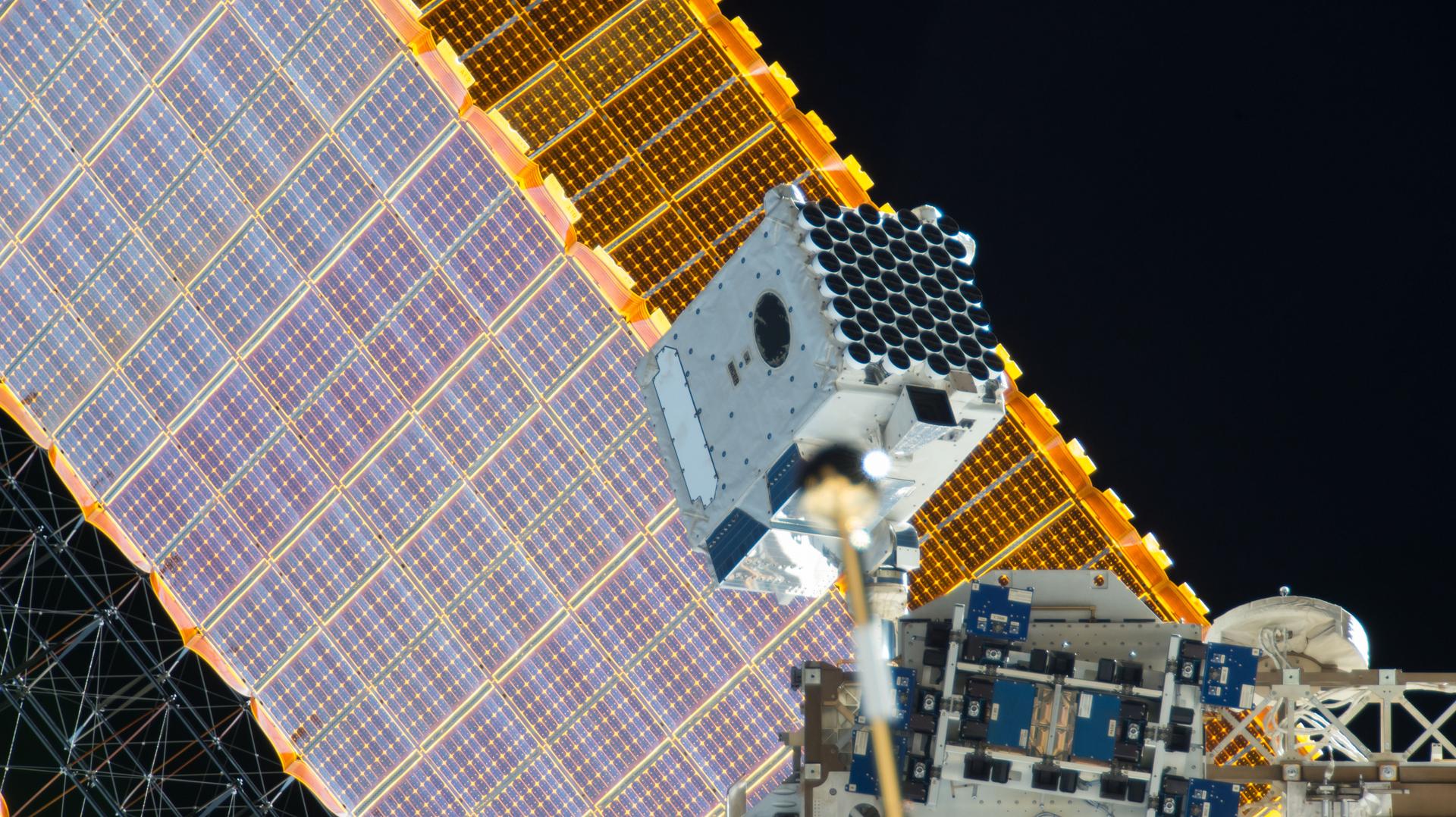
NASA's NICER X-ray telescope on the International Space Station ended science operations in November 2026 after operating for six and a half years beyond its planned 18-month prime mission. The telescope ceased collecting data following an internal motor failure in June 2025 that prevented it from swiveling side-to-side to track cosmic objects.
NICER launched in 2017 and made groundbreaking measurements of neutron stars, the densest matter in the universe that scientists can measure. The mission revolutionized understanding of black holes, active galaxies, and other cosmic phenomena. NICER also successfully demonstrated pulsar-based spacecraft navigation in X-rays, a technique that could support travel to Mars and beyond.
The telescope had encountered a light leak in May 2023 when unwanted sunlight entered the instrument through damage to its thermal shields. During a spacewalk in January 2025, NASA astronaut Nick Hague installed nine patches to cover the largest damaged areas. The NICER team then reconfigured the telescope's detectors to ignore sunlight-generated resets, allowing the mission to recover observations during more than 70 percent of station daytime operations by March 2025.
NASA and space station teams are now finalizing NICER's eight-year archive of X-ray observations and planning the telescope's decommissioning and detachment from the station. Technology developed to test NICER before launch has been incorporated into prototype portable CT scanners, materials analysis systems, and other applications.