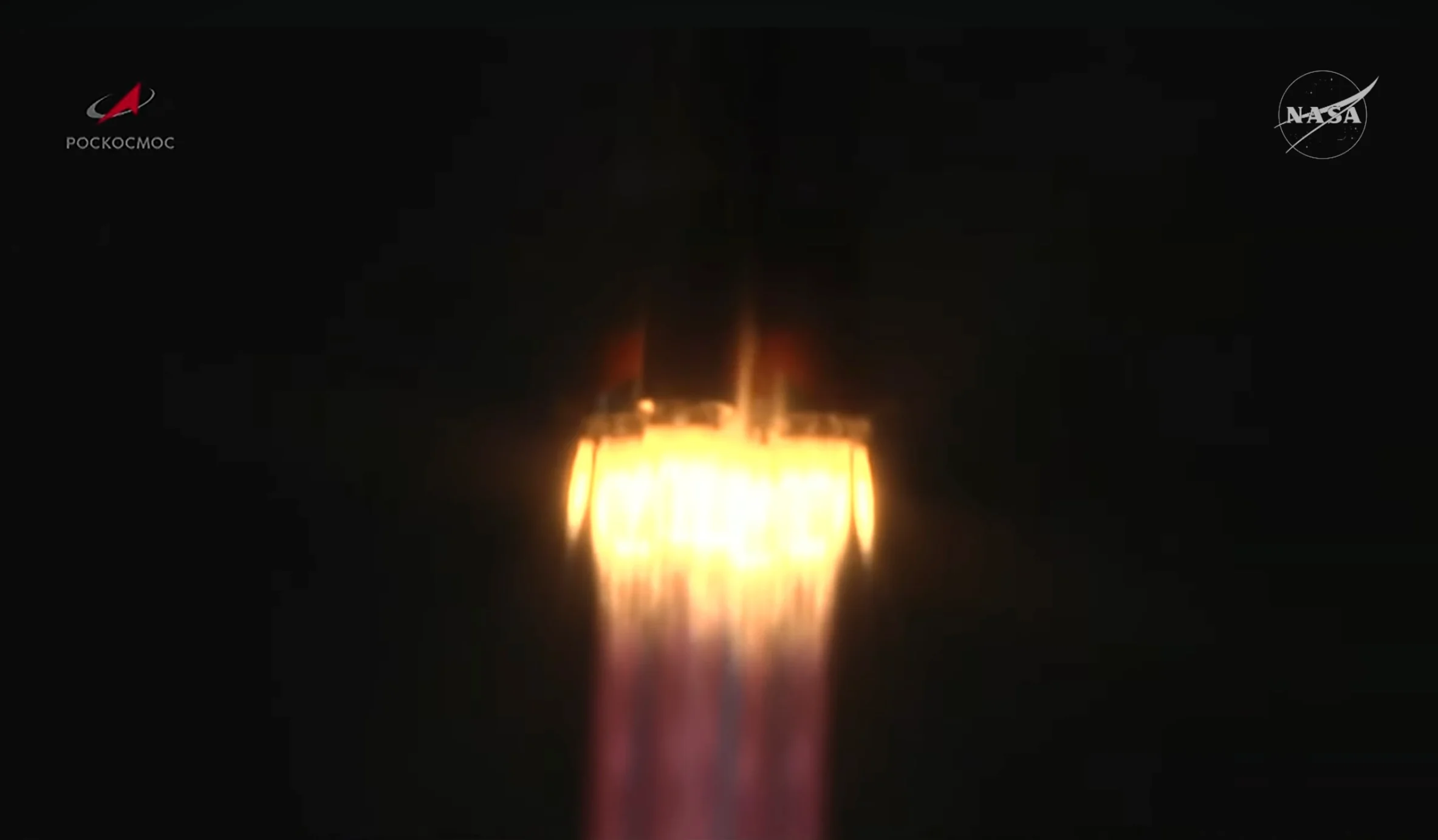
Progress MS-36 launched successfully from Baikonur Cosmodrome on Tuesday, Nov. 24, at 10:17 UTC aboard a Soyuz 2.1b rocket. The cargo spacecraft carries 7,280 kg total mass, including roughly 2,500 kg of supplies: 1,400 kg of dry cargo such as food, clothing, medicine, and scientific equipment including a robot, plus 420 kg of water and life-support supplies, fuel for reboost burns, oxygen, and nitrogen. The spacecraft will dock with the Rassvet module on the Russian segment approximately 48 hours after launch, on Thursday, Nov. 26.
After unloading, Progress MS-36 will move to the Zvezda module. This represents the first Progress mission scheduled to use this new docking procedure, which replaces the previous plan to use the Poisk module.
The docking procedure changed due to the permanent closure of the PrK airlock between Zvezda's hull and docking port. Station partner countries decided in June 2026 to close the airlock because of chronic air leaks and microcracks that developed over several years. Attempts to isolate the leaks failed, and they grew larger in May and June 2026. A NASA risk matrix rated the leaks at the highest level, with a red five-by-five score for both likelihood and consequence. Roscosmos proposed a structural repair involving cutting a bracket, but NASA ordered its astronauts to take shelter in a Crew Dragon if this repair occurred, and the repair was never performed.
Progress MS-36 was the 10th Soyuz 2.1b launch of 2026 and the 109th mission overall for the rocket. The launch came after a months-long delay following a serious incident at the site during the Soyuz MS-28 launch in November 2025. Roscosmos has dramatically reduced its coverage of this mission and other launch campaigns, which the report attributes to recent developments in the war in Ukraine.