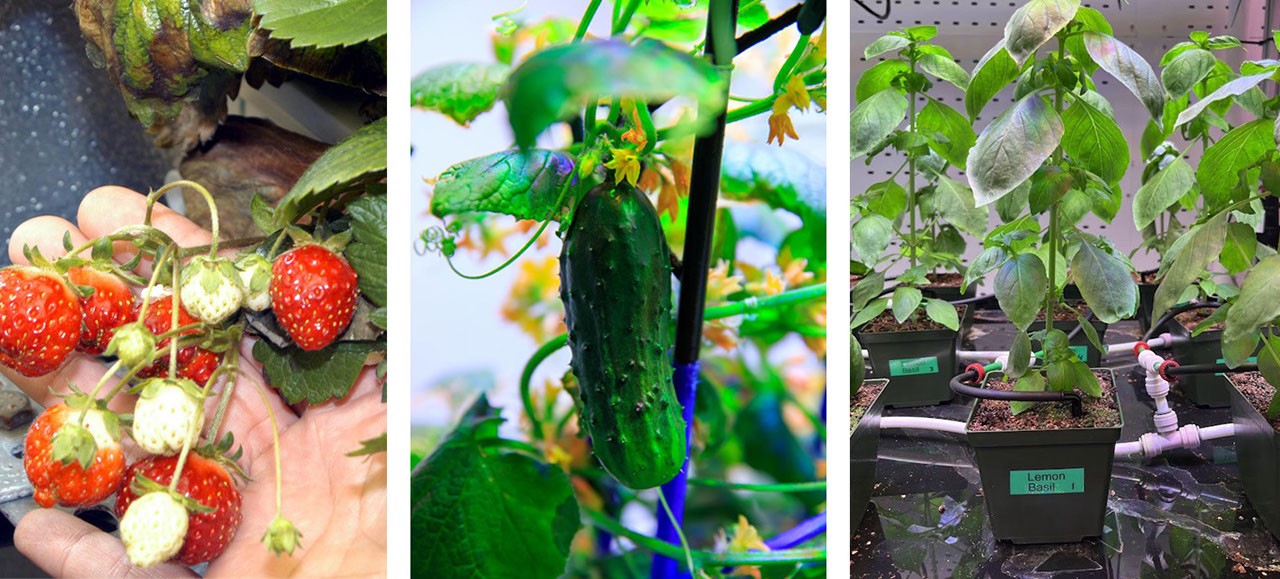
NASA researchers are testing strawberries, cucumbers, and lemon basil as crops for future crewed missions to the Moon and Mars. The crops can absorb carbon dioxide, produce oxygen, and recycle water, capabilities that gain importance as missions travel farther from Earth.
Strawberries rank among the few sweet fruits under consideration. Researchers at NASA's Kennedy Space Center in Florida, working with partners at The Australian Research Council Centre for Excellence in Plants for Space, compared NASA's leading candidate, 'Delizz,' against a wild strawberry. A study published in September in Life Sciences in Space Research found that the wild strawberry produced twice as many buds, flowers, and fruit from seed. However, the wild strawberry grew too many runners that would consume valuable spacecraft room, so Delizz retained its top position.
Cucumbers could be the first crop from the gourd family grown in space. NASA-funded researchers evaluated cucumbers for growth, yield, and nutrition under spaceflight conditions. According to a study published in August in HortScience, the plants produced a steady stream of edible fruit despite showing some signs of enlarged leaves. Crop variety supports astronauts' diets and mental well-being while increasing plant biodiversity for long-duration missions.
Lemon basil, an edible herb with citrus flavor, passed preliminary space crop testing at NASA Kennedy and completed seed sanitization required before spaceflight. The herb will next be assessed for growth in plant pillows aboard the International Space Station.
A new investigation from NASA's Biological and Physical Sciences Division will launch to the International Space Station, where a prototype growth chamber will provide insights for developing crop production systems for future Moon Base habitats and Mars missions.