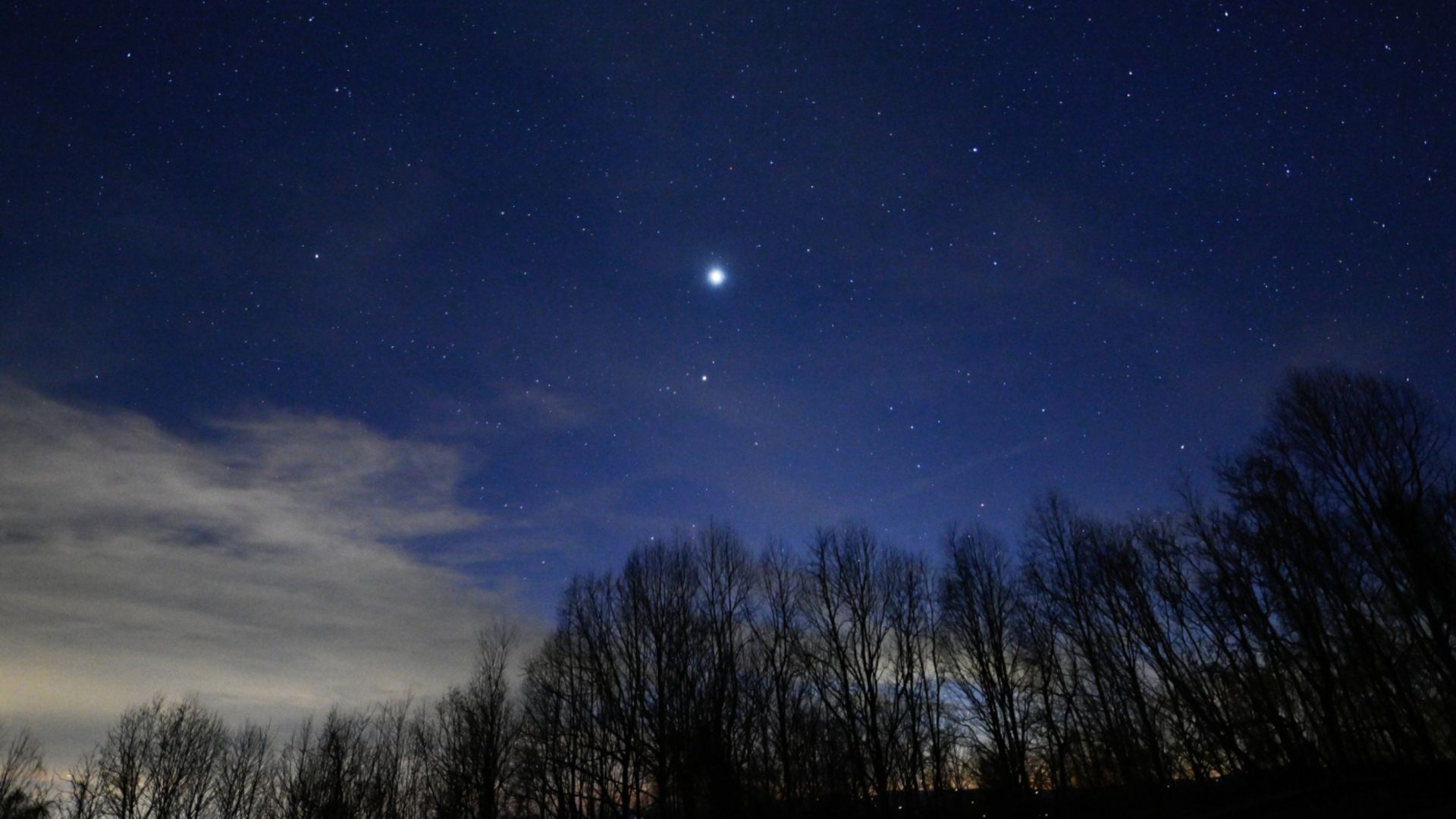
Venus reaches peak brightness during its current morning apparition at 1:37 p.m. EST on November 27, according to In-The-Sky. Stargazers in the U.S. can view the planet in the predawn hours this week as it climbs into the southeastern sky ahead of the rising sun, with Mercury staying close to the horizon below.
The bright star Spica will glow less than five degrees away from Venus before dawn on November 27, roughly the width of three middle fingers held at arm's length against the night sky. Spica is a double star system where two stars orbit one another once every four days, separated by approximately 11 million miles. The system appears as a blue-white star through a 4-inch telescope, though the stars are too close to split visually with amateur equipment.
As an inner planet, Venus never strays far from the horizon compared to outer planets like Jupiter and Mars, which can be visible all night long during opposition. Venus alternates between morning and evening appearances, and its shifting moon-like phases and changing proximity to Earth cause its brightness to wax and wane. Over the coming weeks and months, Venus will appear increasingly illuminated as it moves farther away from Earth in its orbit, while its apparent size through a telescope will gradually decrease.