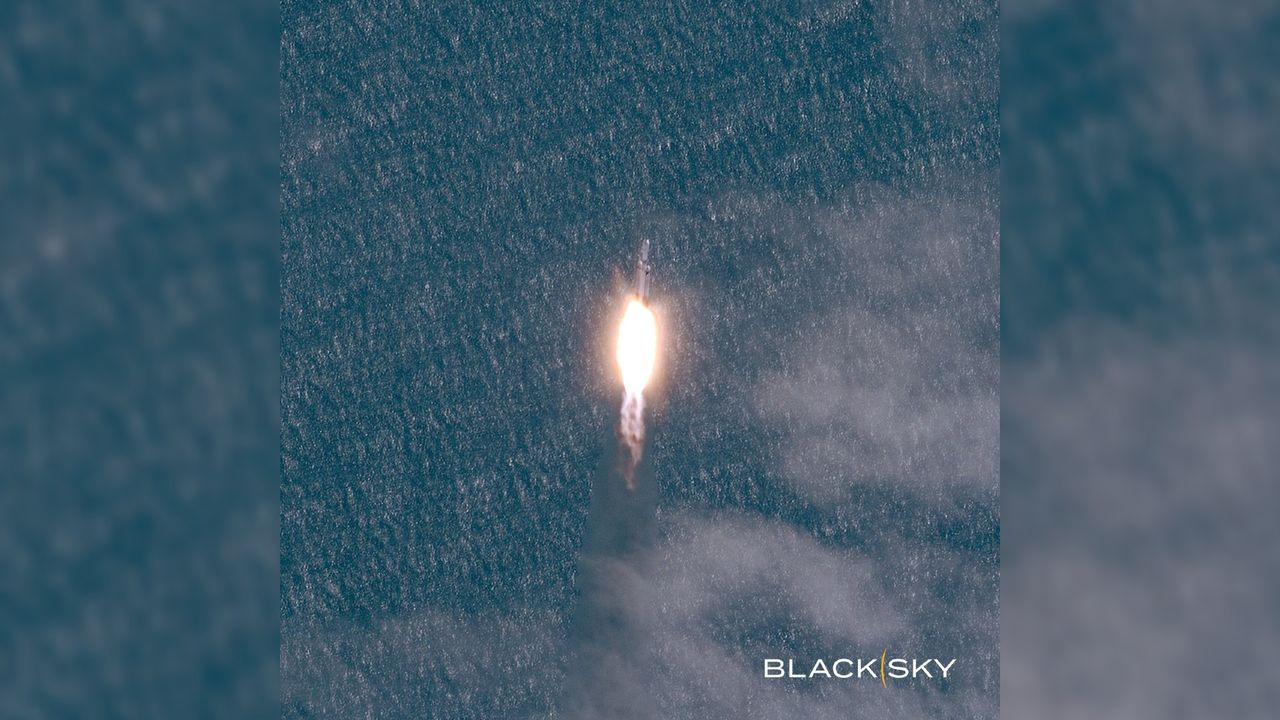
SpaceX launched its Falcon Heavy rocket on Wednesday, April 29, marking the vehicle's first flight in 18 months. A satellite captured imagery of the launch from orbit, documenting the three-core booster system climbing toward space.
The Falcon Heavy remains the world's most powerful operational rocket. Its configuration pairs two recovered first-stage boosters alongside a central core, generating 5.1 million pounds of thrust at liftoff. SpaceX has flown the vehicle nine times since its 2018 debut, though launch cadence slowed considerably through 2023 and early 2024.
The orbital vantage point that captured these images demonstrates how modern Earth-observation satellites track major aerospace events in real time. These platforms, operated by companies like Maxar Technologies and Planet Labs, document infrastructure, environmental change, and now, historic spaceflight moments.
SpaceX has relied on Falcon Heavy primarily for national security payloads and deep-space missions. The rocket's return to the launch manifest signals continued demand for heavy-lift capability beyond what the company's Falcon 9 can deliver. The company has conducted minimal public communication about its Falcon Heavy roadmap, instead focusing development resources on Starship, its fully reusable super-heavy vehicle currently in testing.