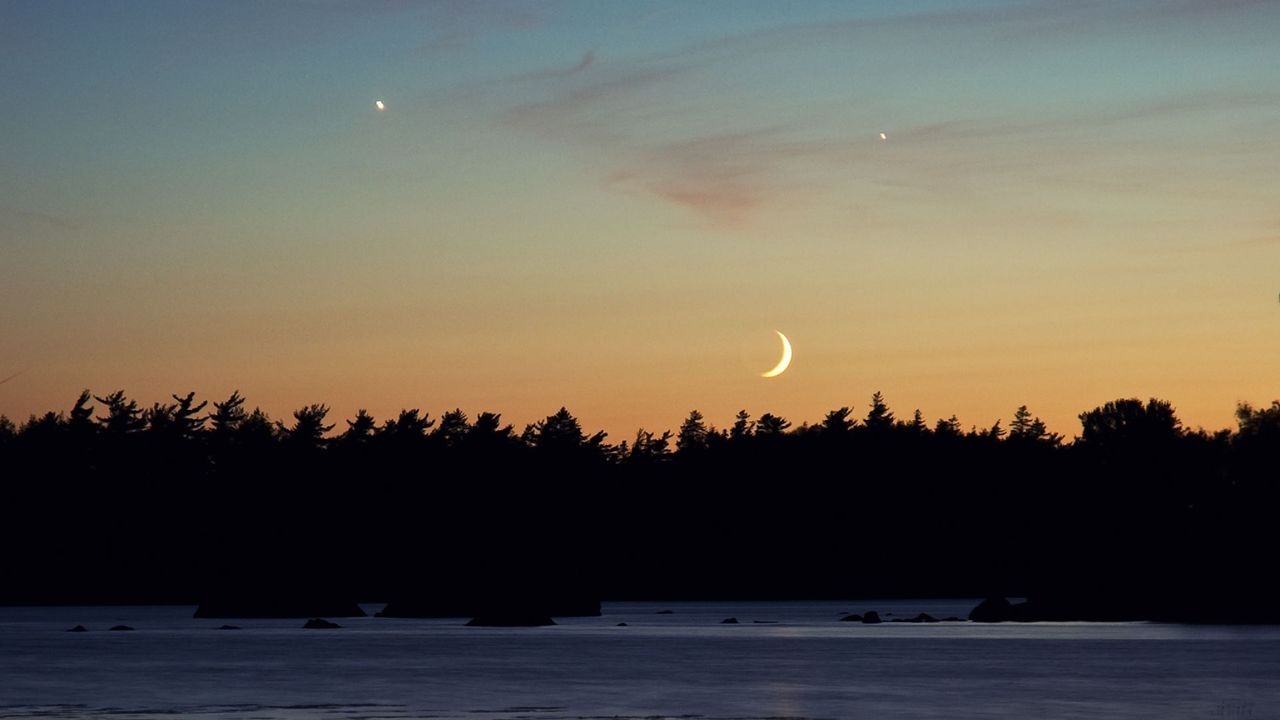
Mercury reaches its greatest elongation from the sun on June 15, marking the best viewing opportunity for the elusive innermost planet during its current evening apparition. At this point, Mercury stretches farthest from the solar disk as seen from Earth, climbing highest above the western horizon after sunset.
Greatest elongation occurs when Mercury sits at its maximum angular distance from the sun, roughly 24 degrees in this case. The geometry favors observation because Mercury climbs higher into the twilight sky, spending more time above the horizon where terrestrial observers can spot it without optical aid.
Mercury presents a persistent observational challenge. Its proximity to the sun means the planet spends most of its orbital period lost in solar glare. The innermost world completes its circuit around the sun every 88 Earth days, creating alternating periods of visibility in the morning or evening sky. During evening apparitions, Mercury rides westward after sunset. During morning apparitions, it appears before dawn in the east.
The June 15 date marks the peak of the current evening phase. Before and after this date, Mercury sinks back toward the solar glare. Observers should look low on the western horizon roughly 30 to 60 minutes after sunset, when twilight lingers but darkness deepens. Clear skies and an unobstructed western view improve chances significantly.
Mercury's orbital mechanics make it the most difficult of the five naked-eye planets to observe. Ancient astronomers struggled with its visibility, sometimes believing it was actually two separate objects. Copernicus himself reportedly never managed to spot it despite decades of attempts. Modern observers with clear skies and proper timing face far better odds than the heliocentric pioneer.