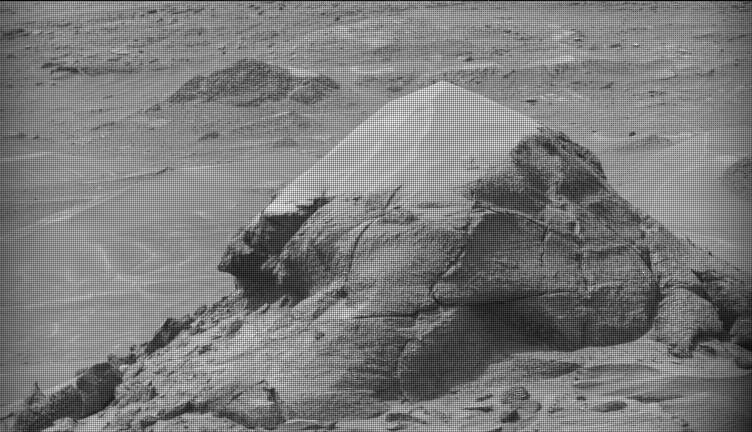
NASA's Curiosity rover continues its methodical ascent of Mount Sharp on Mars, now surveying distinct geological bands that reveal the planet's ancient environmental history. During sols 4920-4926 (Martian days), the rover investigated rock formations with different textures and compositions as it climbed higher on the 5.5-kilometer peak.
William Farrand, Senior Research Scientist at the Space Science Institute, documented the rover's progress through these stratified layers. Each band represents a different period in Mars' geological past, offering clues about how the planet's climate and habitability changed over billions of years.
Curiosity's instruments examined the mineral composition and physical characteristics of the exposed rock bands. These variations in color, texture, and structure help scientists understand the conditions that existed when each layer formed. The rover's position on Mount Sharp places it at the intersection of multiple geological epochs, making it an ideal location for studying Mars' transition from a potentially habitable world with liquid water to its current arid state.
Mount Sharp rises from the center of Gale Crater, where Curiosity landed in 2012. The rover has systematically climbed the mountain over more than a decade, passing through layers that chronicle Mars' atmospheric loss and climate change. Each band the rover encounters provides data that fills gaps in planetary science understanding.
Curiosity's cameras and spectrometers document these geological transitions with precision that ground-based observations cannot match. The rover transmits detailed images and spectral data back to Earth, allowing scientists to analyze the chemical and mineral signatures of Martian rocks in ways that reshape understanding of the Red Planet's habitability window.
The rover's continued operation at higher elevations of Mount Sharp demonstrates both the longevity of Mars rover technology and the enduring scientific value of in-situ exploration. As Curiosity surveys each successive band, it builds a comprehensive record of Mars