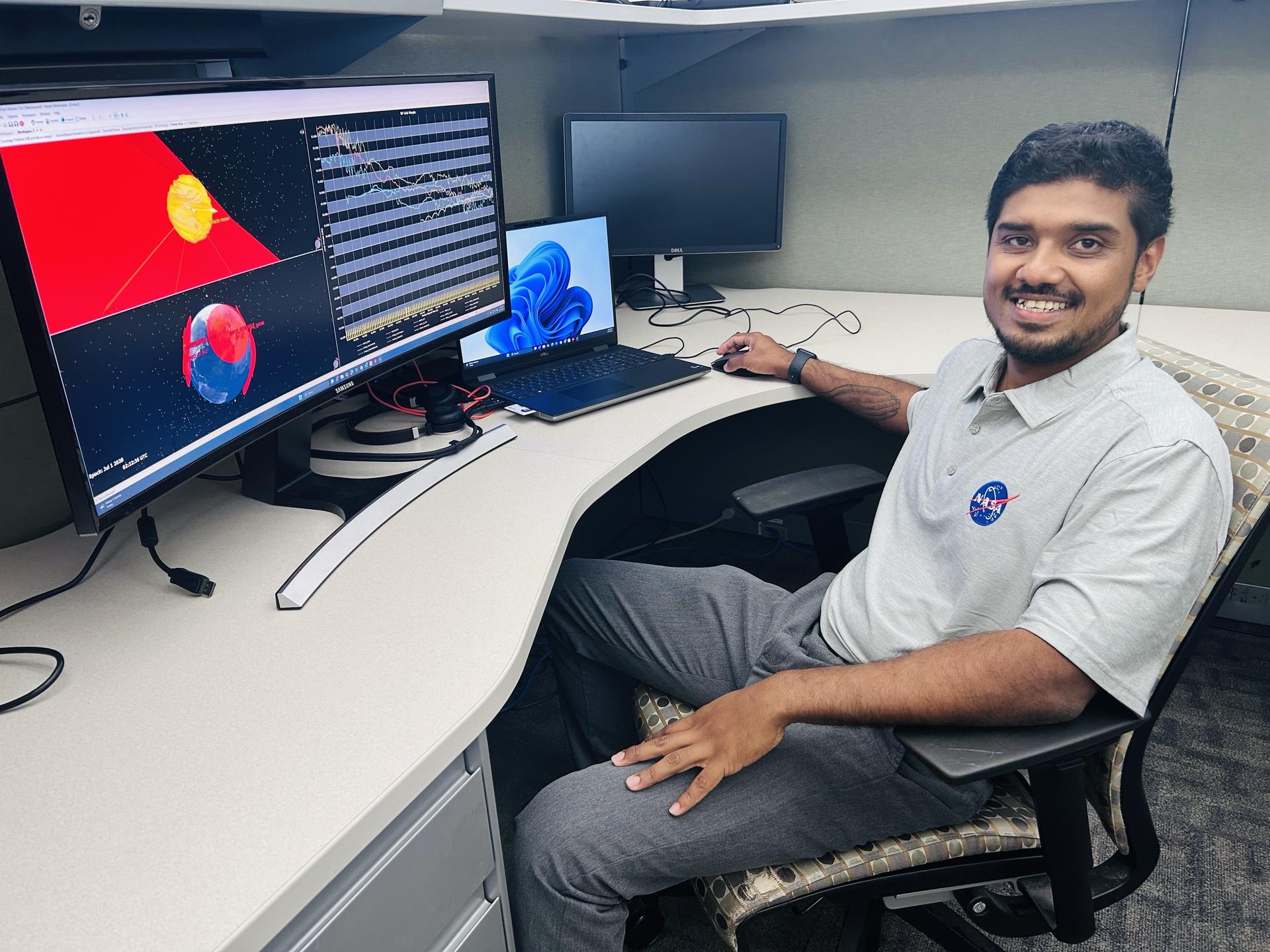
Rohit Goeptar's path to NASA began in poverty in Suriname, where his parents juggled multiple jobs to feed the family. At six years old, he relocated to California seeking opportunity, though his early years remained marked by economic hardship and instability. He eventually returned to South America before charting a course that would lead him into aerospace.
Goeptar's journey represents a distinct track within NASA's workforce. He navigated educational barriers and socioeconomic obstacles to gain the technical skills and credentials the space agency demands. His trajectory from resource-constrained circumstances to employment within one of the world's premier space organizations reflects both personal determination and NASA's commitment to recruiting talent from diverse backgrounds.
The aerospace industry has long faced a challenge recruiting and retaining engineers and scientists from underrepresented communities. Goeptar's story illustrates how individuals from disadvantaged backgrounds can access pathways into space exploration. His experience working at NASA places him among professionals contributing to missions ranging from Earth observation to deep space exploration, from the International Space Station operations to Artemis lunar program development.
NASA has emphasized recruitment from communities historically excluded from technical fields. The agency recognizes that talent emerges from all socioeconomic backgrounds, and expanding the pool of aerospace professionals strengthens the organization's capacity to solve complex problems in space exploration and Earth science.
Goeptar's career with NASA connects him to robotic missions, human spaceflight operations, or research initiatives depending on his specific role within the agency. Whether his work involves propulsion systems, mission planning, or materials science, his presence in NASA's workforce demonstrates that geographic origin and childhood circumstances need not determine professional potential in space exploration.
His account reaches audiences through NASA's official channels, serving as both an employment narrative and an inspiration for young people in similar circumstances who might envision themselves in technical careers. As NASA pursues ambitious objectives including sustained lunar presence and eventual human