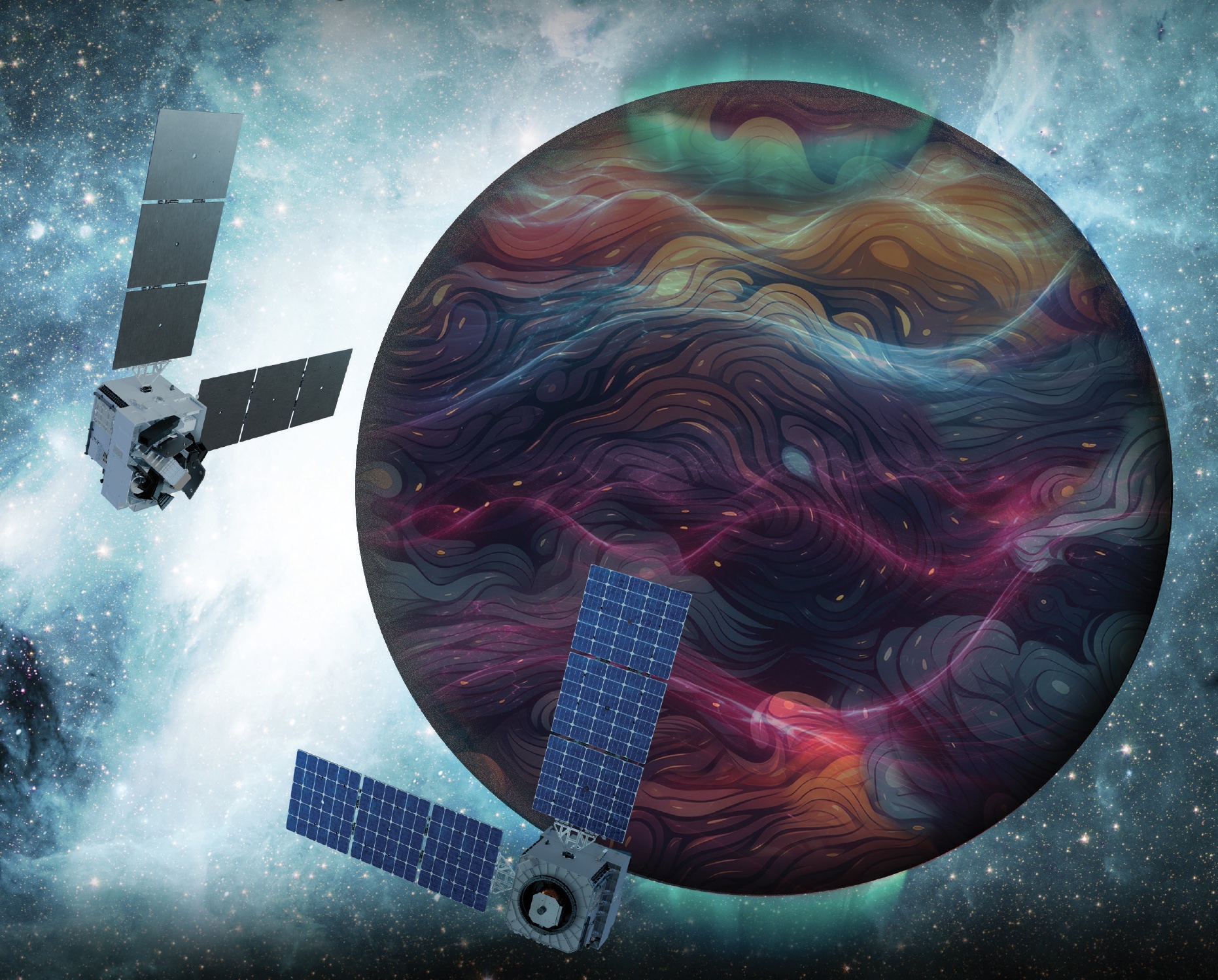
NASA selected the Dynamic Atmosphere-Ionosphere Explorer (DAPHNE) mission for Phase B development to investigate how Earth's atmospheric conditions and space weather interact to affect the near-Earth space environment. The mission addresses a critical gap in understanding the coupling between lower atmospheric dynamics and the ionosphere, the electrically charged region where most satellites and communications systems operate.
DAPHNE will advance predictive models for space weather events that disrupt GPS navigation, degrade communications for low Earth orbit satellites, and pose radiation hazards to astronauts. Current forecasting capabilities remain limited because scientists lack comprehensive data on how atmospheric waves, temperature variations, and other terrestrial processes propagate upward to influence the ionosphere and magnetosphere.
By entering Phase B, DAPHNE progresses toward detailed mission design and technology development. The mission will carry instruments to measure atmospheric and ionospheric parameters simultaneously, creating a direct observational link between ground-level weather and space environment behavior. This integrated approach addresses a fundamental physics question: how do Earth's lower atmosphere and ionosphere exchange energy and momentum.
The research has immediate practical applications. GPS accuracy depends on understanding ionospheric conditions. Satellite operators require better predictions of atmospheric drag, which increases during geomagnetic storms and causes orbital decay. Astronauts need improved radiation forecasts for mission planning and crew safety during solar events.
DAPHNE contributes to NASA's broader space weather research strategy, which includes missions like NOAA's Space Weather Prediction Center and other interagency efforts. Understanding atmosphere-ionosphere coupling improves the entire space weather warning system that protects critical infrastructure on Earth and in orbit.
The mission represents a shift toward treating near-Earth space as an integrated system rather than isolated layers. By connecting atmospheric science with space physics, DAPHNE will enhance prediction models across multiple operational domains and deepen understanding of how our planet's atmosphere extends influence into the