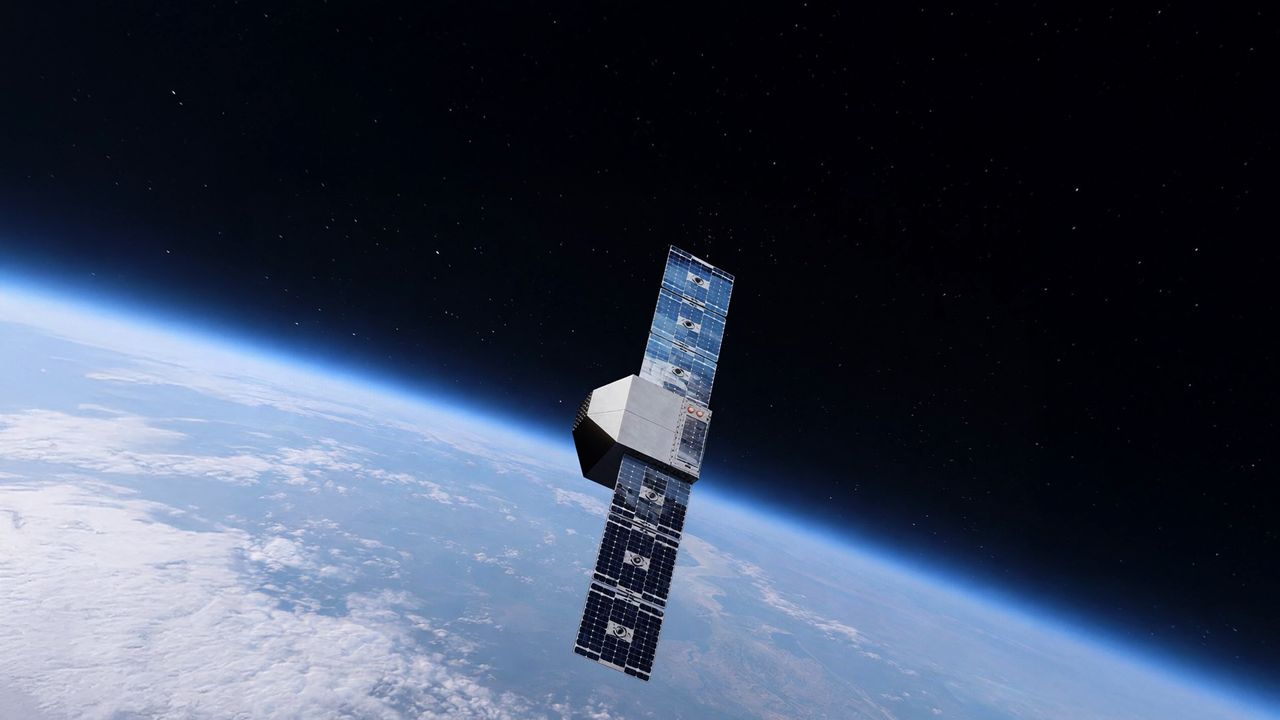
An air-breathing electric propulsion system could soon undergo its first orbital test, fundamentally changing how satellites operate in the extreme lower reaches of Earth orbit. This technology harvests oxygen and nitrogen directly from the thermosphere, the thin atmosphere at altitudes between 80 and 200 kilometers, converting those particles into fuel for electric thrusters.
The innovation addresses a critical limitation of traditional satellite propulsion. Conventional systems require onboard propellant tanks that add mass and limit mission duration. At very low Earth orbit altitudes, residual atmosphere creates drag that forces satellites to either reboost frequently or deorbit. Air-breathing thrusters eliminate this constraint by using the surrounding medium itself.
This capability opens a new operational regime called "very low Earth orbit" or VLEO, positioned below standard low Earth orbit altitudes. Satellites operating at these heights gain significant advantages. They collect higher-resolution imagery with less optical distortion, improve atmospheric monitoring, and enhance Earth observation precision. The lower altitude also reduces latency for communications applications and provides better resolution for ground-based observations.
Several organizations have pursued air-breathing propulsion for years. The technology essentially works as an electric thruster fed by particles collected during flight. Engineers focus on maximizing the ionization efficiency of captured atmospheric molecules to generate sufficient thrust while minimizing power consumption.
Testing this system in actual space conditions represents the next critical step. Laboratory simulations cannot fully replicate the complex interactions between the thruster, the thin thermospheric plasma, and the satellite's electrical systems. A successful orbital demonstration would validate the concept and lead to operational deployments for Earth observation, communications, and scientific missions.
The timing for this test comes as governments and commercial operators increasingly recognize the value of very low Earth orbit capabilities. Better Earth imagery, faster communications, and improved atmospheric science all depend on satellites operating at altitudes previously considered impractical. An air-breathing thruster elimin