# The Five Stages of the 2026 Total Solar Eclipse
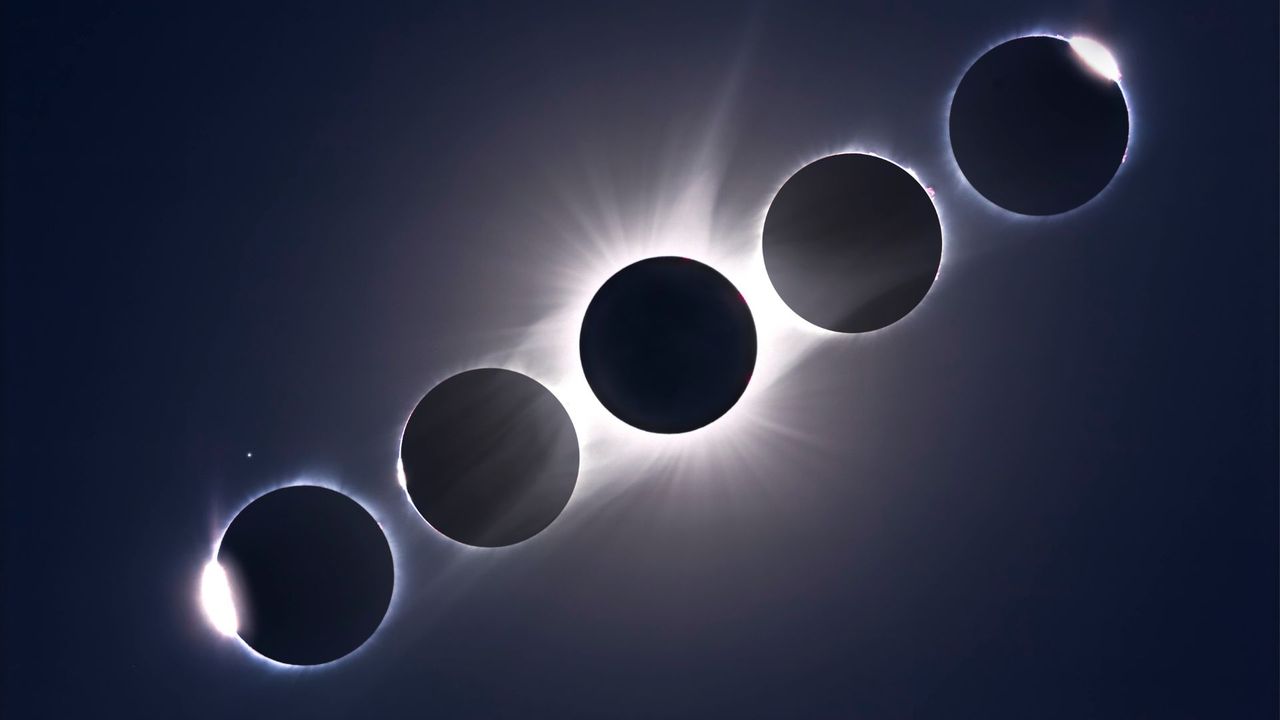
A total solar eclipse will sweep across Earth on August 12, 2026, and observers along the path of totality will witness five distinct stages as the Moon passes in front of the Sun.
First contact marks the beginning. The Moon's edge touches the Sun's disk, starting the partial eclipse phase. This stage lasts roughly an hour, with the Moon gradually covering more of the solar surface. During this time, the Sun remains bright enough to require eclipse glasses for safe viewing.
Second contact occurs when the Moon completely covers the Sun's bright disk and totality begins. The transition happens rapidly, sometimes in just seconds. At this instant, the corona, the Sun's outer atmosphere, becomes visible to the naked eye. The sky darkens dramatically, and temperatures drop noticeably.
Totality itself represents the eclipse's centerpiece. The Moon blocks the Sun's photosphere entirely, allowing observers to see the corona's structure, solar prominences, and other features invisible during normal daylight. Totality typically lasts between two and seven minutes depending on geographic location.
Third contact arrives when the Moon's trailing edge leaves the Sun's disk, ending totality. The corona vanishes from view, and daylight returns swiftly. Some observers report a "diamond ring effect" as the first sliver of sunlight reappears.
The partial eclipse continues through fourth contact as the Moon continues moving across the solar disk, gradually uncovering more of the Sun. This phase mirrors the early stages in reverse, lasting roughly an hour.
Fourth contact concludes the event when the Moon's trailing edge completely clears the Sun's disk, restoring the normal daytime appearance. The eclipse ends, though observers outside the totality path will have experienced only a partial eclipse.
The August 12, 2026 eclipse will be visible from Greenland,