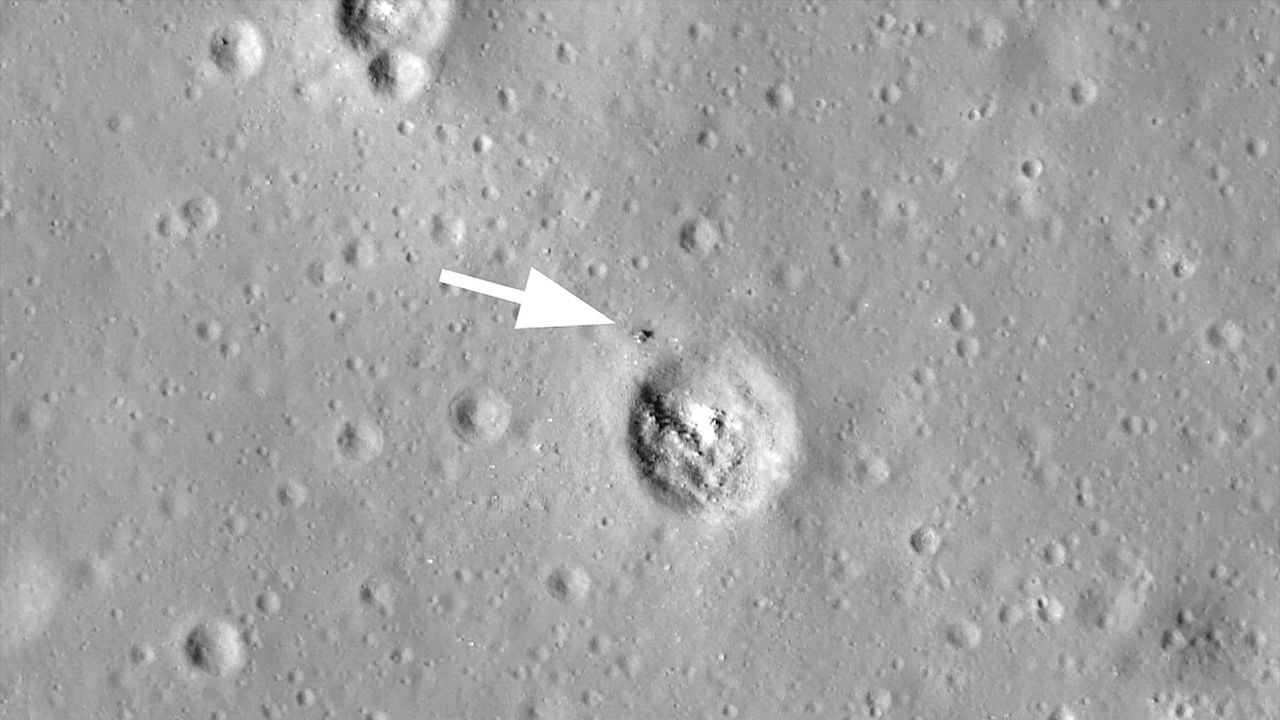
The Soviet Union launched Luna 24 on August 9, 1976, marking the final robotic mission in the Luna program to reach the moon. This sample return spacecraft represented the third and last attempt by the Soviets to retrieve lunar material and bring it back to Earth.
Luna 24 touched down in the Mare Crisium region of the moon's near side. The probe deployed a drill that penetrated deeper into the lunar regolith than previous missions, extracting samples from approximately 1.4 meters below the surface. This depth allowed scientists to access material potentially shielded from cosmic radiation and solar wind exposure.
The mission succeeded in collecting roughly 170 grams of lunar soil and rock before launching from the moon's surface. Its ascent stage rendezvoused with the orbital module and returned to Earth, landing in the Soviet Union on August 22, 1976. The samples provided researchers with data about subsurface lunar geology and composition from a region not previously visited by human or robotic explorers.
Luna 24 concluded a remarkable era of Soviet lunar exploration. The Luna program, which began in 1959, fundamentally reshaped planetary science by demonstrating that robots could safely land on the moon, conduct scientific investigations, and return samples to Earth. Three Luna missions, including Luna 24, successfully completed this full cycle of sample return operations.
The mission arrived during a period when human spaceflight had shifted focus. The Soviet Union was developing its space station program, while the United States had concluded its Apollo missions in 1972. Luna 24 stood as the last attempt by any nation to return lunar samples until China's Chang'e-5 mission in 2020, a gap of 44 years.
The samples from Luna 24 remain scientifically valuable today. They provided comparative data with Apollo samples and revealed compositional variations across the lunar surface