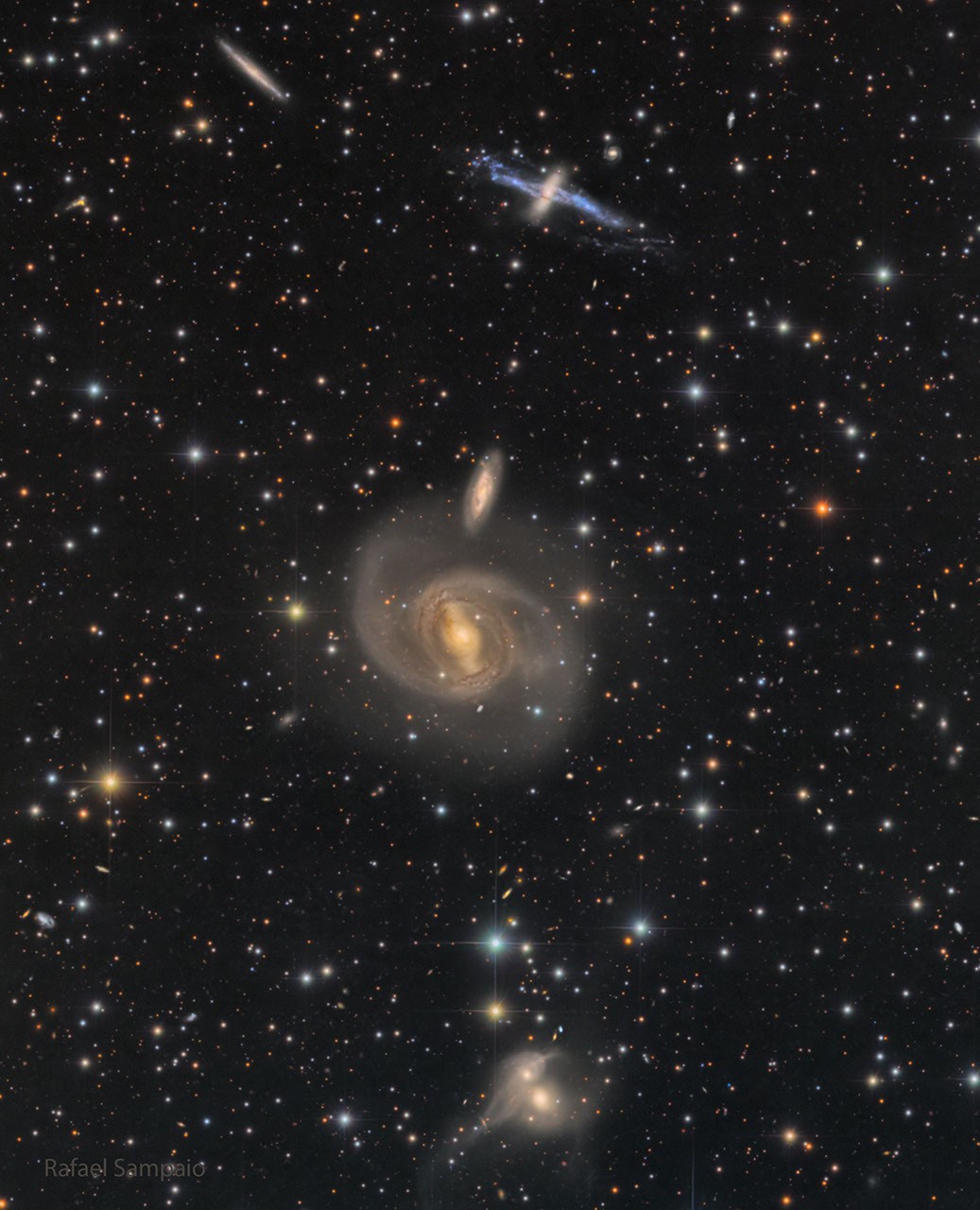
The Astronomy Picture of the Day for August 10, 2026 showcases three distinct galaxy pairs, offering astronomers a window into galactic interactions and merger dynamics across the universe. NASA's APOD program features daily imagery from space telescopes and ground-based observatories, each accompanied by expert analysis from professional astronomers.
Galaxy pairs represent some of the most dynamic structures in the cosmos. When galaxies orbit close to one another, gravitational forces reshape their structures, triggering bursts of star formation and fundamentally altering their morphologies over millions of years. These interactions reveal how galaxies evolve and merge across cosmic time.
The three pairs featured in this image likely span varying distances from Earth, providing multiple perspectives on galactic encounters at different stages. Some pairs may show early-stage interactions where tidal forces begin distorting galactic disks. Others may display more advanced stages where nuclei draw closer, initiating rapid star formation in the overlapping regions. The most advanced pairs might show near-complete merger, with the two original structures merging into a single larger galaxy.
Observations of interacting galaxies inform models of galactic evolution and help astronomers understand our own Milky Way's history. Evidence suggests that the Milky Way has merged with smaller galaxies and will eventually collide with the Andromeda Galaxy in roughly 4.5 billion years.
Ground-based telescopes and space observatories like Hubble capture these systems in visible light, while infrared instruments detect the dust-obscured star formation triggered by collisions. X-ray observations reveal hot gas heated by gravitational encounters. Together, these wavelengths paint a complete picture of how galaxies transform through gravitational interaction.
APOD's daily presentations of cosmic imagery serve both educational and research purposes, introducing the public to contemporary astronomical discoveries while providing researchers with organized archives of significant observations. Each image