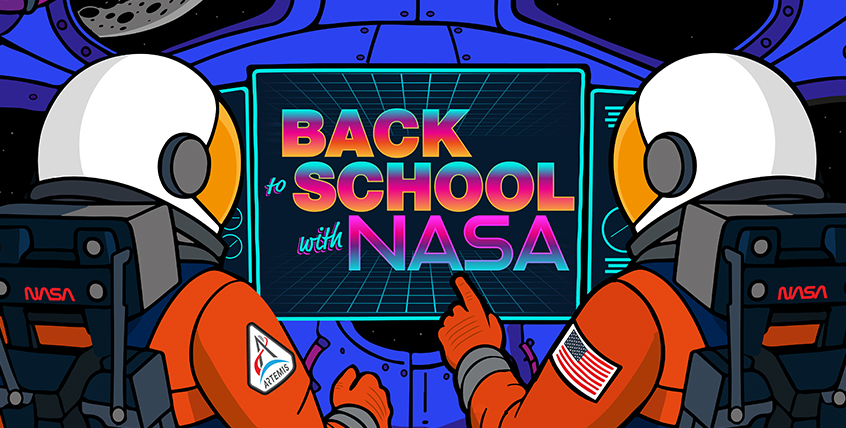
NASA opened its doors to students this school year through educational programs spanning robotic exploration, atmospheric science, and deep-space missions. The agency connects students directly with active projects including Mars rover operations, International Space Station research, and Earth observation satellites.
The programs range from virtual internships to hands-on competitions. Students can participate in the Artemis Student Challenge, which engages learners in lunar exploration planning. The Moon to Mars initiative gives educators curriculum resources tied to real NASA missions pursuing human lunar return and eventual Mars exploration.
NASA's STEM engagement reaches across grade levels. Elementary students access planetarium shows and rover simulations. High school students compete in robotics challenges mirroring JPL engineering problems. College students secure internships at NASA centers, working alongside mission scientists and engineers on active projects.
The agency emphasizes that space exploration demands diverse skill sets beyond traditional science. Computer programming, materials engineering, project management, and communications all find roles in space missions. Students discover these connections through NASA's formal programs and open data portals.
NASA's timing reflects accelerating space activity. The Artemis program targets lunar surface missions within the decade. Commercial partnerships expand launch capacity. Space stations multiply beyond the ISS. These developments create career pathways that didn't exist five years ago.
Students joining NASA's programs contribute to real science. High school groups analyze satellite imagery for environmental monitoring. University teams develop hardware tested on actual spacecraft. Intern contributions appear in published research papers.
Access spans geographic barriers through NASA's digital platforms. Online courses, webinars, and downloadable datasets reach students in rural areas without major research institutions. The agency maintains field centers in ten states, providing local connection points.
The agency recognizes that tomorrow's astronauts, engineers, and mission controllers emerge from classrooms today. By lowering entry barriers and connecting education directly to active exploration, NASA builds both workforce capacity and public understanding of space science.
CATEGORY