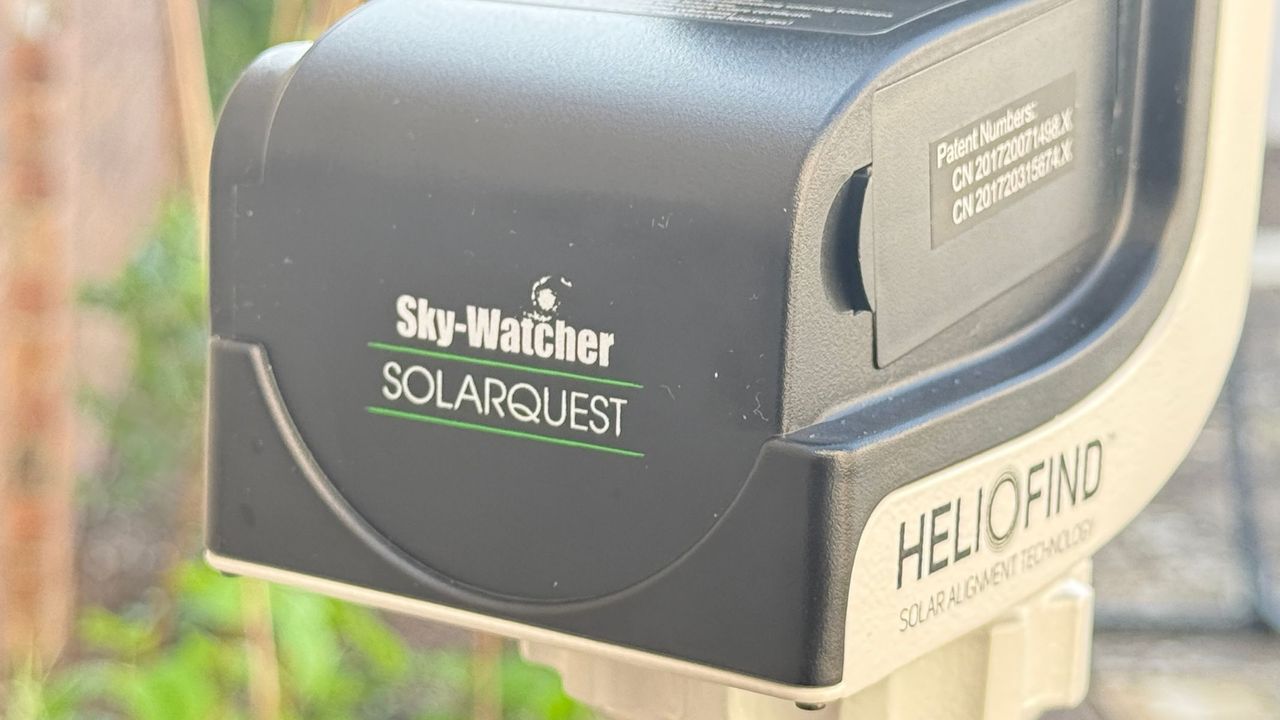
Sky-Watcher's SolarQuest mount head delivers automated solar tracking for amateur astronomers observing the sun. The motorized alt-azimuth mount automatically locates and follows the sun's path across the sky, eliminating manual adjustments during observation sessions.
The SolarQuest suits small refractor and reflector telescopes used for direct solar observation and eclipse viewing. Its grab-and-go design appeals to observers who want quick setup without complex alignment procedures. The mount's tracking motors maintain the sun in the eyepiece field throughout an observation, critical for capturing solar detail and phenomena like sunspots, prominences, and coronal features during partial or total eclipse events.
Automated solar tracking removes a persistent challenge in amateur solar astronomy. Previously, observers either manually nudged their mounts every few minutes to compensate for Earth's rotation, or invested in expensive equatorial mounts with solar tracking capabilities. The SolarQuest fills the gap between manual alt-azimuth mounts and premium solutions.
For eclipse chasers, automated tracking preserves precious viewing time during totality. Rather than fighting to keep the sun centered while adjusting eyepieces or filters, observers can focus on the eclipse itself. During partial phases, continuous tracking enables systematic documentation of contact times and solar disk details.
The motorized approach also benefits solar imaging. Long-exposure imaging of the solar chromosphere or photosphere demands stable, centered framing. Drift-free tracking improves image quality and simplifies post-processing alignment when stacking multiple exposures.
Sky-Watcher targets a specific niche: amateur solar observers with modest aperture instruments who want convenience without complexity. The SolarQuest competes against manual tracking and expensive alternative mounts by offering middle-ground functionality at accessible pricing. For the expanding community of casual solar observers and eclipse enthusiasts, automated sun-tracking technology removes barriers to sustained observation sessions