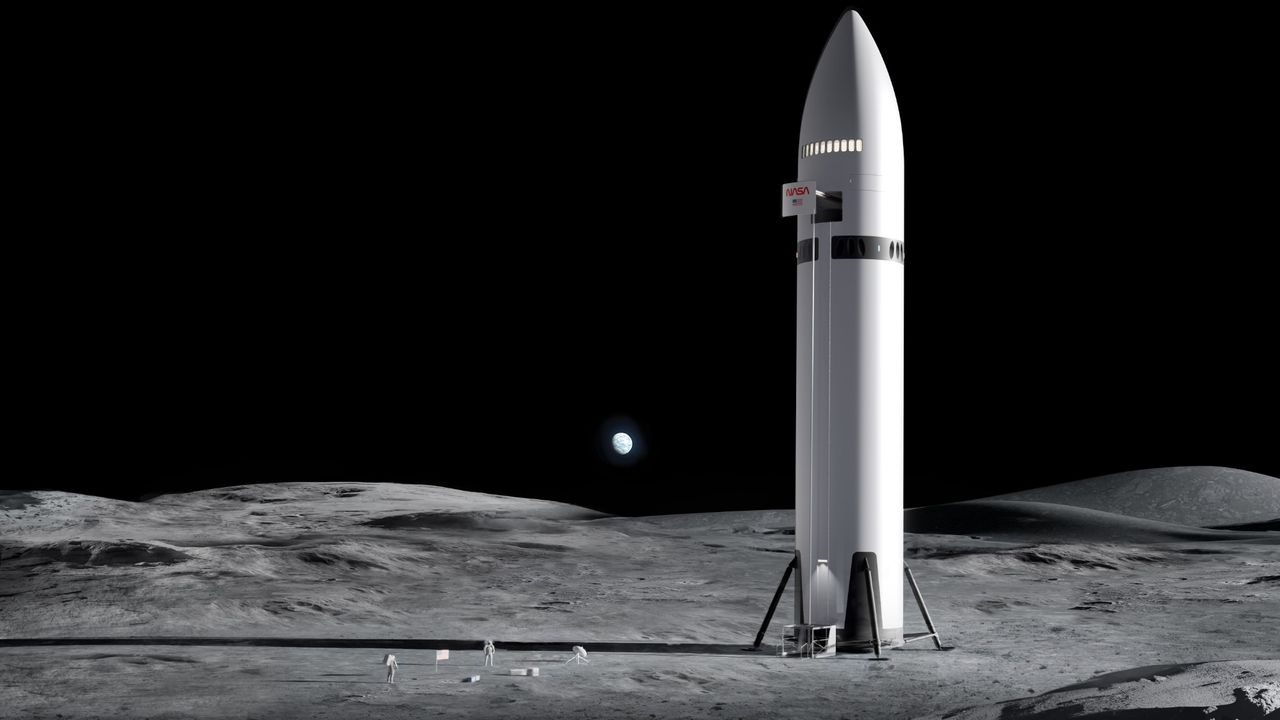
Elon Musk declared on SpaceX's first quarterly earnings call that the company intends to construct factories on the lunar surface, employing robots to handle primary manufacturing operations. The statement represents a formal articulation of SpaceX's long-term lunar ambitions beyond cargo delivery and human exploration.
Musk's commitment to lunar manufacturing aligns with SpaceX's broader strategy to reduce launch costs and establish sustained off-world infrastructure. Manufacturing on the moon would leverage lower gravity and the absence of atmospheric friction, theoretically reducing energy requirements for producing and launching materials into deeper space. Robotic systems would minimize human exposure to hazards while enabling continuous operations across lunar day-night cycles.
The plan connects directly to SpaceX's existing programs. Starship, the company's fully reusable super-heavy-lift vehicle, provides the transportation capacity needed to move equipment and materials to lunar orbit and the surface. NASA selected Starship's variant, called Starship HLS, to land astronauts on the moon during the Artemis program, expected in the mid-2020s.
Establishing manufacturing capability on the moon represents a logical progression toward SpaceX's stated goal of making humanity multiplanetary. Lunar factories could produce fuel, building materials, and components for spacecraft destined for Mars and beyond, reducing the payload mass that must be launched from Earth. This approach would fundamentally alter deep space economics by sourcing materials where gravity wells are shallower.
The timeline for such operations remains unclear. SpaceX currently focuses on Starship's rapid development and the near-term Artemis lunar missions. Building robotic manufacturing infrastructure requires solving problems in power generation, material processing, thermal management, and autonomous systems operation in the harsh lunar environment.
Musk's confidence reflects SpaceX's track record of achieving previously dismissed objectives. The company landed orbital rockets, developed reusable spacecraft