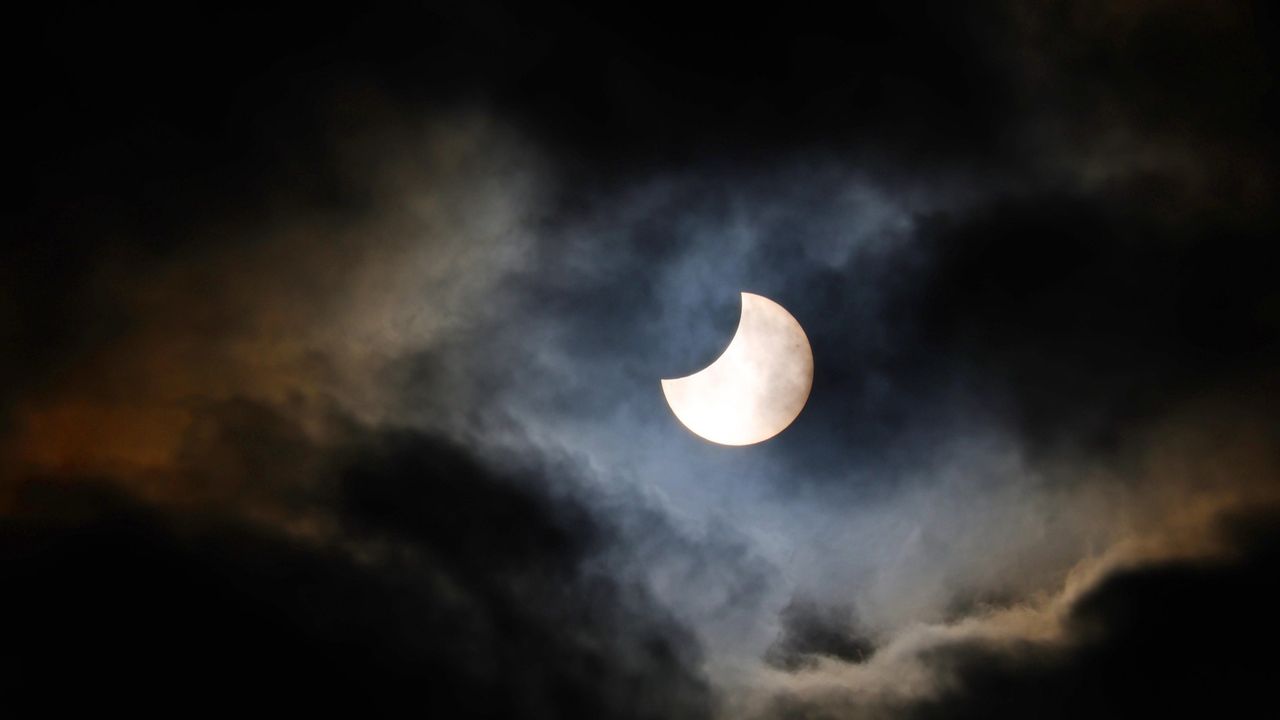
A partial solar eclipse will cross North America on August 12, offering millions of observers across the United States and Canada the chance to witness the moon obscure a portion of the sun. While this event falls short of the totality experienced during April 2024's Great American Eclipse, the partial phase will still deliver a visible astronomical event.
The August 12 eclipse represents a different class of solar eclipse than the cross-continental total eclipse that crossed North America four months earlier. During that April event, observers along the path of totality experienced complete darkness as the moon blocked the sun entirely. The August eclipse, by contrast, will see the moon pass in front of the sun without fully covering the solar disk from any location in North America.
Partial solar eclipses occur when the moon's shadow crosses Earth but only the penumbra (outer shadow) reaches the surface, preventing observers from experiencing totality. The degree of coverage varies by geographic location. Observers in northern regions will see a larger portion of the sun covered compared to those further south.
Proper eclipse glasses remain essential for safe viewing. Looking directly at the sun without certified solar filters risks severe eye damage. ISO 12312-2 certified eclipse glasses block 99.99% of the sun's light and protect the retina during observation.
The timing and visibility depend on exact location. Observers should consult local astronomical resources or NASA's eclipse website for precise timing at their coordinates. Weather conditions will significantly impact visibility, as cloud cover can obstruct the view entirely.
While the August eclipse lacks the drama of totality, partial solar eclipses remain valuable opportunities for public engagement with astronomy. Each eclipse offers educational moments about orbital mechanics and the geometry of the Earth-moon-sun system. For those who experienced April's total eclipse, the August event provides another chance to observe lunar-solar dynamics within a few months.