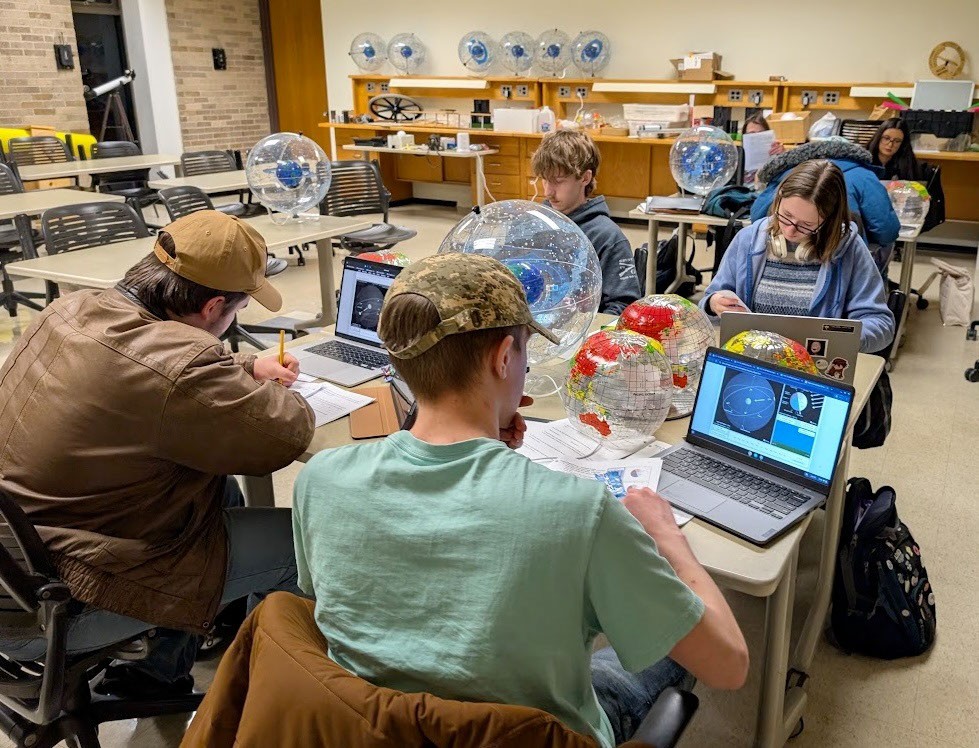
Community college instructors across three project teams partnered with NASA to overhaul astronomy education by integrating NASA's vast repository of images, data, and activities directly into classroom instruction. The collaboration modernizes traditional textbook-based learning to match how students actually absorb information in the 21st century.
The initiative recognizes a fundamental gap. Standard astronomy textbooks present concepts in isolation, disconnected from the actual observations and discoveries driving contemporary space science. NASA's resources—real mission data, satellite imagery, and interactive tools—provide the primary evidence behind astronomical knowledge. Embedding these materials into curriculum transforms passive reading into active learning where students engage with authentic research.
The three community college project teams developed integrated curricula that combine classical astronomy foundations with NASA mission archives. Students working with these enhanced materials encounter the same images analyzed by professional astronomers. They access datasets from missions like the James Webb Space Telescope, Hubble Space Telescope, and Mars rovers. This approach connects abstract concepts to concrete, visible phenomena.
Active learning strategies prove more effective for diverse learners in community college environments. By incorporating NASA resources, instructors create multiple entry points for understanding. Visual learners benefit from high-resolution imagery. Analytical students work directly with spectral data and measurements. Kinesthetic learners engage with interactive simulations and problem-solving activities grounded in real missions.
The collaboration responds to how astronomy itself has transformed. Modern discoveries rely on data analysis, computational modeling, and multi-wavelength observations unavailable when traditional textbooks took their current form. Students preparing for STEM careers need exposure to these contemporary tools and methods, not just historical concepts.
Community colleges serve populations often underrepresented in STEM fields. Enhanced astronomy instruction with NASA resources removes barriers to engagement and demonstrates career pathways in space science. Students see immediate connections between classroom work and the space agency's actual missions and discoveries.
This initiative extends NASA's educational mission beyond universities and