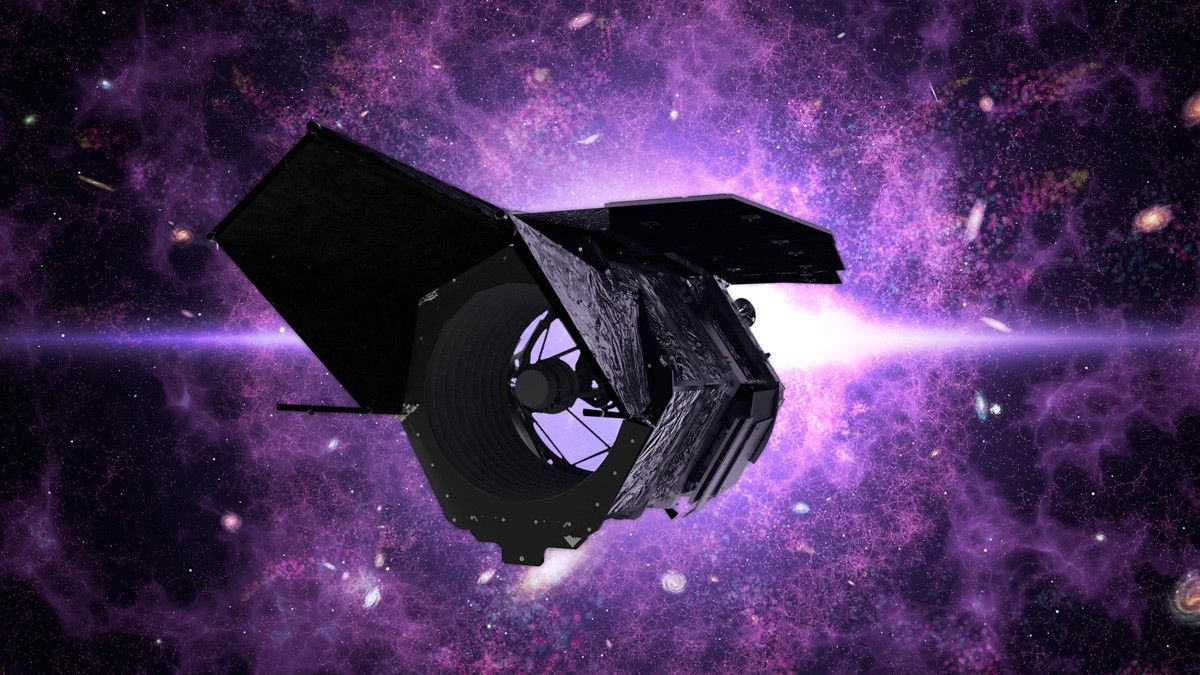
NASA's Nancy Grace Roman Space Telescope represents the agency's next major astrophysics observatory, designed to scan expansive regions of the sky with unprecedented capability. The mission targets fundamental questions about the universe's composition and behavior, focusing on dark energy, dark matter, exoplanet detection, and related phenomena that shape our understanding of cosmic structure.
Named after Nancy Grace Roman, the pioneering astronomer who directed NASA's astronomical programs during the space race era, the observatory carries her legacy of discovery. The telescope will operate as an infrared and visible-light instrument, surveying areas of space vastly larger than existing observatories like the Hubble Space Telescope.
Roman's scientific objectives address some of astrophysics' most pressing mysteries. Dark energy, the mysterious force accelerating the universe's expansion, remains poorly understood despite comprising roughly 68 percent of all matter and energy. Dark matter, which accounts for another 27 percent of the universe's composition, also eludes direct observation. Roman will gather data on both phenomena through its wide-field imaging capabilities.
The telescope will also excel at exoplanet discovery and characterization. Its broad surveys will identify potentially habitable worlds around distant stars while its coronagraphic instruments will directly image planets around other suns, revealing atmospheric compositions and surface features.
The mission demonstrates NASA's commitment to answering humanity's deepest questions about cosmic origins, structure, and the prevalence of worlds beyond Earth. By scanning large sky sections rather than focusing on individual targets like Hubble, Roman will compile comprehensive catalogs of astronomical objects and phenomena, providing data for decades of future research.
Roman represents a generational shift in space astronomy, building on lessons from Hubble while advancing observational capabilities into new wavelengths and scales. The observatory will operate from the second Lagrange point, approximately one million miles from Earth, where gravitational balance allows for stable observations and minimal