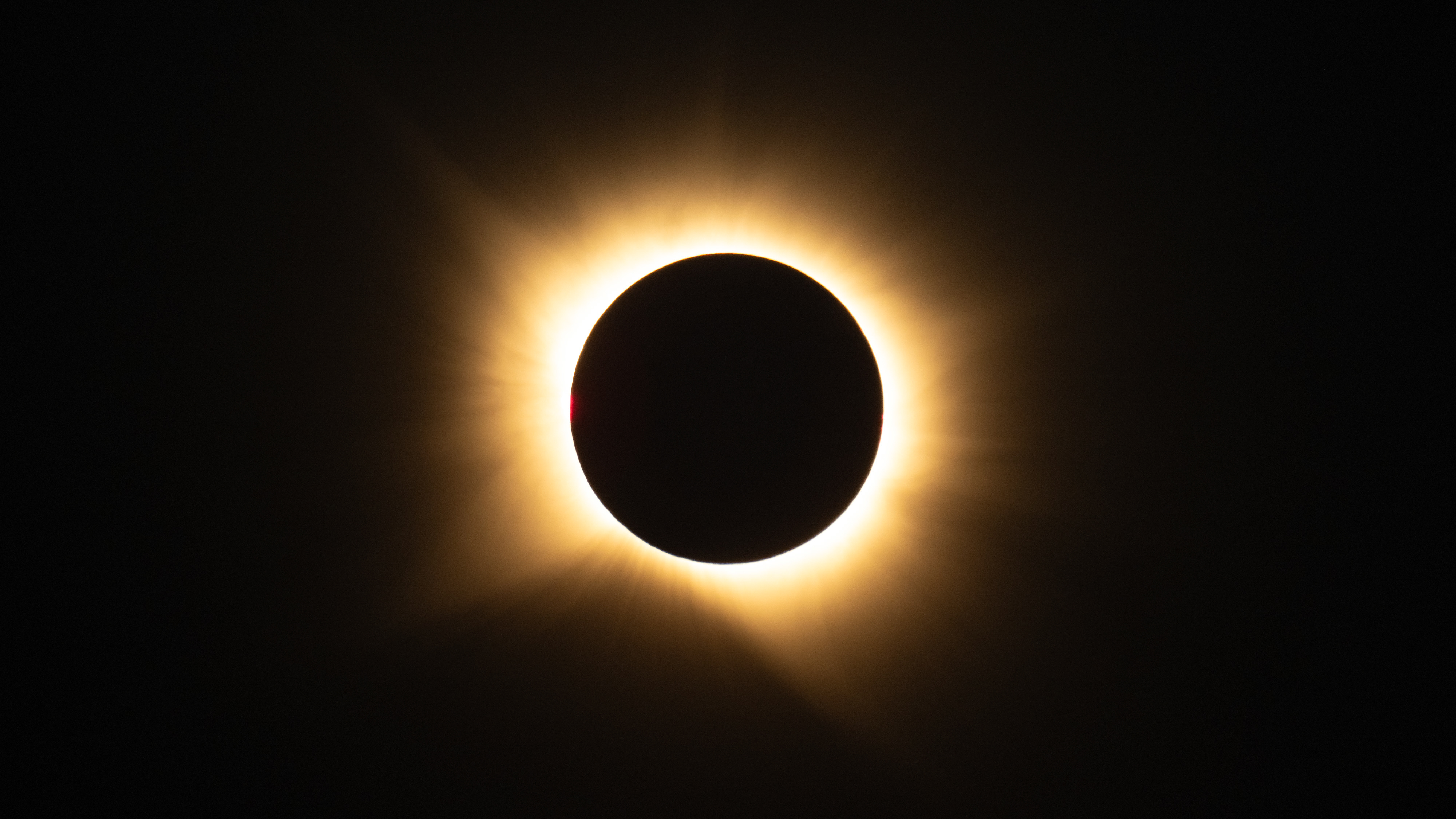
# Spain Prepares for 2026 Total Solar Eclipse as Shadow Sweeps Across Arctic and Atlantic
A total solar eclipse will cross Spain in August 2026, offering European astronomers and eclipse chasers a rare opportunity to observe the Moon completely blocking the Sun from locations on the continent. The eclipse path will stretch across multiple regions starting in Greenland, sweeping through Iceland, northern Russia, the Atlantic Ocean, and ultimately reaching Spain before concluding in a small corner of Portugal.
The August 12, 2026 event marks a significant celestial occurrence for European solar physics. Total solar eclipses happen when the Moon passes directly between the Sun and Earth, and the Moon's angular size matches or exceeds the Sun's as viewed from Earth. This alignment occurs only during new moons and remains rare for any specific terrestrial location. Spain's position along the path means Spanish astronomers and research institutions have already begun planning observation campaigns.
NASA and other space agencies prepare comprehensive scientific objectives for total solar eclipses. During totality, the Sun's corona becomes visible to the naked eye. The corona represents the Sun's outer atmosphere, normally invisible because the photosphere's bright light overwhelms it. Scientists use eclipse observations to study coronal structure, temperature dynamics, and magnetic field configurations that spacecraft cannot fully resolve during normal operations.
Observations during the 2026 eclipse will likely include spectroscopic analysis of coronal emission lines, mass ejection events, and the behavior of solar prominences. Ground-based instruments positioned along the eclipse path will collect data complementing satellite observations from missions like NASA's Parker Solar Probe and the Solar Orbiter, a joint ESA-NASA mission. These combined datasets reveal how energy transfers through the solar atmosphere and powers the solar wind that reaches Earth.
The eclipse path crossing Spain creates logistical opportunities for scientific teams. Cities and regions directly in the path of totality, including San Millán de los Caballeros, will experience several minutes of complete darkness at midday. Locations outside the path will observe a partial eclipse. This geographic advantage positions Spain as a major hub for eclipse science in 2026, similar to how Chile and Argentina hosted scientific operations during the December 2019 total solar eclipse.
Public engagement around the event has already intensified. Tourism boards, astronomical societies, and educational institutions across Spain are coordinating eclipse viewing programs. The 2026 event offers opportunities for citizen science initiatives where trained observers document local phenomena like temperature drops, animal behavior changes, and shadow bands during totality.
For eclipse chasers and professionals, the 2026 eclipse represents the next major opportunity in the Northern Hemisphere following the April 2024 North American eclipse. Greenland and Iceland portions of the path appeal to high-latitude eclipse observers, while Spain's accessibility makes it the primary destination for European participants. Hotels and viewing sites along the Spanish eclipse path are likely to experience significant demand in advance of August 2026.
The eclipse occurs during Solar Cycle 25's active phase, when solar activity peaks. Higher coronal complexity during maximum activity produces more dramatic eclipse observations and complex magnetic structures for scientists to analyze.