# Capturing Planetary Detail: A Technical Guide to Telescopic Imaging
Planetary photography represents one of astronomy's most rewarding pursuits. Modern amateur astronomers can now capture images rivaling professional observatory photographs from decades past, thanks to accessible equipment and refined imaging techniques. Jupiter, Saturn, Mars, and Venus each present distinct challenges and opportunities for the imaging enthusiast.
The fundamental setup involves a telescope, a camera or imaging sensor, and software to process the captured data. Refractor telescopes and Newtonian reflectors both work effectively, though aperture size determines light-gathering capacity and resolution. A six-inch aperture telescope represents a practical minimum for planetary detail, though smaller instruments yield acceptable results under steady atmospheric conditions.
Camera selection matters significantly. Dedicated planetary imaging cameras offer advantages over standard DSLRs. Sensors like those found in ZWO ASI or Player One cameras deliver high frame rates (30 to 200 fps) that allow astronomers to record hundreds of images during a single observing session. This rapid acquisition strategy compensates for atmospheric distortion. Earth's turbulent atmosphere constantly warps light from distant planets. Capturing many frames and selecting only the sharpest images, through a process called "lucky imaging," produces superior results compared to single exposures.
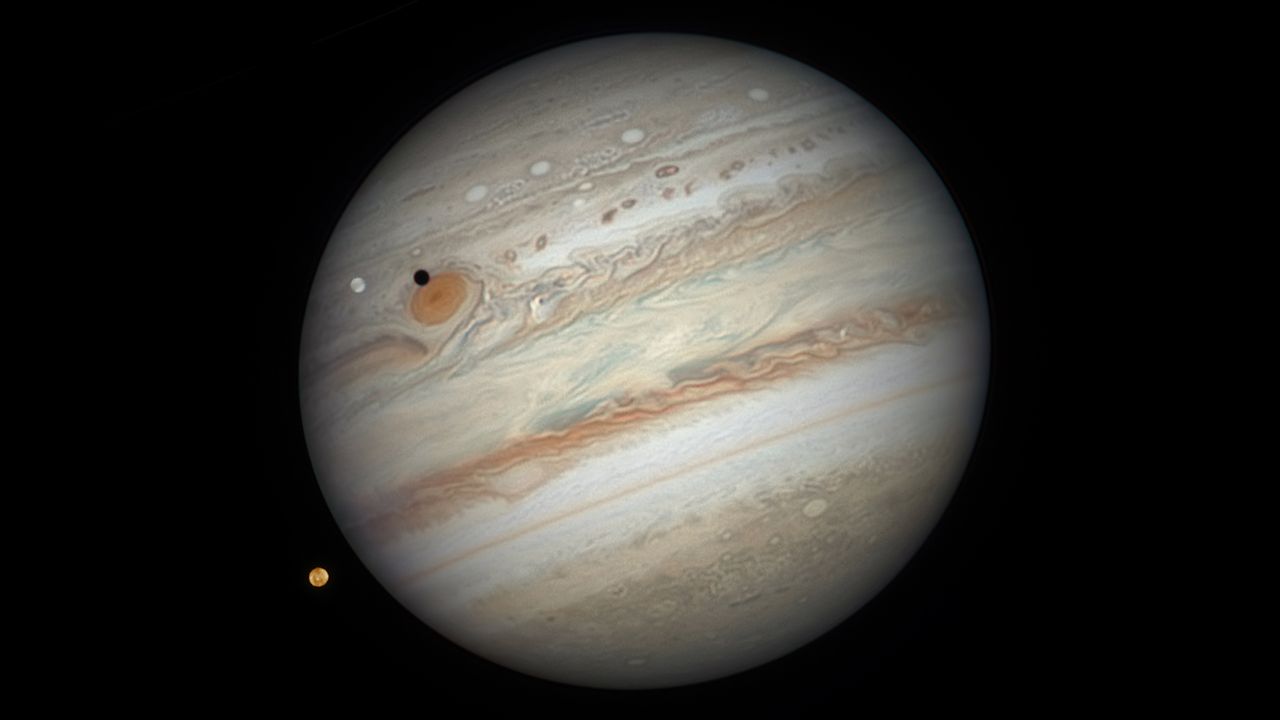
Jupiter presents perhaps the most rewarding target. Its Great Red Spot, cloud bands, and moons shift visibly night to night. A 120mm aperture telescope resolves cloud structures and atmospheric features clearly. Saturn's rings and Cassini Division become visible with six-inch aperture instruments. Mars demands patience and timing. The planet's small apparent size requires either exceptional atmospheric seeing or larger aperture telescopes. Venus, shrouded in clouds, displays phase changes and limb brightening effects rather than surface detail.
Atmospheric seeing quality determines ultimate image sharpness more than equipment specifications. Observing from a location with stable air, away from urban heat sources, produces noticeably better results. High altitude sites and cooler seasons generally offer superior conditions. Allowing a telescope to thermally equilibrate to ambient temperature for 30 minutes before observing prevents heat shimmer that degrades image quality.
Processing transforms raw captured frames into final images. Stacking software aligns hundreds of video frames and averages them together, improving signal-to-noise ratio. Wavelets and deconvolution algorithms then sharpen details obscured by atmospheric distortion. Programs like Autostakkert and RegiStax handle these computational tasks effectively.
Timing observations coincides with planetary apparitions. Jupiter reaches optimal viewing around opposition, when Earth passes directly between the sun and the giant planet. Mars observations concentrate during favorable oppositions when the planet approaches closest to Earth. Venus displays its most interesting phases at evening or morning elongation.
Success in planetary imaging requires patience and persistence. Clear skies prove rare, and poor seeing nights outnumber excellent ones substantially. Building a collection of images over months reveals seasonal atmospheric changes and surface feature evolution. Jupiter's storm systems evolve over weeks. Saturn's atmosphere harbors storms that develop and fade across years. These images contribute to citizen science initiatives where amateur observations complement space agency data.
The investment needed remains modest compared to other hobbies. Used telescopes cost $300 to $800. Entry-level planetary cameras range from $200 to $600. The learning curve is steep but rewarding. Amateur astronomers producing competition-quality planetary images today would have astounded professionals twenty years ago.