Venus approaches its peak brightness in Earth's evening sky this week, offering stargazers a rare opportunity to test a claim that sounds almost mythological: the planet can cast a shadow on Earth.
The phenomenon occurs because Venus ranks as the brightest natural object in our night sky after the Moon. At maximum brightness, Venus shines at magnitude negative 4.7, bright enough to create shadows under ideal observing conditions. The effect requires a clear, dark sky and excellent night vision, but observers have documented shadow-casting by Venus for centuries.
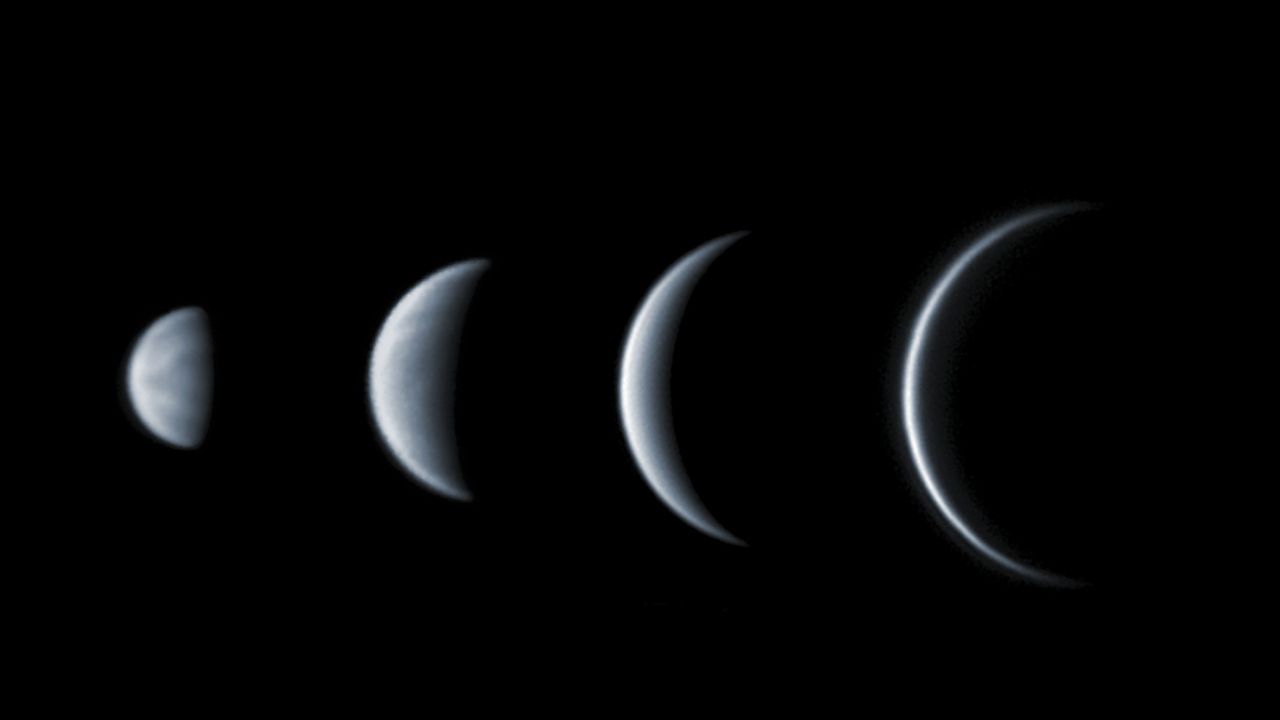
Venus reaches greatest brilliancy when it sits at its optimal angle relative to both Earth and the Sun. This configuration occurs roughly every 584 days, when Venus completes its synodic cycle relative to Earth. During these events, the planet appears as a thin crescent in a telescope while remaining a brilliant point to the naked eye. The geometry places Venus high enough in the evening sky for observers in northern latitudes to position themselves for potential shadow observation.
To attempt shadow detection, observers should position themselves in complete darkness away from artificial light sources. A light-colored surface like white paper or a white wall works best. The shadow cast by Venus proves extremely faint compared to lunar shadows, requiring patience and dark-adapted eyes. Some observers report success by holding a thin object between themselves and the reference surface, watching for the subtle darkening that Venus's light creates when blocked. Others describe the effect as barely perceptible, requiring multiple attempts before confirmation.
The difficulty in observing Venus shadows explains why many amateur astronomers consider the claim dubious. Professional astronomers acknowledge the theoretical basis: any object bright enough produces shadows under sufficiently dark conditions. Venus's magnitude of negative 4.7 actually exceeds that of Venus's shadow-casting threshold. Yet the practical challenge of detection means most observers never witness the effect personally.
Historical records document shadow observations dating back centuries. Medieval and Renaissance astronomers noted the phenomenon, though they lacked modern language to describe it. The advent of telescopes and photometry confirmed the brightness measurements that make shadow-casting plausible. Modern measurements from space probes and orbiting observatories have pinned down Venus's exact brightness at various phases.
This week's observing window represents the best opportunity for northern hemisphere skywatchers to attempt shadow detection. Venus remains visible for several hours after sunset, providing extended darkness to work with. Success requires no special equipment beyond human eyes and a dark location. The test itself serves as a practical demonstration of how light behaves and how our perception adapts to extreme darkness.
Whether observers succeed or fail, the exercise connects them to astronomy's practical tradition. Testing theoretical predictions through direct observation represents the foundation of scientific inquiry. Venus's shadow, real or barely perceptible, stands as a reminder that the night sky offers phenomena that remain just beyond comfortable observation, waiting for dedicated effort to reveal.