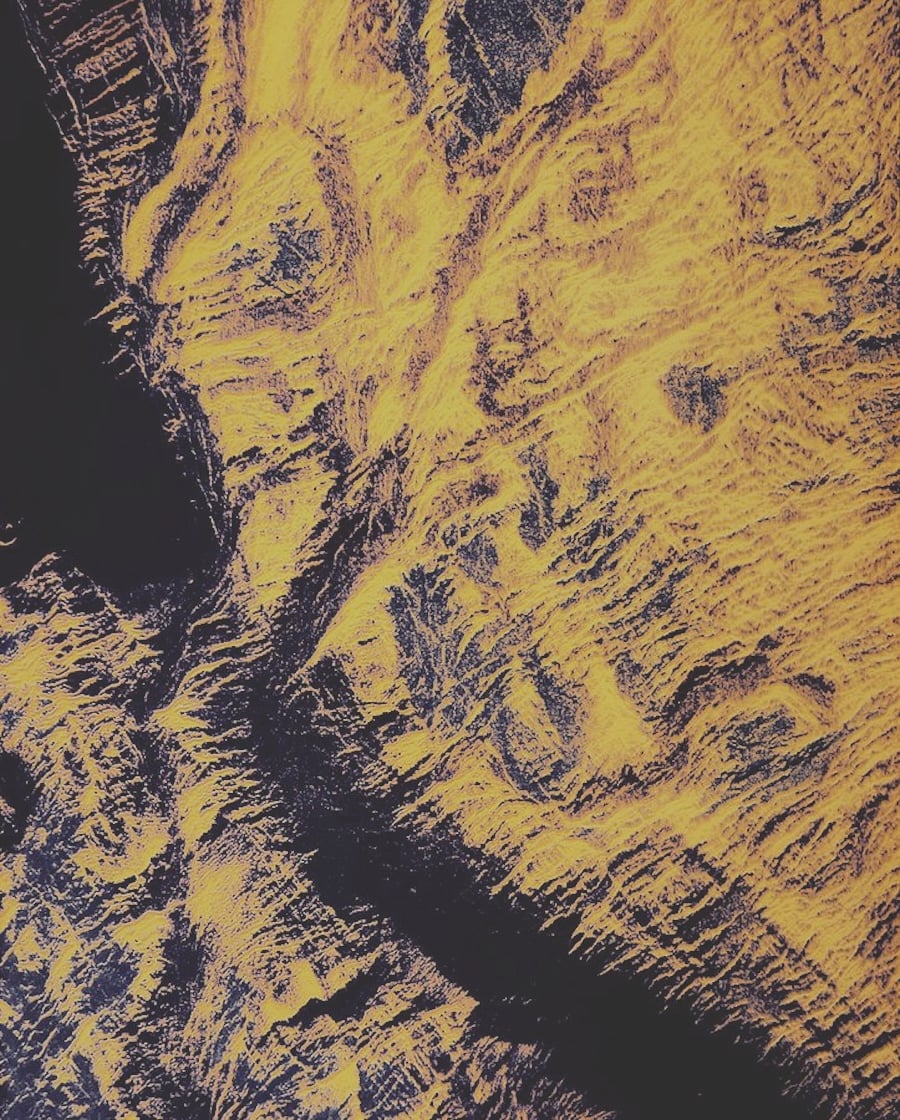
Astronomers have been measuring the wrong thing when they track how fast Venus rotates. A new study reveals that Venus's atmosphere circles the planet every four Earth days, while the solid surface takes 243 days to complete one rotation. This sixty-fold difference between atmospheric and planetary spin rates creates a measurement problem that extends far beyond Venus.
The research warns that distant exoplanets may be systematically mismeasured using the same flawed methodology. When astronomers observe distant worlds, they cannot resolve surface features the way NASA's Magellan spacecraft mapped Venus with radar imagery. Instead, they track cloud movements and atmospheric patterns to estimate rotation rates. On Venus, this approach produces wildly inaccurate results because the clouds move so much faster than the planet itself.
Stephen Kane, the lead researcher, proposes a solution using multi-wavelength observations. Different wavelengths penetrate atmosphere and cloud layers at different depths, allowing astronomers to separate atmospheric motion from planetary rotation. This technique matters enormously for characterizing potentially habitable exoplanets, where rotation rate directly affects atmospheric circulation, climate zones, and surface conditions.
A planet's rotation rate determines day length, which controls how much solar heating one hemisphere receives. For Earth-like worlds orbiting distant stars, this parameter influences whether a planet could harbor life. A slow rotation might allow one side to face perpetual daylight while the other freezes in darkness. A fast rotation distributes heat more evenly. Measuring rotation becomes fundamental to assessing habitability.
Venus demonstrates this principle dramatically. Its ultra-slow rotation means each solar day lasts 117 Earth days. Combined with its thick, sulfuric acid atmosphere, this slow spin contributes to surface temperatures reaching 462 degrees Celsius. The atmospheric super-rotation remains poorly understood, though scientists attribute it to cloud-based heat absorption and circulation patterns.
The Magellan mission revealed Venus's surface in the 1990s through synthetic aperture radar, penetrating the opaque clouds that hide the solid planet entirely. No optical telescope can see Venus's surface from Earth. This fundamental limitation applies to exoplanet observations as well. Astronomers studying worlds around distant stars cannot simply peer through clouds to measure surface rotation directly.
For exoplanets, the problem intensifies. These worlds appear as points of light in telescopes, even with modern instruments like the James Webb Space Telescope. Spectroscopy offers the primary window into their properties, including rotation rates measured through Doppler broadening of spectral lines. If those spectral signatures trace atmospheric rather than surface motion, entire catalogues of exoplanet properties require revision.
Kane's multi-wavelength approach targets infrared, visible, and ultraviolet light to penetrate at various atmospheric depths. Different molecular absorbers dominate at different wavelengths. By observing simultaneously across this spectrum, astronomers can map where circulation actually occurs and distinguish planetary surface rotation from atmospheric dynamics.
This correction becomes especially critical for the growing inventory of potentially habitable exoplanets identified by missions like NASA's Kepler and TESS. Dozens of Earth-sized worlds in their stars' habitable zones now exist in the confirmed exoplanet database. Accurate rotation measurements matter for modeling their atmospheres, magnetic fields, and long-term climate stability. A systematic error in rotation rates means a systematic misunderstanding of these worlds' true characteristics.
The study reframes a basic question: what exactly does rotation mean when observing from light-years away? Venus has taught astronomers that the answer depends entirely on what you choose to measure.