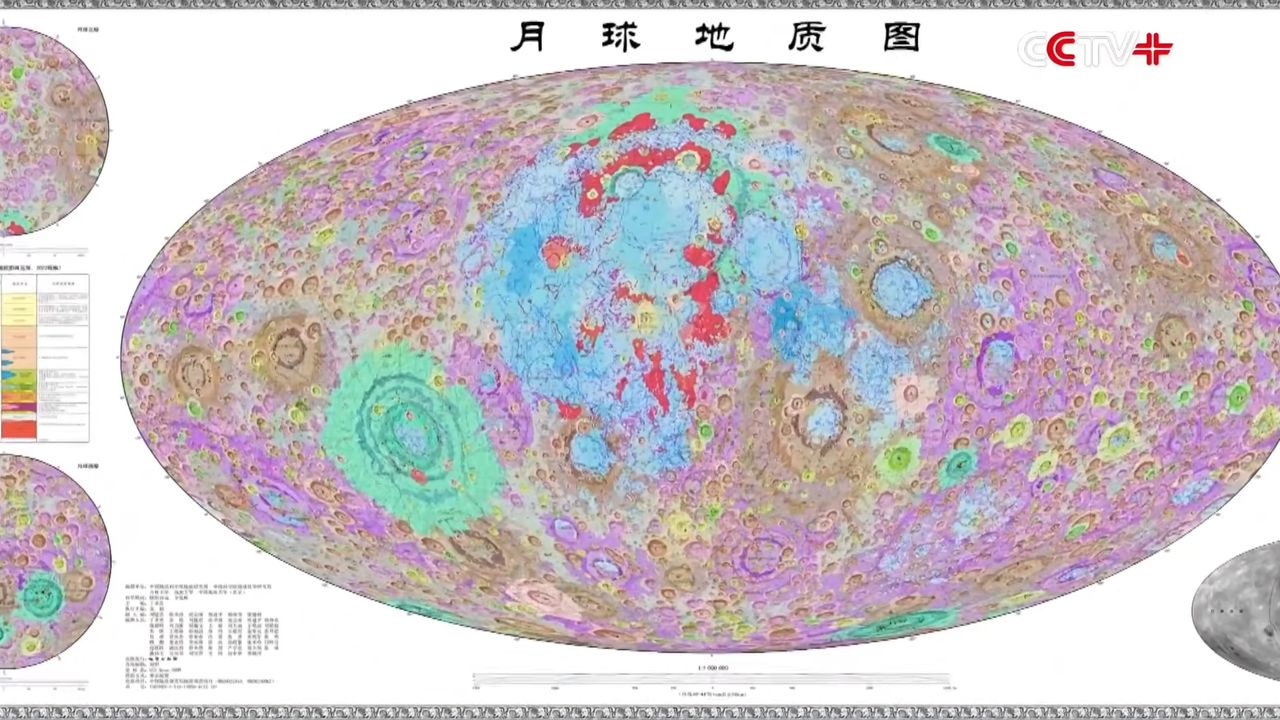
China released a detailed lunar map incorporating fresh chronology data and new information about the moon's far side, establishing its own cartographic standard for solar system exploration. The map reflects Beijing's strategy to shape how celestial bodies get documented and measured as space exploration accelerates globally.
The lunar cartography represents more than technical achievement. It positions China as a standards-setter in space science, moving beyond the Western-dominated frameworks that have traditionally governed how missions catalog planetary features and geological timelines. By publishing its own moon map with updated chronological data, China signals intent to lead lunar science interpretation rather than follow established conventions.
China's Chang'e missions have collected substantial data from the lunar far side, territory largely unknown until the Chang'e-4 lander touched down there in 2019. That mission and subsequent Chang'e-5 operations generated observations unavailable to earlier American and Soviet programs. The new map incorporates these findings, giving China's cartographic version unique scientific authority.
The timing aligns with China's broader lunar strategy. The country plans crewed moon missions and a research station at the lunar south pole through its International Lunar Research Station partnership with Russia. Establishing independent mapping standards strengthens China's claim to leadership in that region and provides navigational frameworks for future operations.
This cartographic initiative carries geopolitical weight. Space exploration traditionally operated within frameworks established by NASA, ESA, and international treaties written during the Cold War. China's homegrown standard challenges that order. It demonstrates that non-Western spacefaring nations can define how space science gets organized and interpreted, not merely participate in systems others built.
The moon map also addresses practical needs. As more nations and commercial entities target lunar resources and landing sites, standardized data becomes essential. China's version competes with existing American and international standards, potentially becoming the reference system for Chinese-led missions and partners aligned with Beijing's space vision.
The initiative reflects