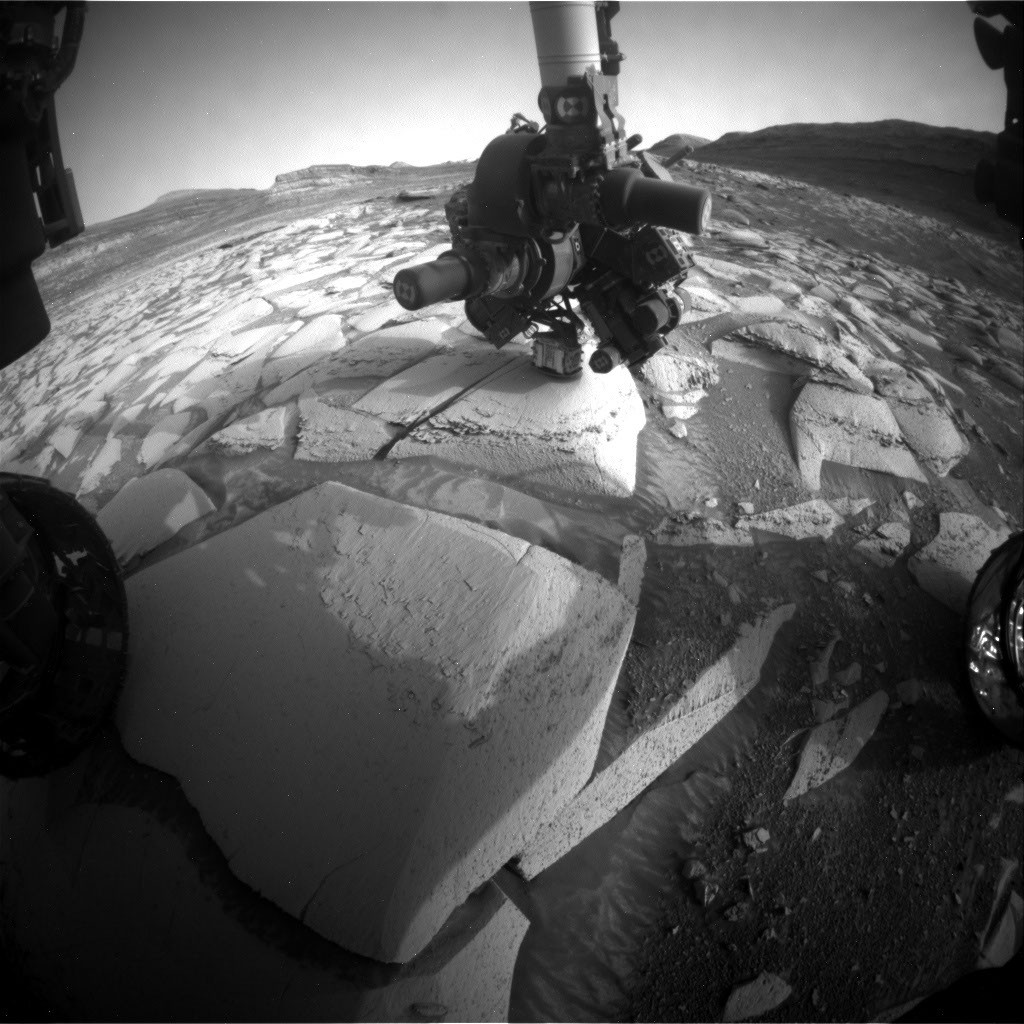
NASA's Curiosity rover marks 14 years of continuous operation on Mars this week, a milestone that underscores the endurance of robotic exploration on the Red Planet. The rover landed in Gale Crater on August 6, 2012, tasked with investigating whether Mars once harbored conditions suitable for microbial life. Fourteen years later, Curiosity continues its slow traverse across the Martian surface, gathering data that fundamentally reshapes our understanding of Mars' geological history and past habitability.
The rover's longevity exceeds its original two-year mission by a factor of seven. Curiosity's success stems from meticulous engineering and adaptive software updates from the Jet Propulsion Laboratory. The rover's ten scientific instruments remain operational, measuring atmospheric composition, detecting organic compounds in ancient rocks, and monitoring radiation levels that affect potential human exploration.
During its extended mission, Curiosity has climbed the foothills of Mount Sharp, the three-mile-high central peak of Gale Crater. This ascent reveals layered geological history, with each elevation band recording different climatic periods in Mars' past. The rover's investigations have confirmed that Gale Crater once contained liquid water and possessed the chemical building blocks necessary for life, including sulfur, nitrogen, hydrogen, and oxygen.
Recent discoveries include fluctuating methane levels in the Martian atmosphere and seasonal variations in organic molecules trapped in subsurface rocks. These findings raise questions about whether active biological or chemical processes continue beneath Mars' surface today. The rover's measurements also inform radiation shielding requirements for future human missions to Mars.
Curiosity's team celebrates not merely survival, but scientific productivity. Each sol on Mars yields measurable advances in planetary geology and the search for biosignatures. The rover's continued function validates the design philosophy behind NASA's Mars rovers, demonstrating that robust engineering and