# How Star Trek's Design Architects Built the Visual Language of Space Exploration
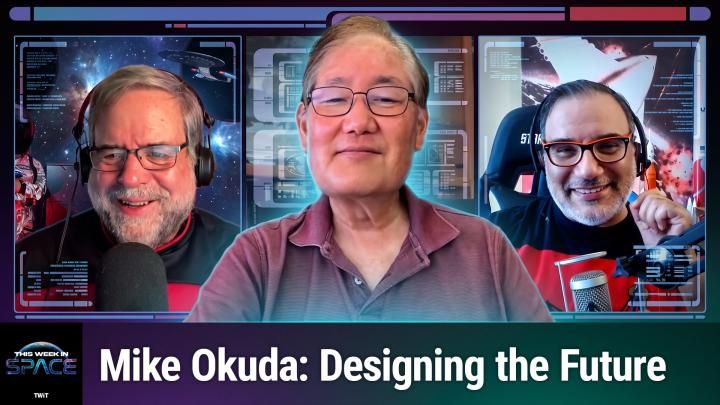
Michael Okuda, the legendary production designer who shaped the aesthetic and technical foundation of Star Trek across multiple decades, joined hosts Rod Pyle and Tariq Malik on Episode 227 of This Week In Space to discuss his career-long influence on one of science fiction's most consequential franchises.
Okuda and his wife Denise transformed how audiences visualized futuristic technology and spacecraft design. Working across Star Trek: The Next Generation, Deep Space Nine, Voyager, and subsequent films, Okuda created visual systems that felt plausible rather than purely fantastical. The display screens, control interfaces, and ship designs he developed established a visual grammar that persisted across decades of television and cinema.
His work extended beyond aesthetics into technical accuracy. Okuda collaborated with physicists and engineers to ground Star Trek's visual elements in scientific principles, even when depicting fictional technology. The Enterprise-D's warp core, the transparent aluminum hull materials, and the tactical displays all carried internal consistency. This approach elevated Star Trek beyond typical television science fiction, giving it a foundation of plausibility that attracted viewers interested in actual space exploration and technology.
The podcast conversation explored how Okuda's designs influenced generations of engineers, scientists, and space industry professionals. Many acknowledged that Star Trek's visualization of future spacecraft and space stations shaped their childhood aspirations toward aerospace careers. NASA personnel have cited the franchise's design philosophy as inspiration for actual spacecraft architecture.
Okuda's contributions encompassed far more than individual props or sets. He developed consistent design languages for different species' technology, created believable starship interiors that functioned as actual working environments, and established visual hierarchies that communicated complex information through graphics and spatial arrangement. The LCARS interface system he created for The Next Generation became so iconic that subsequent shows adopted and evolved it rather than abandoning it.
Beyond production design, Okuda participated in the creative storytelling process itself. Understanding the technical capabilities and limitations of the ship designs he created informed narrative possibilities. Writers could reference specific ship systems Okuda had designed, creating plot devices grounded in established fictional technology rather than arbitrary plot conveniences.
The conversation touched on how Star Trek's thoughtful approach to future technology influenced real-world design thinking. Spacecraft designers at companies like SpaceX and Blue Origin have referenced Trek's interior design philosophy when creating crew compartments and control stations. The franchise demonstrated that functional design and aesthetic sophistication need not conflict.
Okuda's legacy extends into contemporary Star Trek productions, including Discovery, Picard, and Strange New Worlds, which either build upon or deliberately reinterpret his foundational design work. New creative teams face the challenge of honoring Okuda's established visual language while advancing it for modern audiences and storytelling requirements.
This Week In Space's Episode 227 provided a rare opportunity to hear directly from the architect of Star Trek's visual universe. Okuda's insights into the relationship between design, storytelling, and audience engagement offer lessons applicable beyond science fiction production. The episode underscores how detailed worldbuilding and visual consistency create immersion that transforms entertainment into cultural touchstones capable of inspiring real scientific and engineering careers.