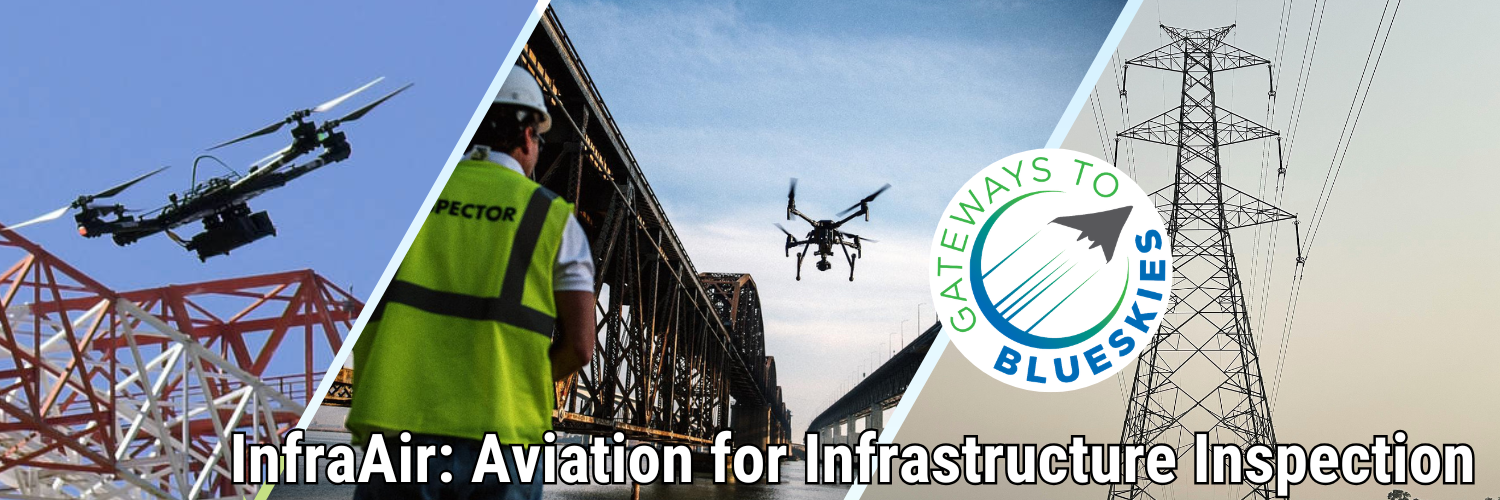
NASA launched the latest iteration of its Gateways to Blue Skies competition, challenging collegiate engineering teams to design aircraft capable of inspecting critical land-based infrastructure like bridges and tunnels by 2035. The competition addresses a practical need across American infrastructure maintenance, where current inspection methods prove expensive, time-consuming, and sometimes dangerous.
Teams will conceptualize autonomous or remotely piloted aircraft equipped with advanced sensors and imaging systems to assess structural integrity of aging bridges, highway tunnels, and other essential systems. The designs must balance payload capacity, flight endurance, operational costs, and safety protocols. NASA sees this as an opportunity to transition aviation technology from research phases into real-world infrastructure applications.
The challenge reflects NASA's broader Aeronautics Research Mission Directorate focus on making aviation more sustainable and operationally efficient. By engaging students early in the design process, NASA identifies emerging talent while advancing solutions to problems facing the nation's transportation networks. Teams benefit from mentorship and technical resources from NASA centers, accelerating their development pathways.
Infrastructure inspection represents a high-value application for advanced aircraft. Traditional methods require road closures, specialized equipment, and trained personnel working at heights. Automated aerial inspection systems could dramatically reduce costs while improving data quality through high-resolution imaging and spectral analysis. The 2035 timeline aligns with broader NASA and Federal Aviation Administration goals for integrating advanced air mobility systems into the national airspace.
Previous Gateways to Blue Skies competitions produced designs ranging from electric vertical takeoff aircraft to optimized fixed-wing platforms. The student work often influences actual research directions at NASA facilities, creating a direct pipeline from academic innovation to agency priorities.
This year's competition continues NASA's strategy of building the aerospace workforce while solving tangible infrastructure challenges. By connecting student creativity to national needs, the agency positions aviation technology as a solution to the infrastructure maintenance crisis facing municipalities and states across the country