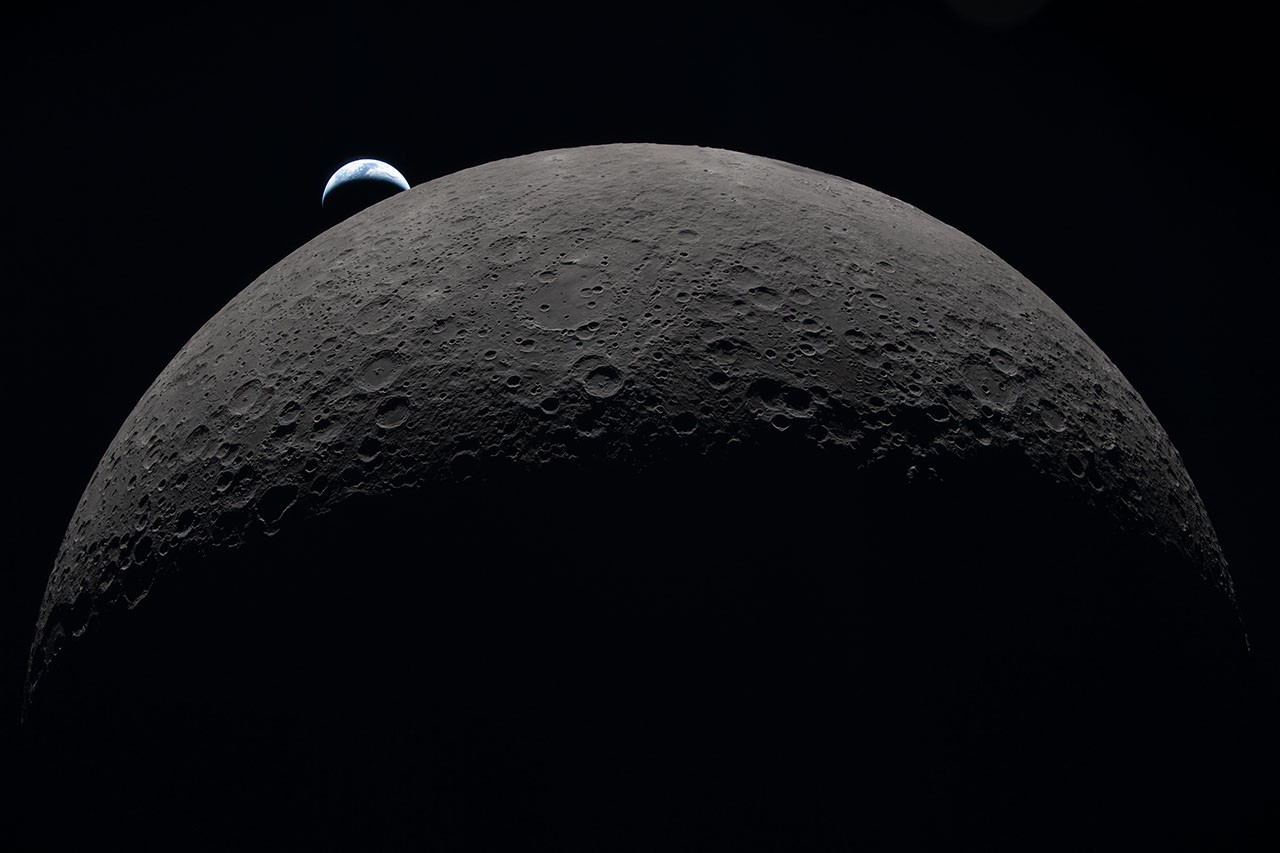
NASA's Lunar Reconnaissance Orbiter photographed a fresh impact crater on the Moon created when a SpaceX Falcon 9 upper stage struck the lunar surface on August 5. The LRO captured the imagery between August 11 and 12, providing the first detailed observations of the debris field.
The Falcon 9 upper stage had launched Firefly Aerospace's Blue Ghost 1 lander in January 2025. After completing its mission objective, the rocket body remained in lunar orbit until its eventual uncontrolled impact. The collision generated a crater that LRO's cameras detected and documented.
This imaging represents a rare opportunity for lunar scientists. Each impact event leaves measurable signatures that reveal information about lunar surface composition and structure. The crater formation process involves excavation of subsurface material, ejection of regolith, and the creation of a debris pattern that orbiting instruments can analyze in detail.
LRO, which has operated continuously since 2009, maintains the highest resolution imaging capability of any instrument currently observing the Moon. Its Camera instrument achieves approximately 0.5-meter resolution, allowing scientists to identify features just meters across. This capability proved essential for locating and characterizing the new impact site.
The observation connects to broader efforts to monitor lunar surface changes and track spacecraft debris. SpaceX conducted the Blue Ghost 1 mission as part of its lunar logistics development, utilizing Firefly's lander to deliver payloads. Upper stage impacts, while unintended, provide natural experiments for understanding how energy dissipates during hypervelocity collisions with airless bodies.
These data inform models predicting long-term effects of increased lunar traffic. As commercial lunar operations expand through companies like Firefly and others, discarded upper stages will inevitably strike the Moon. Understanding the scale and distribution of such impacts helps NASA and international partners plan infrastructure