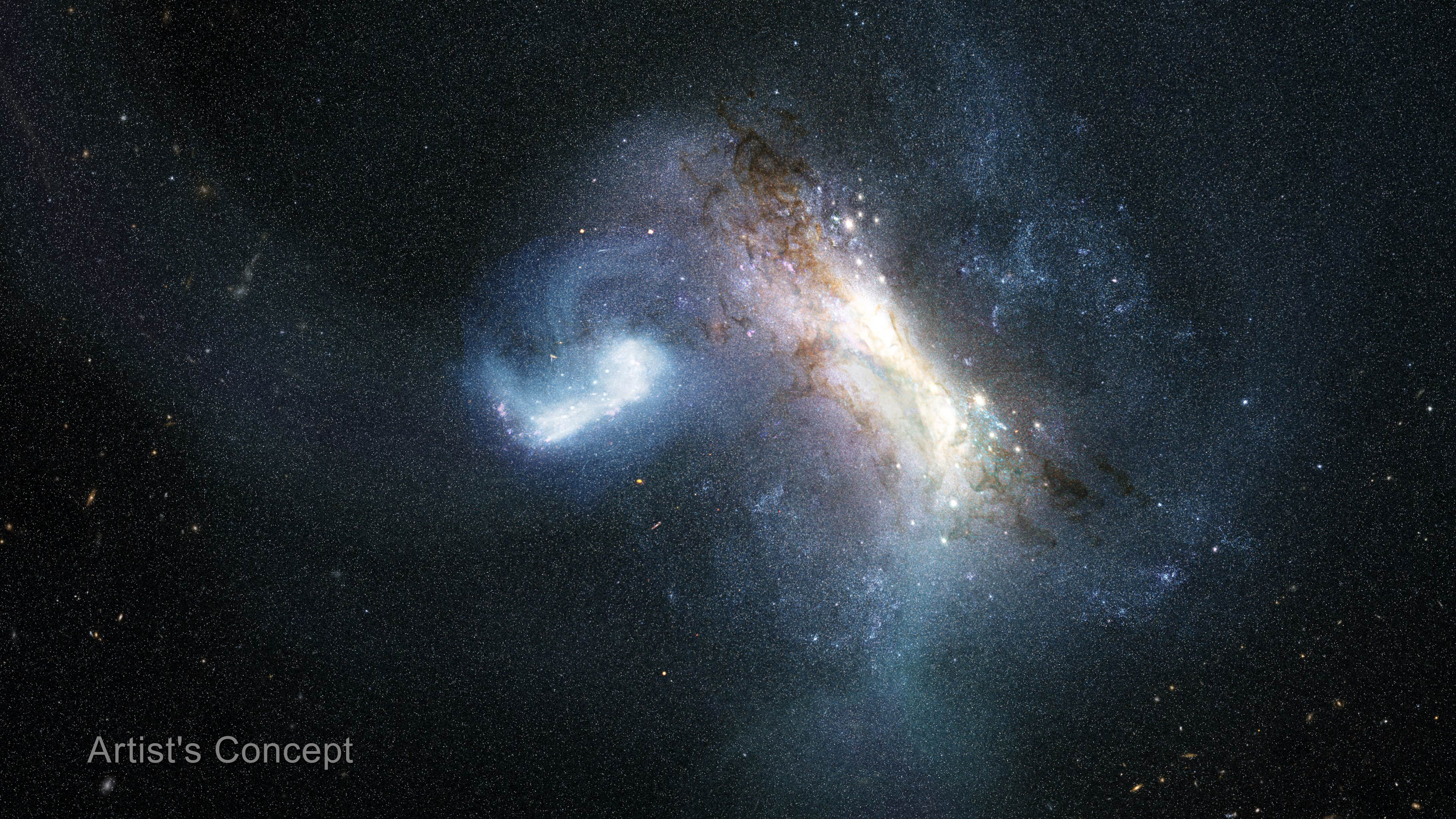
NASA's Hubble Space Telescope has uncovered definitive evidence that the Milky Way collided with a dwarf galaxy called LKH approximately 12 billion years ago, according to research published in Nature Astronomy. The merger occurred when our galaxy was still in its youth, fundamentally shaping its structure and evolution.
Astronomers analyzed Hubble data to trace the remnants of this ancient collision. The dwarf galaxy merged with the Milky Way during a period of intense cosmic activity, when galaxy mergers were common throughout the universe. This particular encounter left detectable signatures in the stellar populations and chemical composition of our galaxy that persist today.
The discovery reshapes our understanding of galactic formation. Early Milky Way development involved multiple mergers with smaller systems. Each collision contributed material, triggered star formation, and redistributed matter throughout the expanding disk. The LKH merger represents one of several documented encounters that assembled the mature galaxy we observe now.
Hubble's ultraviolet and visible-light observations proved essential for identifying this ancient event. The telescope resolved individual stars and measured their ages and chemical abundances, revealing the distinct population left behind by the dwarf galaxy's merger. These stellar forensics allowed researchers to date the collision and confirm its origin from a separate system.
Understanding the Milky Way's collision history informs broader theories about galaxy assembly across the universe. Simulations suggest that large spiral galaxies like ours typically experience numerous mergers. Observational confirmation of the LKH event strengthens these models and demonstrates how dwarf galaxies contribute to the growth of larger systems.
This research also highlights the ongoing role of Hubble, now over three decades old. The telescope continues revealing the cosmos's fundamental processes through detailed stellar analysis. Future observations, including data from the James Webb Space Telescope, will likely uncover additional merger events in our galaxy's past, further clarifying