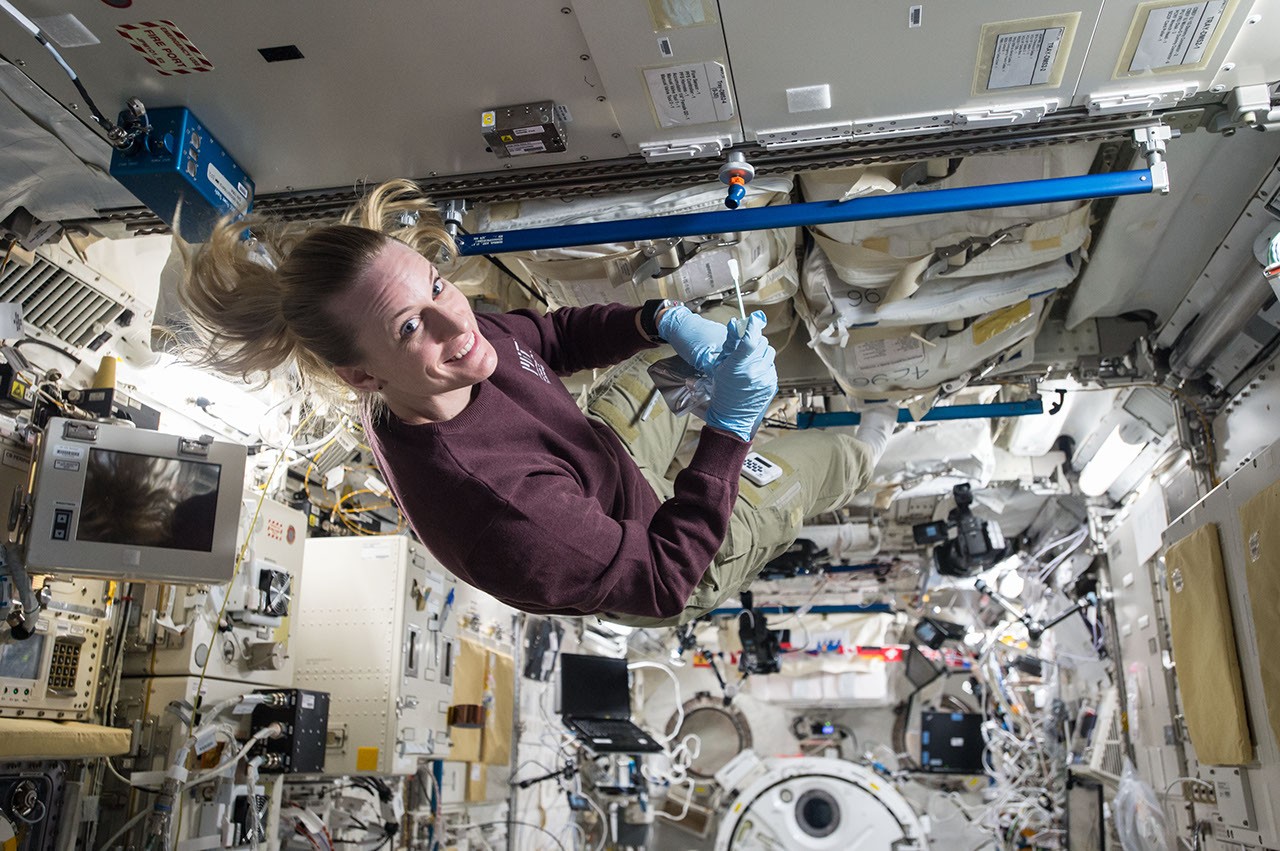
NASA researchers have determined that terrestrial microbes transported to the lunar surface aboard human spacecraft could survive in shadowed regions near the Moon's South Pole. The study, published August 19, 2026, in Science Advances, identifies permanently shadowed craters as potential habitats for Earth-origin bacteria and other microorganisms.
The Moon's South Pole presents a uniquely challenging environment. Temperatures in permanently shadowed areas plummet below minus 230 degrees Celsius. Yet NASA's analysis reveals that certain subsurface locations within these craters could offer protection from radiation and maintain conditions amenable to microbial survival. Water ice deposits abundant in the region would provide essential moisture. Some microbes possess remarkable resistance to extreme temperatures, desiccation, and radiation through cryptobiosis, a dormant state that suspends metabolic activity.
This research carries direct implications for NASA's Artemis program, which aims to establish sustained human presence at the lunar South Pole within this decade. As astronauts and equipment land, inevitable microbial contamination occurs. Understanding which organisms might persist on the Moon matters for two reasons. First, forward contamination threatens scientific efforts to detect indigenous lunar life or study pristine geological samples. Second, human safety depends on knowing how Earth microbes might behave in alien environments.
The findings underscore the necessity for stricter planetary protection protocols. NASA and other space agencies already implement sterilization procedures for spacecraft and equipment, but absolute contamination prevention remains technologically impossible. The agency must now refine these protocols based on this new data about where and how Earth microbes could potentially establish themselves on the lunar surface.
The research informs the broader question of panspermia. if Earth organisms can survive the Moon's harsh conditions, similar microbes might traverse the far greater distances between planets within meteorites or spacecraft. This connects to astrobiology's fundamental quest: understanding life's